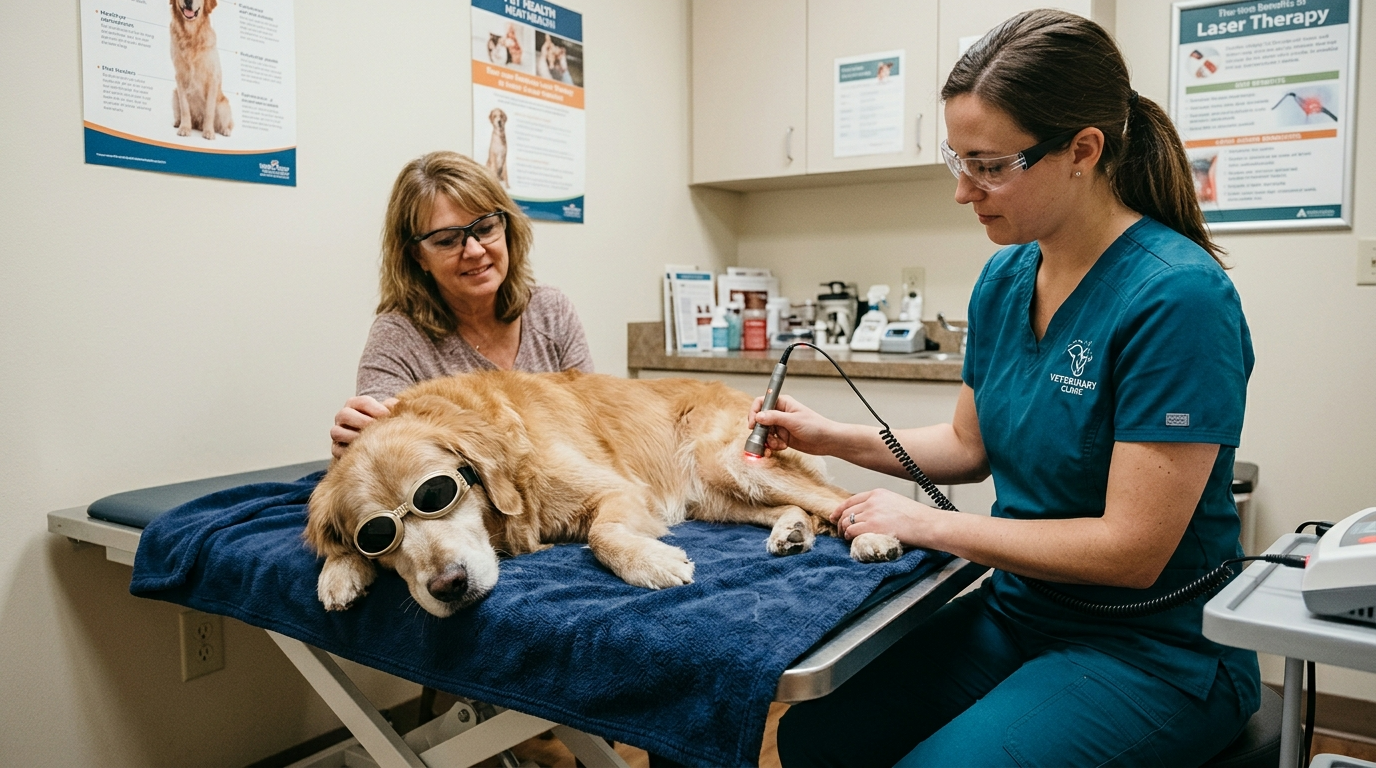
Arthritis can slowly reduce a dog’s comfort, mobility, and quality of life. Fortunately, laser therapy for dogs provides a non-invasive option that helps manage inflammation and pain effectively. Because this treatment stimulates natural healing processes, it supports recovery without surgery or heavy medication.
Many aging dogs struggle with stiffness, limping, and reduced activity. While traditional treatments like anti-inflammatory drugs can help, long-term use may carry risks. Therefore, veterinarians increasingly recommend supportive therapies that work alongside standard care.
Understanding how light-based treatment works can help you decide whether it fits your dog’s arthritis management plan.
Understanding Canine Arthritis
Arthritis develops when cartilage inside joints wears down over time. As the protective layer thins, bones rub together. Consequently, inflammation increases and movement becomes painful.
Older dogs face higher risk, although injuries and genetics also contribute. Because arthritis progresses gradually, early signs often go unnoticed.
Common symptoms include stiffness after rest, reluctance to jump, slower walks, and irritability. Additionally, some dogs withdraw from play.
Although arthritis cannot be reversed, symptoms can be managed. Laser therapy for dogs offers one approach that targets inflammation directly at the tissue level.
How Laser Therapy Works
Laser treatment uses focused light energy to stimulate cellular activity. When light penetrates the skin, it reaches damaged tissues beneath.
Laser therapy for dogs increases blood flow in affected areas. Improved circulation delivers oxygen and nutrients that support repair.
Additionally, the therapy encourages ATP production inside cells. ATP fuels cellular regeneration, which accelerates healing.
Inflammation decreases as the body responds to stimulation. Therefore, pain signals often reduce over time.
Because the procedure remains non-invasive, dogs typically tolerate sessions well.
Pain Relief Without Invasive Procedures
Traditional arthritis treatments sometimes include injections or long-term medications. While effective, these methods may produce side effects.
Laser therapy for dogs offers drug-free support. Instead of masking pain, it addresses inflammation and tissue healing.
Sessions are quick and painless. Most dogs relax during treatment.
Because there is no need for sedation in most cases, recovery time remains minimal.
As a complementary therapy, laser sessions may reduce the need for higher medication doses.
Improved Mobility and Flexibility
Reduced inflammation often leads to noticeable mobility improvements.
Laser therapy for dogs helps loosen tight muscles around stiff joints. As a result, movement becomes smoother.
Many owners observe easier rising after rest. Additionally, dogs may resume light play.
Although results vary depending on severity, consistent sessions usually produce gradual progress.
Better flexibility supports overall confidence and comfort.
What Happens During a Session
A veterinarian or certified technician performs the procedure.
The device emits concentrated light over the affected joint. Laser therapy for dogs typically lasts between 5 and 20 minutes per area.
Dogs remain awake and comfortable. In fact, many fall asleep during treatment.
The light produces gentle warmth but no pain.
Treatment frequency depends on severity. Acute cases may require multiple sessions weekly at first.
Chronic cases often shift to maintenance visits over time.
Scientific Support and Veterinary Use
Veterinary medicine increasingly recognizes therapeutic laser applications.
Research suggests improved mobility and reduced pain scores in arthritic dogs.
Laser therapy for dogs appears in many rehabilitation clinics and specialty practices.
Although individual responses vary, clinical experience supports its role in integrative care.
Certified providers ensure proper dosing and safety.
Combining Laser Therapy With Other Treatments
Laser treatment works best as part of a broader plan.
Weight management reduces joint strain. Additionally, physical therapy strengthens supporting muscles.
Laser therapy for dogs complements omega-3 supplementation and joint-support diets.
Hydrotherapy or controlled exercise also enhances outcomes.
A balanced approach produces stronger long-term results.
Safety and Side Effects
When administered properly, side effects remain rare.
Laser therapy for dogs should not be applied over tumors or certain eye areas.
Mild soreness may occur temporarily. However, serious complications are uncommon.
Professional guidance ensures safe energy levels and treatment duration.
Always consult your veterinarian before beginning therapy.
Cost Considerations
Pricing varies by clinic and geographic location.
Laser therapy for dogs may cost per session or through bundled packages.
Although initial expenses may seem significant, reduced medication costs can offset long-term spending.
Discuss payment plans with your provider if needed.
Investment in comfort often improves overall well-being.
Monitoring Progress at Home
Track mobility changes carefully.
Note improvements in stair climbing, walking distance, and playfulness.
Laser therapy for dogs typically shows gradual results rather than immediate transformation.
Photographs and written notes help measure subtle gains.
Regular follow-up visits allow adjustment of treatment frequency.
When to Consider Laser Treatment
If your dog shows persistent stiffness despite medication, consult your veterinarian.
Laser therapy for dogs suits pets that cannot tolerate certain drugs.
Additionally, dogs recovering from orthopedic surgery may benefit from light stimulation.
Early intervention may slow progression of discomfort.
Professional evaluation ensures appropriate use.
Long-Term Arthritis Management
Arthritis requires ongoing care.
Laser therapy for dogs supports maintenance when combined with balanced nutrition and moderate exercise.
Consistency matters. Therefore, follow recommended schedules carefully.
Maintenance sessions may occur monthly after initial improvement.
Stable management preserves mobility and independence.
Emotional and Behavioral Improvements
Pain influences mood.
Dogs experiencing relief often regain energy and interest in daily activities.
Laser therapy for dogs may indirectly improve emotional well-being by reducing chronic discomfort.
Owners frequently report brighter expressions and increased engagement.
Quality of life extends beyond physical movement.
Is Laser Therapy Right for Every Dog?
Not every case responds equally.
Severity, age, and overall health influence outcomes.
Laser therapy for dogs should complement, not replace, comprehensive veterinary care.
Discuss goals clearly with your provider.
Customized plans yield the best results.
Conclusion
Arthritis can significantly affect a dog’s comfort and independence. However, laser therapy for dogs offers a modern, non-invasive solution that targets inflammation at the cellular level. By improving circulation, reducing pain, and supporting tissue repair, this therapy enhances mobility and overall well-being.
When integrated with proper weight management, exercise, and medical supervision, laser treatment becomes a valuable component of long-term arthritis care. While it may not cure joint disease, it can meaningfully improve quality of life. With consistent sessions and professional guidance, many dogs regain comfort and confidence in their daily movement.
FAQ
- How quickly can improvements appear after treatment?
Some dogs show progress within a few sessions, while others require consistent treatments over several weeks. - Is the procedure painful for pets?
No. Most dogs remain relaxed and comfortable during light therapy sessions. - Can this replace arthritis medication completely?
In many cases, it complements medication rather than replacing it entirely. - How long does each session take?
Treatments usually last between 5 and 20 minutes depending on the affected area. - Are there dogs that should not receive light therapy?
Dogs with certain medical conditions or tumors require veterinary evaluation before starting treatment.