Some dogs seem naturally built for winter. While many breeds struggle in freezing temperatures, others thrive when snow begins falling and temperatures drop sharply. Thick coats, strong endurance, and cold-resistant body structures allow certain breeds to remain comfortable and active in harsh winter climates. That is why many owners specifically search for the best dog breeds for cold weather before choosing a pet for colder regions.
Cold-weather breeds were often developed in northern climates where survival depended on strength, stamina, and insulation against freezing conditions. Many originally worked alongside humans by pulling sleds, guarding livestock, hunting, or traveling across snowy terrain. Consequently, these dogs often possess remarkable resilience and physical endurance.
However, cold tolerance involves more than fur alone. Body size, metabolism, coat texture, paw structure, and energy levels all contribute to winter adaptability. Some breeds naturally conserve body heat better than others, while certain dogs maintain strong circulation in icy conditions.
The best dog breeds for cold weather usually enjoy outdoor activity and physical exercise during winter months. Many become especially energetic in cooler temperatures because their thick coats prevent overheating more effectively.
Why Some Dogs Handle Winter Better Than Others
Dogs adapted to colder climates often possess double coats designed for insulation. The outer coat repels moisture and snow, while the dense undercoat traps warmth close to the body. This combination helps regulate temperature even during freezing conditions.
Dog breeds for cold weather also tend to have compact body shapes that conserve heat more efficiently. Smaller ears, thicker paws, and sturdy builds often reduce heat loss while improving endurance on snow and ice.
Many cold-weather breeds naturally maintain higher energy levels as well. Historically, these dogs performed physically demanding jobs despite extreme temperatures. Therefore, they usually enjoy outdoor activity even during winter weather.
Behavior also matters. Dogs bred for northern climates often display confidence and adaptability in challenging conditions. Snow, wind, and cold temperatures rarely discourage them from remaining active outdoors.
Despite these natural advantages, even winter-hardy breeds still require proper care and shelter during severe weather. Cold resistance does not make dogs invulnerable to frostbite or dangerous exposure.
Siberian Huskies and Their Incredible Endurance
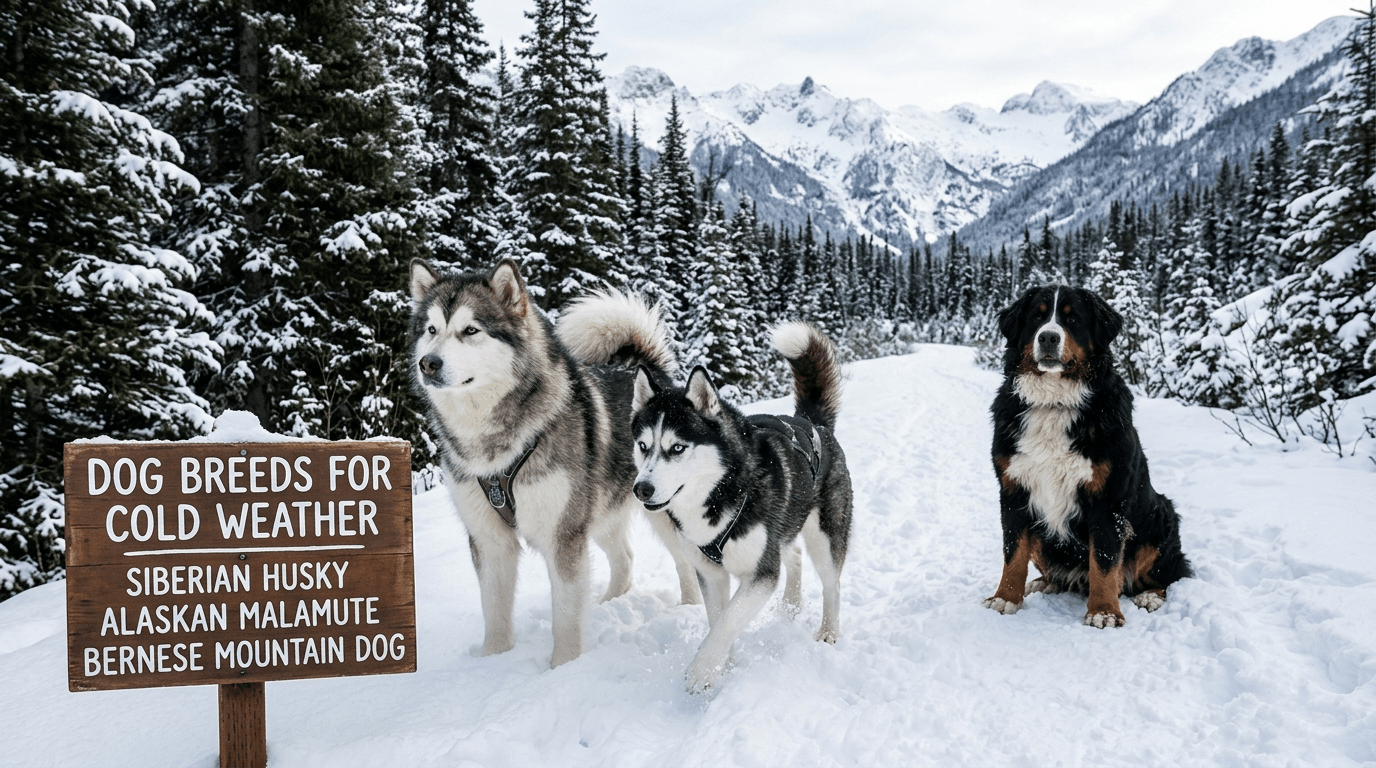
Siberian Huskies remain among the most recognized dog breeds for cold weather because of their remarkable endurance and sled-pulling history. Originally bred by the Chukchi people of Siberia, Huskies developed exceptional stamina while traveling long distances across snow-covered terrain.
Their thick double coats provide excellent insulation against freezing temperatures. Additionally, Huskies naturally regulate body heat effectively during physical activity in cold climates.
These dogs usually enjoy snow and outdoor winter exercise tremendously. Many Huskies become more energetic during colder months because heat affects them more than winter conditions.
However, Huskies also require substantial exercise and mental stimulation. Without enough activity, they may become destructive or overly vocal indoors. Therefore, they perform best with active owners who enjoy outdoor lifestyles.
Their independent personalities can make training somewhat challenging at times. Still, consistent guidance and positive reinforcement often produce excellent results.
Alaskan Malamutes for Harsh Winter Conditions
Alaskan Malamutes are powerful working dogs developed specifically for hauling heavy loads in Arctic environments. Their size, strength, and thick coats make them one of the strongest dog breeds for cold weather living.
Unlike faster sled breeds, Malamutes specialize in endurance and power. They typically tolerate freezing conditions extremely well because of their dense undercoats and sturdy physical structure.
These dogs often enjoy snowy outdoor activity and require regular exercise to remain emotionally balanced. Long walks, hiking, and pulling activities help satisfy their working instincts naturally.
Malamutes generally display affectionate behavior toward family members, although they can appear independent and stubborn during training. Consequently, early socialization and consistent leadership remain important.
Because of their thick coats, Malamutes may struggle significantly in hot climates. Owners should provide shade, hydration, and limited heat exposure during warmer seasons.
Saint Bernards and Their Calm Temperament
Saint Bernards originally worked as rescue dogs in snowy Alpine regions. Their impressive size and cold-resistant coats allowed them to travel through dangerous mountain conditions while assisting stranded travelers.
Among dog breeds for cold weather, Saint Bernards stand out for their calm and gentle personalities. Despite their large size, many become affectionate and patient family companions.
Their thick coats help protect against harsh winter temperatures, although owners should still monitor ice buildup and skin health during snowy weather.
Saint Bernards generally require moderate exercise rather than extremely intense activity. Short outdoor walks and regular movement usually maintain healthy physical condition.
Because of their size, joint care becomes especially important throughout life. Maintaining healthy weight and providing supportive bedding can help reduce strain on hips and elbows.
Bernese Mountain Dogs and Outdoor Adaptability
Bernese Mountain Dogs developed in the Swiss Alps, where they worked pulling carts and assisting farmers in cold mountainous regions. Their beautiful tri-colored coats provide strong insulation during winter weather.
These dog breeds for cold weather typically display friendly and loyal personalities alongside strong work ethics. Many enjoy outdoor family activities such as hiking, snow walks, and farm work.
Bernese Mountain Dogs usually bond deeply with their families and thrive when included in daily routines. They often remain calm indoors after receiving enough exercise outdoors.
Their thick coats require regular grooming, especially during seasonal shedding periods. Brushing helps prevent matting while maintaining healthy insulation.
Because Bernese Mountain Dogs grow quite large, owners should monitor growth carefully during puppyhood to support long-term joint health.
Newfoundlands and Their Water Resistance
Newfoundlands combine cold-weather tolerance with exceptional swimming ability. Originally bred as working dogs for Canadian fishermen, these dogs developed thick water-resistant coats that protect them from freezing temperatures and icy water.
Dog breeds for cold weather often possess impressive strength, and Newfoundlands certainly fit that pattern. Their muscular bodies and large paws help them move confidently through snow and rough terrain.
These dogs generally display calm, patient, and gentle temperaments. Consequently, many families appreciate their affectionate nature around children.
Although Newfoundlands enjoy outdoor activity, they usually do not require the extreme exercise levels of sled breeds. Moderate daily activity often keeps them healthy and emotionally balanced.
Regular grooming remains important because their dense coats can trap moisture and debris during winter conditions.
Akitas and Their Strong Cold Tolerance
Akitas originated in Japan, where they developed resilience against snowy mountain climates. Their thick double coats and sturdy builds help them remain comfortable in colder environments.
These dog breeds for cold weather often display dignified and loyal personalities. Akitas typically form strong attachments to their families while remaining naturally protective.
Because of their independent nature, early training and socialization become especially important. Proper guidance helps create balanced adult behavior around strangers and other animals.
Akitas usually enjoy outdoor exercise during cooler temperatures. However, they often prefer structured activity rather than chaotic social environments.
Their thick coats shed heavily during seasonal changes, so routine brushing helps maintain coat condition and cleanliness.
Great Pyrenees for Snowy Rural Areas
Great Pyrenees dogs were originally bred to guard livestock in snowy mountain regions. Their thick weather-resistant coats provide excellent insulation against freezing temperatures and harsh weather conditions.
Among dog breeds for cold weather, Great Pyrenees dogs stand out for their calm confidence and protective instincts. They typically remain patient with livestock and family members while staying alert to potential threats.
These dogs often prefer cooler climates because their dense coats trap significant body heat. During winter months, many become especially active and energetic outdoors.
Great Pyrenees dogs usually require secure fencing because they tend to patrol large areas independently. Their guardian instincts may encourage wandering if boundaries remain unclear.
Despite their size, many display gentle and affectionate personalities with trusted family members.
Caring for Dogs During Winter
Even cold-adapted breeds still need responsible winter care. Owners should provide shelter from severe storms, access to fresh water, and protection against dangerous ice or chemical exposure.
Dog breeds for cold weather may tolerate low temperatures well, although prolonged exposure still creates risks. Frostbite and hypothermia can affect any dog under extreme conditions.
Paw care becomes especially important during winter. Ice, salt, and frozen surfaces may irritate paw pads or create small injuries. Therefore, owners should inspect paws regularly after outdoor activity.
Nutrition also matters during colder months. Active outdoor dogs sometimes require additional calories to maintain body temperature and energy levels.
Owners should also brush snow and ice from coats after outdoor play. Ice buildup between paw pads or inside thick fur may create discomfort if ignored.
Choosing the Right Winter Breed for Your Lifestyle
Not every cold-weather breed fits every household equally well. Some dogs require intense daily exercise, while others prefer calmer lifestyles. Therefore, owners should consider personality, activity level, and grooming needs carefully before choosing a breed.
Dog breeds for cold weather often thrive with owners who enjoy outdoor routines and active lifestyles. Hiking, snow walks, and winter recreation frequently suit these dogs naturally.
Space requirements also vary significantly. Larger working breeds generally perform best with room to move comfortably and safely.
Training experience matters too. Certain cold-weather breeds display strong independence and require confident leadership during training.
Most importantly, owners should choose dogs based on compatibility rather than appearance alone. A beautiful thick coat means little if the breed’s temperament or exercise needs do not fit the household properly.
Cold-weather breeds often become incredibly loyal and rewarding companions when matched with the right environment and lifestyle. Their resilience, intelligence, and love for outdoor activity make them excellent partners for snowy climates and active families.
The best dog breeds for cold weather combine physical toughness with emotional companionship. Whether pulling sleds, guarding livestock, hiking through snow, or relaxing beside the fireplace after outdoor adventures, these dogs often thrive in winter conditions where other breeds struggle. With proper care, training, and environment, cold-weather dogs can enjoy long, healthy, and fulfilling lives in colder climates.
FAQ
1. What makes certain dogs better suited for winter climates?
Thick double coats, compact body structures, strong stamina, and cold-resistant genetics help some breeds tolerate winter better.
2. Are large dogs naturally better in cold weather?
Not always, although many larger breeds with dense coats tend to handle freezing temperatures more comfortably than smaller short-haired dogs.
3. Do winter dog breeds still need shelter outdoors?
Yes, all dogs require safe shelter and protection during extreme weather, even breeds built for colder climates.
4. Which winter breeds require the most exercise?
Siberian Huskies, Alaskan Malamutes, and other working breeds usually require significant daily physical activity.
5. Can cold-weather dogs live in warm climates too?
Some can adapt, although owners must manage heat exposure carefully because thick-coated breeds may overheat easily.