Living in the countryside offers a unique lifestyle filled with open space, fresh air, and daily responsibilities that often require dependable animal companions. Choosing the right dog breeds for farm life is essential because not every dog thrives in a rural environment. While some dogs adapt easily to wide-open spaces and active routines, others may struggle without structure or purpose. That is why understanding which breeds naturally fit into farm settings can make a significant difference in both your daily life and your dog’s happiness.
Dog breeds for farm life are typically known for their intelligence, endurance, and strong work ethic. These dogs are not just pets; they often become working partners that assist with herding, guarding, or simply keeping up with an active outdoor lifestyle. As a result, selecting the right breed ensures a smoother transition into rural living while providing a loyal companion that can handle the demands of farm life.
What Makes A Dog Suitable For Rural Living
Not all dogs are built for the challenges of the countryside, so it is important to understand what qualities define the best dog breeds for farm life. First, these dogs need high energy levels because farm environments often involve long hours outdoors. They should also be physically strong and capable of handling various weather conditions.
In addition, intelligence plays a crucial role. Dog breeds for farm life must learn tasks quickly and respond reliably to commands. Whether herding livestock or guarding property, these dogs need to think independently while still following direction. This balance of independence and obedience is what makes them so effective in rural settings.
Another key factor is temperament. Dogs that are calm yet alert tend to perform well on farms. They must remain focused during work but also adapt to quieter moments. Because of this, choosing dog breeds for farm life involves looking at both physical traits and personality.
Top Working Dogs That Thrive On Farms
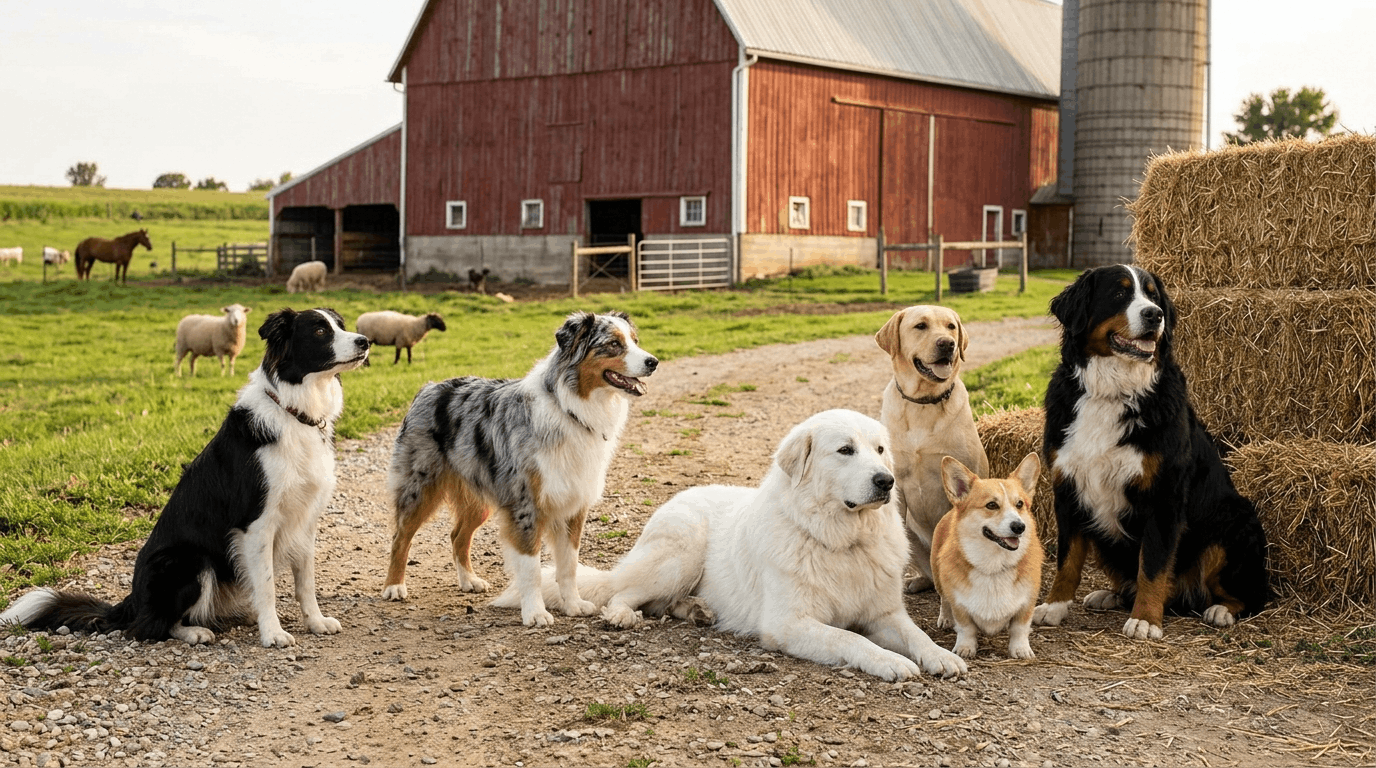
Some breeds have been specifically developed to excel in rural environments. Border Collies are often considered one of the best dog breeds for farm life due to their exceptional intelligence and herding ability. They are highly trainable and thrive when given tasks, making them ideal for managing livestock.
Australian Shepherds are another excellent choice. Known for their agility and energy, they handle herding duties with ease while forming strong bonds with their owners. Their adaptability makes them suitable for different types of farms, from small homesteads to larger operations.
Labrador Retrievers may not be traditional herding dogs, but they are still among the most versatile dog breeds for farm life. They are friendly, hardworking, and capable of assisting with various tasks, including retrieving and guarding. Their balanced temperament makes them a great addition to family farms.
Guardian Breeds For Protection And Security
In rural areas, protecting property and livestock is just as important as managing daily tasks. Therefore, certain dog breeds for farm life are specifically suited for guarding roles. Great Pyrenees are well-known for their ability to protect livestock. They are calm, patient, and highly alert, making them reliable guardians against potential threats.
Anatolian Shepherds are another strong option. These dogs are independent and naturally protective, which allows them to watch over large areas without constant supervision. Because of their size and strength, they can deter predators effectively.
Additionally, Maremma Sheepdogs are often used on farms for their loyalty and protective instincts. They work quietly yet efficiently, ensuring livestock safety while remaining gentle with animals under their care. These guardian dog breeds for farm life provide peace of mind for rural households.
Versatile Dogs That Adapt To Farm Life
Some breeds may not specialize in one specific role but still perform well in a farm environment. For example, Golden Retrievers are known for their friendly nature and adaptability. While they are not traditional working dogs, they can adjust to farm routines and assist with light tasks.
Similarly, Standard Poodles are highly intelligent and capable of learning a variety of activities. Their adaptability makes them suitable for families who want both a companion and a capable helper. These flexible dog breeds for farm life offer a balance between work and companionship.
Mixed-breed dogs can also be excellent choices. Many mixed breeds inherit traits that make them well-suited for rural living. By considering temperament and energy level, you may find a dog that fits perfectly into your farm lifestyle.
Matching A Breed To Your Farm Needs
Choosing the right dog involves more than selecting a popular breed. Instead, you should consider the specific needs of your farm. For instance, if you have livestock, herding or guardian dog breeds for farm life may be the best fit. On the other hand, if your focus is companionship and general assistance, a versatile breed might be more suitable.
It is also important to evaluate your available time and resources. High-energy dogs require regular exercise and mental stimulation. Without proper engagement, they may develop unwanted behaviors. Therefore, selecting dog breeds for farm life should align with your ability to meet their needs consistently.
Additionally, consider the size of your property. Larger farms may benefit from dogs that can cover more ground, while smaller properties may be better suited for compact, adaptable breeds. By matching the breed to your environment, you create a more harmonious living situation.
Training And Socialization In Rural Settings
Even the best dog breeds for farm life require proper training to reach their full potential. Early socialization helps dogs adapt to different animals, people, and environments. This step is especially important on farms, where dogs may encounter livestock, machinery, and visitors.
Training should focus on clear commands and consistent routines. Because farm dogs often work independently, they must understand boundaries and expectations. Positive reinforcement techniques can help build trust and encourage cooperation.
Regular interaction also strengthens the bond between you and your dog. By spending time together, you ensure that your dog remains responsive and engaged. This connection is essential for maintaining a productive and enjoyable farm environment.
Lifestyle Benefits Of Farm Dogs
Having the right dog breeds for farm life brings numerous benefits beyond practical tasks. These dogs provide companionship, security, and a sense of connection to the land. Their presence can make daily routines more enjoyable while offering support during demanding activities.
Moreover, farm dogs often lead fulfilling lives because they have a clear purpose. Working alongside their owners allows them to use their natural instincts, which contributes to their overall happiness. This mutually beneficial relationship is one of the most rewarding aspects of rural living.
Conclusion
Choosing the right dog breeds for farm life is one of the most important decisions for anyone living in a rural environment. By selecting a breed that matches your needs, lifestyle, and property, you create a partnership that enhances both work and daily life. From herding and guarding to companionship and adaptability, these dogs play a vital role in the success of farm living.
Ultimately, the best choice is one that balances ability, temperament, and compatibility. When you take the time to understand your options, you ensure that your dog thrives in its environment while supporting your rural lifestyle. With the right approach, dog breeds for farm life become more than just pets—they become trusted partners in your everyday journey.
FAQ
1. What type of dog works best on a farm?
Herding and guardian breeds are often the most effective due to their instincts and adaptability.
2. Are family-friendly dogs suitable for rural living?
Yes, many friendly breeds can adapt well if they receive enough exercise and structure.
3. Do farm dogs require special training?
Yes, proper training ensures they can handle tasks and interact safely with livestock.
4. Can small dogs live on farms?
They can, but they may not perform working roles as effectively as larger breeds.
5. How much exercise do rural dogs need?
Most farm dogs require daily physical and mental activity to stay healthy and engaged.