Calm dog breeds are often the perfect choice for families seeking peaceful companionship. While many dogs display high energy and constant enthusiasm, others prefer quiet routines and relaxed environments. Therefore, choosing a breed known for steady temperament can make daily life smoother and more predictable.
Not every household thrives with an energetic working breed. Some owners prefer dogs that enjoy lounging, gentle walks, and calm interaction. Fortunately, calm dog breeds offer affectionate companionship without excessive activity demands.
In this guide, you will explore popular relaxed breeds, understand what makes them tranquil, and learn how to match temperament to your lifestyle. Moreover, you will discover why proper training and environment still matter, even with naturally easygoing dogs.
What Makes a Dog Calm by Nature
Temperament develops through genetics, early socialization, and training. However, certain breeds consistently display lower reactivity and reduced energy levels.
Calm dogs typically show:
- Steady emotional responses
- Lower prey drive
- Moderate activity needs
- Gentle interaction with children
- Adaptability to routine
Although personality varies within every breed, some groups tend to remain more relaxed overall. Therefore, researching breed traits helps set realistic expectations.
Calm dog breeds still require exercise and mental stimulation. However, they usually prefer short walks and quiet play rather than intense activity.
Matching temperament to environment prevents frustration for both owner and pet.
Basset Hound: Laid-Back Companion
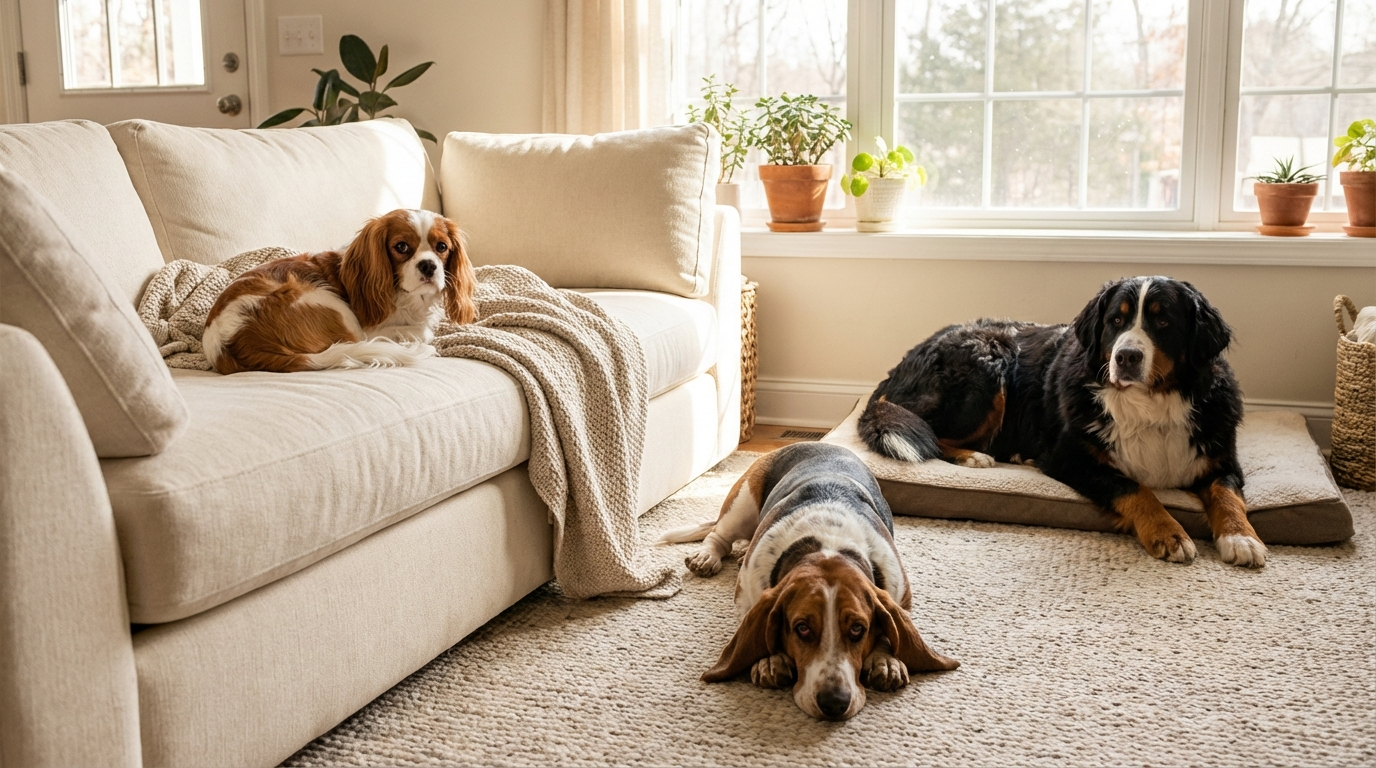
Basset Hounds are famous for their droopy ears and soulful expressions. Beneath that charming appearance lies a patient and relaxed temperament.
These dogs enjoy moderate walks but rarely demand constant play. Instead, they prefer lounging near family members.
Although scent-driven outdoors, Basset Hounds remain gentle indoors. As a result, they fit well in quieter households.
Among calm dog breeds, they stand out for their affectionate and tolerant nature. However, consistent training helps manage occasional stubbornness.
Their easygoing personality makes them suitable for families and older owners alike.
Bulldog: Gentle and Steady
Bulldogs may appear muscular and serious, yet they possess remarkably calm dispositions.
They require minimal exercise compared to many breeds. Short daily walks usually suffice. Additionally, they adapt well to apartment living.
Bulldogs enjoy human companionship and often form strong bonds with family members. Therefore, they prefer relaxed indoor environments.
Calm dog breeds like Bulldogs thrive when routines remain predictable. Overexertion should be avoided, especially in warm climates.
Their steady demeanor and low activity level make them popular among urban households.
Cavalier King Charles Spaniel: Affectionate and Mild
This small breed combines elegance with gentle behavior. Cavalier King Charles Spaniels tend to remain affectionate and adaptable.
They enjoy cuddling and moderate play. However, they rarely display hyperactive tendencies.
Because they bond closely with owners, they prefer companionship. Nevertheless, they remain calm in structured routines.
Among calm dog breeds, Cavaliers fit well in families with children or seniors seeking gentle interaction.
Regular grooming and moderate exercise maintain their health and comfort.
Great Dane: Gentle Giant
Despite their imposing size, Great Danes often display surprising calmness.
They require space due to their height. However, their energy level indoors remains moderate.
Great Danes typically prefer lounging rather than constant activity. Therefore, they adapt well to structured daily walks and relaxed home life.
Calm dog breeds like this giant companion demonstrate that size does not equal hyperactivity.
Early socialization ensures confident and balanced behavior.
Their affectionate and patient nature often earns them the nickname “gentle giant.”
Shih Tzu: Relaxed Lap Dog
Originally bred as companion animals, Shih Tzus thrive in calm environments.
They enjoy short walks and indoor play. However, they rarely demand extensive exercise.
Because they value companionship, they adapt well to apartment living.
Calm dog breeds such as Shih Tzus suit owners seeking affectionate, low-energy pets.
Regular grooming keeps their coats manageable.
Their stable temperament makes them dependable indoor companions.
Newfoundland: Patient and Loyal
Newfoundlands possess impressive size combined with remarkable gentleness.
They often display patience with children and family members. Therefore, they earn reputations as nurturing companions.
Although they require space, their indoor energy remains moderate.
Calm dog breeds like Newfoundlands benefit from early obedience training due to their strength.
Consistent structure ensures safety while preserving their affectionate demeanor.
Their loyalty and calm confidence make them trusted family guardians.
Greyhound: Surprisingly Relaxed
Many assume Greyhounds require intense activity. However, retired racing Greyhounds often become relaxed couch companions.
While they enjoy short bursts of exercise, they spend much of the day resting.
Because of their calm indoor behavior, they adapt surprisingly well to apartments.
Among calm dog breeds, Greyhounds demonstrate that athletic ability does not prevent tranquility at home.
Proper leash training remains important due to prey instincts outdoors.
Bernese Mountain Dog: Gentle and Steady
Bernese Mountain Dogs combine strength with emotional steadiness.
They enjoy moderate outdoor activity but remain composed indoors.
Their affectionate nature makes them excellent family pets.
Calm dog breeds such as Bernese thrive in homes with space and consistent routines.
Regular brushing supports coat maintenance.
Their balanced personality often appeals to first-time large-breed owners.
Clumber Spaniel: Quiet and Loyal
Clumber Spaniels rarely display hyperactivity. Instead, they prefer slow-paced activities.
They bond deeply with family members and respond well to positive reinforcement.
Because of their lower energy, they suit quieter households.
Calm dog breeds like Clumbers benefit from structured daily walks to prevent weight gain.
Their gentle temperament enhances their appeal as companion animals.
Environment and Training Still Matter
Even naturally relaxed breeds require proper socialization.
Early exposure to various environments prevents fear-based reactivity. Additionally, positive training reinforces stable behavior.
Calm dog breeds can still develop behavioral problems without structure.
Consistency in routines strengthens emotional security.
Although genetics influence temperament, environment shapes final outcomes.
Balanced leadership ensures steady behavior long term.
Matching Lifestyle to Breed
Choosing a calm companion involves honest lifestyle assessment.
Consider:
- Living space size
- Daily schedule
- Activity level
- Experience with dogs
- Family composition
Calm dog breeds suit quieter households, but individual personality always varies.
Spending time with breeders or rescue organizations helps evaluate temperament before adoption.
Compatibility increases long-term satisfaction.
Health Considerations
Some relaxed breeds face breed-specific health issues.
Bulldogs may experience breathing challenges. Great Danes require joint monitoring. Cavaliers may develop heart concerns.
Therefore, regular veterinary checkups remain essential.
Calm dog breeds still require preventive care and balanced nutrition.
Proactive health management preserves quality of life.
Benefits of Choosing a Relaxed Breed
Peaceful temperaments often result in:
- Lower stress levels
- Reduced destructive behavior
- Easier training experiences
- Better compatibility with children
- Improved apartment living suitability
Calm dog breeds simplify daily routines while strengthening emotional bonds.
Their steady nature fosters predictable interactions.
Adoption and Rescue Options
Many rescue organizations specialize in specific breeds.
Adopting adult dogs allows clearer assessment of temperament.
Calm dog breeds frequently appear in breed-specific rescues seeking stable homes.
Responsible adoption ensures both owner and dog find suitable matches.
Conclusion: Finding Your Perfect Peaceful Companion
Calm dog breeds provide steady companionship and predictable behavior. From gentle giants like Great Danes to small lap companions like Shih Tzus, relaxed temperaments appear in many sizes.
However, temperament depends on both genetics and environment. Therefore, proper training and routine remain essential.
When lifestyle and breed traits align, harmony follows naturally. By researching carefully and prioritizing balanced care, you can welcome a loyal and tranquil companion into your home.
Ultimately, choosing a relaxed breed supports a peaceful household while strengthening the bond between you and your dog.
FAQ
- Are relaxed dogs easier to train?
Generally, steady-tempered dogs respond well to consistent and positive training methods. - Do calm breeds require less exercise?
They usually need moderate activity, but regular walks remain important for health. - Are larger dogs always high energy?
Not necessarily. Some giant breeds display surprisingly gentle indoor behavior. - Can calm dogs live in apartments?
Yes, many relaxed companions adapt well to smaller living spaces with daily walks. - How can I evaluate temperament before adopting?
Spend time interacting with the dog and consult breeders or rescue staff for personality insights.