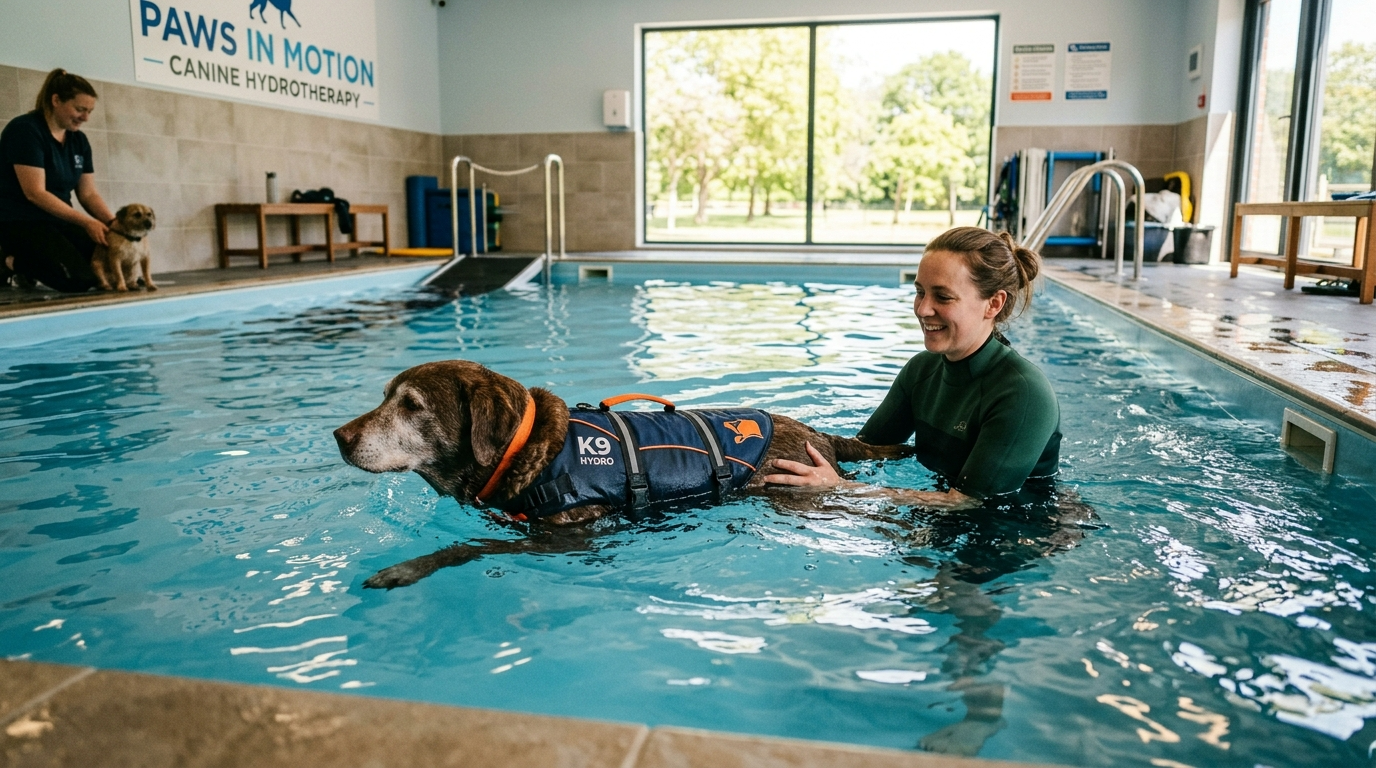
As dogs age, joint stiffness and discomfort become more common. However, swimming therapy for senior dogs provides a gentle way to reduce pain while improving strength and mobility. Because water supports body weight, older dogs can move freely without stressing fragile joints.
Arthritis, hip dysplasia, and ligament injuries often limit activity in aging pets. Consequently, many owners seek safe alternatives to traditional exercise. Water-based rehabilitation offers both relief and gradual muscle rebuilding. When done correctly, it improves flexibility, boosts circulation, and enhances overall well-being.
Why Joint Pain Affects Older Dogs
Joint pain rarely appears overnight. Instead, it develops slowly due to wear and tear on cartilage. Over time, inflammation increases, and mobility decreases.
Arthritis remains the most common cause. However, past injuries, excess weight, and genetics also contribute. As cartilage thins, bones rub together. This friction causes discomfort and stiffness.
Senior dogs often show subtle symptoms at first. For example, they may hesitate before climbing stairs. They might also struggle to stand after resting. Because these changes seem gradual, many owners miss early warning signs.
Left untreated, joint pain reduces activity. Reduced movement then weakens muscles. Weak muscles place even more strain on joints. Therefore, breaking this cycle becomes essential.
How Water Therapy Works
Water creates natural resistance. At the same time, buoyancy reduces body weight pressure. Therefore, dogs can exercise without overloading painful joints.
Swimming therapy for senior dogs combines these two benefits. Muscles work harder in water. However, joints experience less impact. As a result, dogs gain strength while minimizing discomfort.
Hydrostatic pressure also improves circulation. Better blood flow helps reduce swelling and stiffness. Additionally, warm water relaxes tight muscles. This relaxation increases flexibility and comfort.
Because sessions remain controlled, therapists can tailor routines to each dog’s condition. Some dogs use underwater treadmills. Others swim in pools designed for rehabilitation.
Physical Benefits of Aquatic Exercise
Water therapy offers multiple physical improvements. First, it strengthens muscles that support weak joints. Stronger muscles reduce strain during everyday movement.
Second, it enhances range of motion. Repetitive water movement gently stretches stiff joints. Over time, flexibility improves noticeably.
Third, it aids weight management. Extra pounds worsen joint pain. Therefore, calorie-burning water exercise supports healthy weight loss.
Swimming therapy for senior dogs also increases cardiovascular health. Because the heart works steadily during swimming, endurance gradually builds.
Moreover, balance improves. The shifting water forces dogs to stabilize themselves. Consequently, coordination strengthens over time.
Emotional and Behavioral Advantages
Pain affects mood. Dogs experiencing discomfort often appear withdrawn or irritable. Fortunately, water exercise can boost mental well-being.
Movement releases endorphins. These natural chemicals improve mood and reduce stress. As dogs feel better physically, they often regain confidence.
Swimming therapy for senior dogs also provides mental stimulation. New environments and gentle challenges keep aging pets engaged. Therefore, cognitive function may remain sharper for longer.
Additionally, structured sessions create routine. Routine offers comfort, especially for older animals adjusting to physical limitations.
Conditions That Respond Well to Hydrotherapy
Not every dog needs water rehabilitation. However, several common conditions respond extremely well.
Arthritis remains the top candidate. Because cartilage damage causes chronic pain, low-impact movement reduces flare-ups.
Hip dysplasia also benefits significantly. Controlled swimming strengthens hip-supporting muscles. This added strength improves stability.
Post-surgical recovery often includes swimming therapy for senior dogs. After ligament repair or orthopedic procedures, water sessions rebuild muscle safely.
Spinal issues sometimes improve as well. Buoyancy reduces spinal compression. Consequently, nerve pressure decreases during sessions.
Obesity-related joint stress also responds positively. Water workouts burn calories without further damaging joints.
Safety Considerations Before Starting
Although water therapy is gentle, preparation matters. First, consult a veterinarian. A proper diagnosis ensures hydrotherapy suits your dog’s condition.
Next, choose a qualified rehabilitation center. Certified therapists understand canine anatomy and recovery protocols.
Swimming therapy for senior dogs should never begin abruptly. Instead, sessions must start slowly. Gradual exposure reduces fatigue and stress.
Water temperature also matters. Warm water relaxes muscles and increases circulation. Cold water may stiffen joints.
Finally, supervision remains essential. Even strong swimmers can panic or tire unexpectedly.
What a Typical Session Looks Like
Initial sessions focus on comfort. Therapists introduce dogs to shallow water first. Calm encouragement builds trust.
Once relaxed, guided swimming begins. Sessions usually last 10 to 20 minutes at first. Over time, duration increases gradually.
During underwater treadmill therapy, water levels adjust according to mobility needs. Because the belt moves slowly, dogs maintain controlled strides.
Swimming therapy for senior dogs often includes rest breaks. These pauses prevent overexertion.
After each session, drying and gentle massage help prevent muscle soreness. Hydration also supports recovery.
Home Swimming vs Professional Hydrotherapy
Some owners consider backyard pools. While home swimming can help, professional guidance ensures safety.
Rehabilitation centers monitor posture and stride. They also track progress over time. Therefore, improvements become measurable.
Swimming therapy for senior dogs performed professionally includes tailored exercise plans. In contrast, unsupervised swimming may lack structure.
If home pools are used, shallow entry ramps are essential. Additionally, life vests improve safety.
Owners must remain in the water or within arm’s reach at all times.
Frequency and Duration of Treatment
Consistency produces results. Most programs recommend two to three sessions weekly.
Improvements typically appear within several weeks. However, long-term maintenance may continue for months.
Swimming therapy for senior dogs works best when combined with other treatments. Anti-inflammatory medication, joint supplements, and controlled diet enhance outcomes.
Regular reassessment ensures progress remains on track.
Complementary Therapies
Water therapy works well alongside other supportive methods.
Massage therapy reduces muscle tightness. Acupuncture may ease chronic inflammation.
Laser therapy can also support tissue repair. Meanwhile, controlled land exercises improve balance.
When combined thoughtfully, swimming therapy for senior dogs forms part of a comprehensive care plan.
Signs of Progress to Watch For
Improvement appears gradually. However, small changes signal positive results.
Dogs may rise more easily after resting. They might also walk longer without limping.
Energy levels often increase. Additionally, mood typically brightens.
Swimming therapy for senior dogs strengthens supporting muscles. Consequently, daily movement becomes smoother.
Keep a journal to track subtle progress.
When to Avoid Water Therapy
Although highly beneficial, certain conditions require caution.
Open wounds must heal first. Severe heart disease may limit water exercise.
Respiratory disorders also require veterinary approval. Because water pressure affects breathing slightly, supervision becomes critical.
If a dog shows extreme fear of water, alternative therapies may work better.
Long-Term Impact on Quality of Life
The ultimate goal remains comfort and mobility. Aging does not need to mean inactivity.
Swimming therapy for senior dogs encourages gentle movement without pain spikes. Over time, this movement preserves muscle tone and flexibility.
Active dogs maintain healthier weight and stronger cardiovascular systems. Therefore, overall longevity may improve.
Furthermore, emotional resilience grows when dogs feel capable and engaged.
Cost Considerations
Professional hydrotherapy varies in cost. Prices depend on location and session length.
Although expenses add up, long-term benefits often outweigh costs. Reduced medication needs and improved mobility provide meaningful value.
Some pet insurance plans partially cover rehabilitation. Therefore, check policy details before starting.
Creating a Supportive Environment at Home
Support does not stop at the therapy center. Non-slip mats reduce falls indoors.
Orthopedic beds cushion sore joints. Ramps replace stairs when possible.
Swimming therapy for senior dogs becomes more effective when home adjustments support mobility.
Gentle daily walks complement water sessions. However, avoid rough terrain.
Monitoring and Adjusting the Plan
Regular veterinary checkups remain essential. Joint conditions evolve over time.
Therapists may adjust water depth or session length. Because progress varies, personalized plans deliver better outcomes.
Swimming therapy for senior dogs should adapt to changing needs. Flexibility ensures continued improvement.
Conclusion
Aging dogs deserve comfort and mobility. Swimming therapy for senior dogs offers a safe, low-impact solution for joint pain and stiffness. Because water reduces pressure while strengthening muscles, it supports both recovery and long-term health.
With professional guidance, consistent sessions, and supportive home care, many senior dogs regain confidence and independence. Therefore, hydrotherapy stands as one of the most effective rehabilitation tools available today. By investing in gentle aquatic exercise, owners help their companions move with greater ease and enjoy their golden years fully.
FAQ
- How quickly can older dogs see improvement from hydrotherapy?
Many dogs show subtle mobility gains within a few weeks, especially when sessions remain consistent. - Is aquatic exercise safe for dogs with severe arthritis?
Yes, with veterinary approval and professional supervision, water-based workouts are often ideal for advanced joint issues. - Can small breeds benefit from pool rehabilitation?
Absolutely. Toy and small breeds respond well because buoyancy reduces joint strain. - What if my dog is afraid of water?
Gradual introduction and positive reinforcement usually help. However, alternative therapies exist if fear persists. - Should water therapy replace medication entirely?
Hydrotherapy often complements medication rather than replacing it. A combined plan typically delivers the best results.