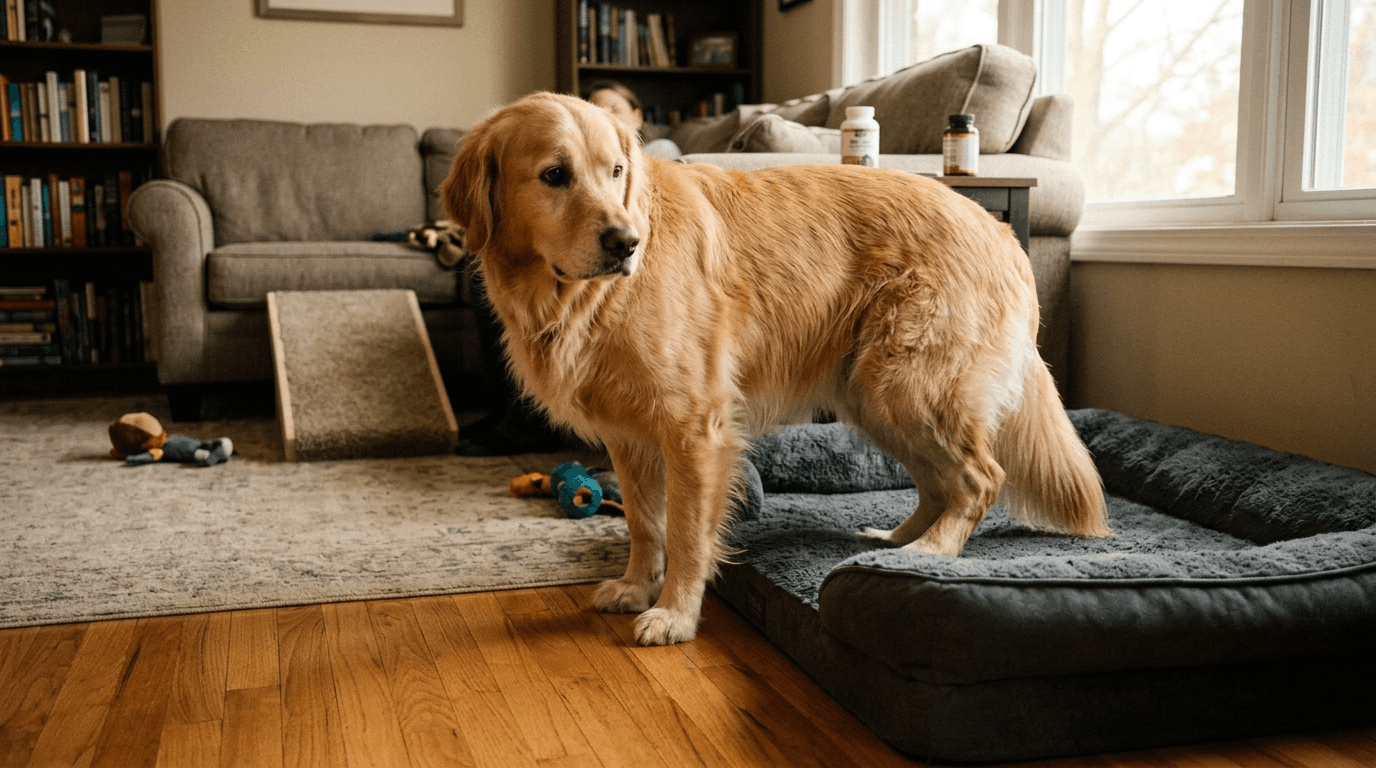
As dogs age or experience physical stress, mobility issues can quietly develop and gradually affect their quality of life. Recognizing dog joint pain signs early is essential because these subtle changes often go unnoticed until discomfort becomes severe. Many pet owners assume slowing down is just part of aging, yet joint pain can begin much earlier and worsen without proper care. By understanding what to watch for, you can take action before the condition limits your dog’s ability to move freely and comfortably.
Dog joint pain signs can appear in different ways depending on your dog’s age, breed, and activity level. Some dogs show obvious limping, while others display quieter behavioral changes. Therefore, paying attention to small shifts in routine, movement, and mood can make a significant difference. Early detection allows for timely treatment, which can help reduce pain, improve mobility, and prevent further joint damage over time.
Understanding What Causes Joint Pain in Dogs
Joint pain in dogs can result from several underlying conditions, and identifying the cause is the first step toward effective care. Arthritis is one of the most common reasons, especially in senior dogs, as cartilage naturally wears down over time. However, younger dogs can also experience joint issues due to injuries, genetic conditions like hip dysplasia, or excessive physical strain.
Because of these varied causes, dog joint pain signs may develop gradually or appear suddenly after an injury. In many cases, inflammation builds up slowly, making symptoms less obvious at first. As a result, owners may overlook early warning signs, assuming their dog is simply tired or less energetic. Understanding these causes helps you stay alert and respond appropriately when changes occur.
Early Dog Joint Pain Signs You Should Not Ignore
Spotting early dog joint pain signs can help you address problems before they escalate. One of the first indicators is stiffness, especially after rest or sleep. You may notice your dog taking longer to stand up or moving more cautiously in the morning. Additionally, reluctance to jump, climb stairs, or play can signal discomfort in the joints.
Another important clue is a change in walking pattern. Even slight limping or uneven weight distribution can indicate underlying pain. Moreover, behavioral changes such as irritability or reduced interaction may suggest your dog is uncomfortable. Because dogs cannot verbalize pain, these subtle cues often provide the clearest insight into their condition.
When Joint Pain Becomes More Serious
As joint issues progress, dog joint pain signs tend to become more noticeable and persistent. Your dog may begin to avoid activities they once enjoyed, such as walks or playtime. Furthermore, visible swelling around joints or increased sensitivity when touched can indicate worsening inflammation.
In more advanced cases, dogs may struggle with basic movements like standing or lying down. This level of discomfort should never be ignored, as it can significantly impact your pet’s quality of life. At this stage, professional evaluation becomes essential to determine the severity of the condition and explore appropriate treatment options.
When To See A Veterinarian
Knowing when to seek professional help is crucial when dealing with dog joint pain signs. If symptoms persist for more than a few days, it is wise to consult a veterinarian. Early intervention can prevent minor issues from developing into chronic conditions that are harder to manage.
Additionally, immediate veterinary attention is necessary if your dog shows sudden or severe pain, refuses to bear weight on a limb, or exhibits signs of distress. These symptoms may indicate injury or a more serious underlying issue. By acting promptly, you can ensure your dog receives the care they need without unnecessary delays.
What To Expect During A Vet Visit
When you bring your dog to the vet, the evaluation process typically begins with a physical examination. The veterinarian will assess mobility, check for swelling, and observe how your dog moves. In some cases, imaging tests such as X-rays may be recommended to get a clearer view of the joints.
Based on the findings, the vet may suggest a treatment plan tailored to your dog’s condition. This plan could include medication, physical therapy, or lifestyle adjustments. Addressing dog joint pain signs early often leads to better outcomes, allowing your dog to maintain a more active and comfortable life.
Treatment Options And Long-Term Care
Managing joint pain involves a combination of approaches aimed at reducing discomfort and improving mobility. Medications such as anti-inflammatory drugs can help control pain, while supplements like glucosamine may support joint health over time. Additionally, weight management plays a critical role, as excess weight puts added strain on joints.
Exercise should also be adjusted to suit your dog’s condition. Low-impact activities like gentle walks or swimming can help maintain mobility without causing further damage. By combining these strategies, you can effectively manage dog joint pain signs and improve your pet’s overall well-being.
Preventing Joint Problems Before They Start
While not all joint issues can be avoided, certain preventive measures can reduce the risk. Providing a balanced diet, maintaining a healthy weight, and ensuring regular exercise all contribute to joint health. Furthermore, using supportive bedding and avoiding excessive strain during play can help protect your dog’s joints.
Regular veterinary check-ups are equally important, as they allow for early detection of potential problems. By staying proactive, you can minimize the likelihood of severe dog joint pain signs developing later in life. Prevention not only supports physical health but also enhances your dog’s comfort and happiness.
Supporting Your Dog At Home
Creating a supportive environment at home can make a noticeable difference for dogs experiencing joint discomfort. Simple changes, such as adding non-slip rugs or using ramps, can improve mobility and reduce strain. Additionally, providing a comfortable resting area helps your dog relax without putting pressure on sensitive joints.
Consistent routines also play a role in managing dog joint pain signs. Gentle grooming, regular monitoring, and attentive care ensure that any changes are noticed early. By combining these efforts with professional guidance, you can provide comprehensive support that meets your dog’s evolving needs.
Conclusion
Recognizing dog joint pain signs early is one of the most important steps you can take to protect your pet’s health and comfort. While joint issues are common, they do not have to limit your dog’s quality of life. With timely veterinary care, appropriate treatment, and thoughtful home adjustments, you can help your dog stay active and happy.
Ultimately, paying close attention to your dog’s behavior and responding quickly to changes makes all the difference. By staying informed and proactive, you can ensure that your dog enjoys a comfortable life, even as they age or face mobility challenges.
FAQ
1. What are the first signs of joint discomfort in dogs?
Early signs include stiffness, slower movement, and reluctance to jump or play.
2. Can young dogs experience joint problems?
Yes, injuries or genetic conditions can cause joint issues even in younger dogs.
3. How long should I wait before seeing a vet?
If symptoms last more than a few days or worsen, a vet visit is recommended.
4. Are there natural ways to support joint health?
Maintaining a healthy weight, proper diet, and gentle exercise can help.
5. Can joint pain be completely cured?
While not always curable, it can be effectively managed with proper care and treatment.