Watching a beloved dog grow older can feel emotional and challenging. Many owners notice slowing movement, stiffness, hesitation on stairs, or difficulty standing up. As these changes appear, understanding aging dog mobility becomes essential for maintaining comfort, confidence, and quality of life.
Mobility decline affects many senior dogs gradually. Some dogs begin walking slower during daily walks, while others struggle with jumping, climbing, or standing after resting. Although aging naturally changes the body, proper support can make a significant difference.
Fortunately, owners can help senior dogs stay active, comfortable, and emotionally secure with practical adjustments. Small improvements in daily routines, nutrition, home setup, and exercise habits often reduce discomfort while preserving independence longer.
Understanding what causes movement decline helps owners respond early and prevent unnecessary stress for aging pets.
Why Senior Dogs Lose Mobility Over Time
Aging affects joints, muscles, and connective tissues naturally.
As dogs grow older, cartilage may wear down gradually. Arthritis often develops in the hips, knees, elbows, or spine, leading to stiffness and discomfort during movement. Additionally, muscle mass tends to decrease with age, reducing overall strength and stability.
Some senior dogs also experience nerve-related changes that affect balance and coordination.
Weight gain may worsen mobility issues because extra pressure strains already sensitive joints. Therefore, maintaining a healthy body condition becomes increasingly important as dogs age.
Although mobility decline is common, many dogs remain happy and active with proper care and lifestyle adjustments.
Early Signs of Movement Problems
Mobility decline rarely happens overnight.
Many owners first notice subtle changes, such as slower walking, hesitation before jumping, or stiffness after naps. Dogs may begin avoiding stairs, slipping on floors, or needing extra time to stand comfortably.
Additionally, some senior dogs become less interested in long walks or active play.
Behavioral changes may also appear. Dogs in discomfort sometimes become quieter, more irritable, or less social than usual.
Recognizing early warning signs allows owners to seek support before problems worsen significantly.
Joint Pain Often Affects Daily Confidence
Pain changes behavior considerably.
Dogs experiencing discomfort may avoid movement because they associate activity with pain. Over time, reduced movement weakens muscles further, creating a cycle of worsening mobility and stiffness.
This is why early intervention matters greatly for aging dog mobility.
Gentle movement, proper support, and veterinary guidance often help maintain confidence and activity levels longer.
Weight Management Makes a Huge Difference
Excess weight creates major stress on aging joints.
Even a few additional pounds may worsen discomfort and limit mobility significantly. Maintaining a lean body condition often improves movement, energy, and overall comfort in senior dogs.
Balanced nutrition and portion control remain essential throughout the aging process.
Additionally, healthy weight management may reduce inflammation and slow arthritis progression naturally.
Many veterinarians consider weight control one of the most effective long-term strategies for improving aging dog mobility.
Low-Impact Exercise Helps Maintain Strength
Exercise still matters for senior dogs.
However, the type of activity becomes increasingly important with age. High-impact activities like excessive jumping or rough running may strain sensitive joints unnecessarily.
Instead, low-impact movement often works best.
Gentle walks, swimming, controlled play, and short mobility exercises help maintain muscle strength while supporting joint flexibility. Additionally, regular movement improves circulation and reduces stiffness.
Consistency matters more than intensity for senior dogs.
Swimming Supports Aging Joints Naturally
Water exercise provides excellent support for older dogs.
Swimming allows dogs to move freely without placing heavy pressure on joints. Many senior dogs regain confidence in water because movement feels easier and less painful.
Hydrotherapy programs can also help dogs recovering from injuries or arthritis flare-ups.
However, owners should supervise swimming carefully and avoid overexertion.
Supportive Flooring Prevents Slipping
Slippery floors become dangerous for aging dogs.
Tile, hardwood, and laminate surfaces may increase fear, instability, and injury risk. Dogs struggling with traction often lose confidence moving around the home.
Fortunately, rugs, mats, and carpet runners improve grip significantly.
Creating safe walking paths through the house helps senior dogs move more comfortably and independently.
Orthopedic Beds Improve Recovery and Rest
Sleep quality matters greatly for senior dogs.
Orthopedic beds provide cushioning that reduces pressure on painful joints and muscles. Memory foam beds especially help distribute body weight more evenly during rest.
Many owners notice improved comfort and easier movement after upgrading bedding.
Additionally, raised beds or low-entry options help dogs lie down and stand up more easily.
Comfortable sleep supports recovery, energy, and emotional well-being in aging pets.
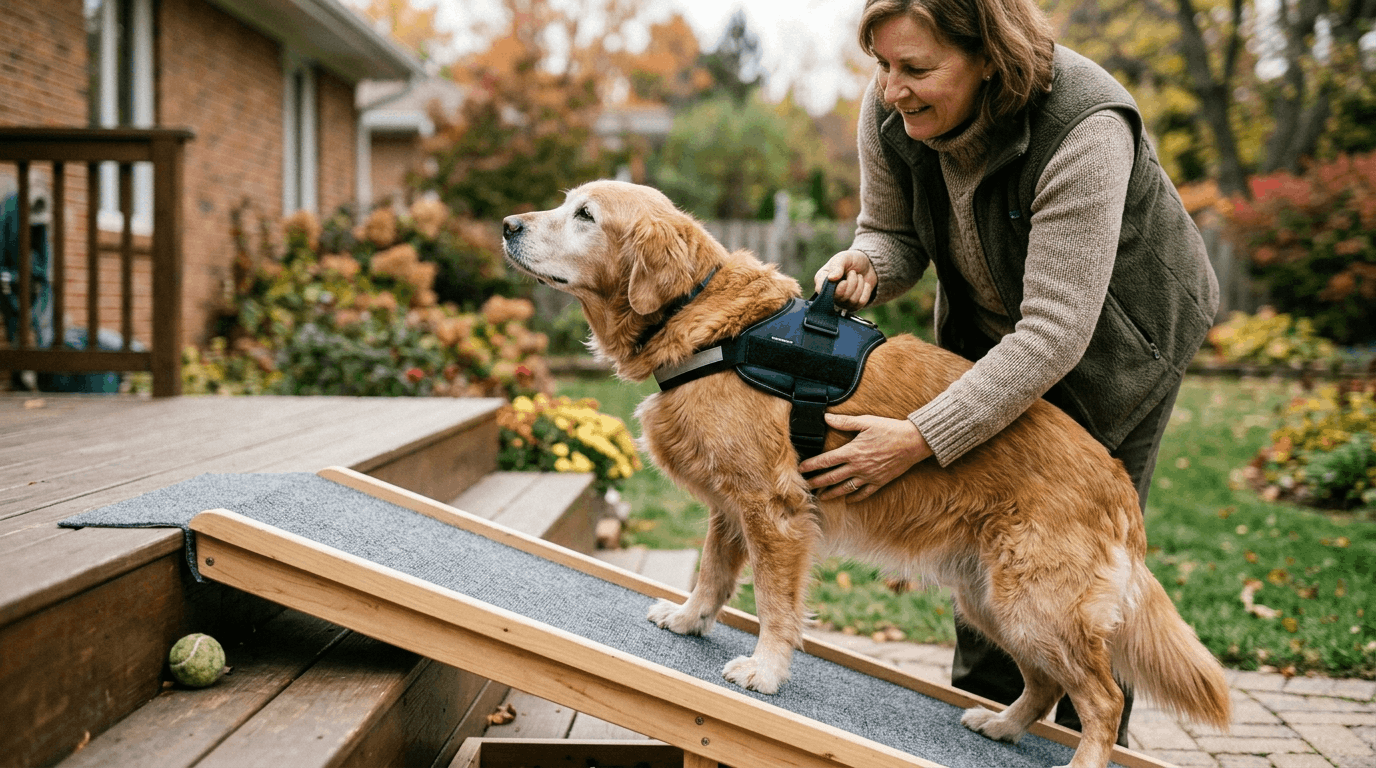
Ramps Reduce Joint Strain
Jumping becomes difficult for many senior dogs.
Cars, beds, couches, and stairs may suddenly feel challenging or unsafe. Pet ramps and stairs help reduce strain while allowing dogs to maintain independence.
Teaching dogs to use ramps early often prevents injuries and preserves confidence.
Additionally, ramps help owners avoid lifting large dogs repeatedly, which may become physically difficult over time.
Supplements May Support Joint Health
Some supplements may help maintain joint comfort.
Glucosamine, chondroitin, omega-3 fatty acids, and green-lipped mussel supplements are commonly recommended for senior dogs with arthritis or stiffness.
These ingredients may support cartilage health and reduce inflammation gradually.
However, owners should discuss supplements with veterinarians before starting new products.
Massage and Stretching Improve Flexibility
Gentle massage often helps aging dogs relax.
Light stretching and muscle massage may improve circulation while reducing stiffness and tension. Many senior dogs enjoy calm hands-on care sessions that encourage relaxation.
However, movements should remain gentle and pain-free.
Professional canine rehabilitation specialists may also teach owners safe stretching techniques for home use.
Mental Health Matters During Aging
Mobility decline affects emotional well-being too.
Dogs that suddenly lose independence may feel frustrated, anxious, or withdrawn. Maintaining routines and providing encouragement helps reduce stress significantly.
Interactive toys, scent games, and gentle training exercises keep senior dogs mentally stimulated even when physical activity decreases.
Positive attention and emotional reassurance remain incredibly important throughout the aging process.
Shorter Walks Often Work Better
Long walks may become exhausting for older dogs.
Instead of one extended outing, many senior dogs benefit from several shorter walks throughout the day. Frequent low-intensity movement supports circulation without causing excessive fatigue.
Additionally, dogs often feel more confident when allowed to move at their own pace.
Owners should pay attention to signs of discomfort or exhaustion during walks.
Cold Weather May Increase Stiffness
Many senior dogs struggle more during colder months.
Low temperatures sometimes increase joint stiffness and discomfort. Warm bedding, dog sweaters, and shorter outdoor sessions may help improve comfort during winter.
Additionally, warming up slowly before walks often reduces stiffness naturally.
Nail Care Supports Better Movement
Overgrown nails affect posture and balance.
Long nails may force dogs to walk awkwardly, increasing strain on joints and muscles. Regular nail trimming helps maintain stability and comfort.
Because aging dogs sometimes struggle with traction already, proper nail length becomes even more important.
Mobility Harnesses Provide Extra Support
Support harnesses help dogs move safely.
Some senior dogs need assistance climbing stairs, entering vehicles, or standing after rest. Mobility harnesses allow owners to support the rear legs or entire body gently.
These tools reduce fall risk while helping dogs stay active longer.
Additionally, harnesses often improve confidence for dogs struggling with weakness or instability.
Regular Veterinary Care Becomes More Important
Senior dogs benefit from frequent checkups.
Veterinarians can identify arthritis, neurological changes, muscle loss, or hidden pain that owners may overlook. Early treatment often improves long-term comfort and mobility outcomes significantly.
Pain management plans sometimes include medications, physical therapy, supplements, or lifestyle adjustments.
Monitoring health changes closely helps owners respond quickly when mobility worsens.
Avoid Overdoing Good Days
Some senior dogs appear energetic occasionally.
However, overexertion during active moments may worsen soreness afterward. Owners should balance enthusiasm with moderation carefully.
Controlled exercise usually works better than unpredictable bursts of intense activity.
Consistency Helps Dogs Feel Secure
Routine creates emotional comfort.
Senior dogs often adapt better when feeding times, walks, sleeping areas, and daily schedules remain predictable. Familiar environments help reduce stress and confusion.
Additionally, gradual adjustments usually work better than sudden lifestyle changes.
Patience Strengthens the Human-Dog Bond
Caring for aging dogs requires compassion.
Simple tasks may take longer, accidents may happen occasionally, and movement may become increasingly difficult over time. Patience and understanding help dogs feel safe despite physical limitations.
Many owners discover that supporting aging dog mobility deepens emotional bonds even further during the senior years.
Watching a beloved dog slow down can feel heartbreaking, but mobility decline does not mean happiness must disappear. Many senior dogs continue enjoying life when owners provide thoughtful support, safe environments, gentle exercise, and consistent care. Simple changes like orthopedic bedding, better traction, shorter walks, healthy weight management, and mobility aids often improve comfort significantly. Additionally, emotional reassurance and patience help senior dogs maintain confidence during physical changes. Aging naturally affects movement, yet many dogs remain loving, playful, and deeply connected to their families well into their later years. With proper support, owners can help senior dogs stay comfortable, active, and emotionally secure for as long as possible.
FAQ
1. What causes movement problems in older dogs?
Arthritis, muscle loss, joint degeneration, and nerve changes commonly affect senior dog mobility.
2. Can exercise still help senior dogs?
Yes, gentle low-impact exercise often improves strength, flexibility, and overall comfort.
3. Are orthopedic beds worth buying?
Orthopedic beds usually help reduce joint pressure and improve sleep quality for older dogs.
4. How can I help my dog walk safely indoors?
Rugs, carpet runners, and non-slip flooring help improve traction and stability indoors.
5. When should I see a veterinarian about mobility changes?
Owners should seek veterinary guidance whenever dogs show stiffness, limping, weakness, or difficulty standing comfortably.