Dog mobility home modifications can make a life-changing difference for pets struggling with movement issues. Whether your dog is aging, recovering from injury, or living with a chronic condition, simple changes at home can improve their comfort, safety, and independence. While mobility challenges can feel overwhelming at first, the right adjustments create a supportive environment where your dog can continue to thrive.
Many dogs experience mobility issues as they age, especially larger breeds. However, injuries, arthritis, and neurological conditions can affect dogs at any stage of life. Because of this, dog mobility home modifications should focus on reducing strain, preventing slips, and making everyday activities easier. Even small changes can have a significant impact on your dog’s confidence and quality of life.
Understanding Mobility Challenges In Dogs
Before making any changes, it is important to understand how mobility issues affect your dog. Some dogs struggle with joint stiffness, while others experience weakness in their legs. In many cases, dogs may hesitate to jump, climb stairs, or walk on slippery surfaces. Therefore, recognizing these signs helps guide your approach to dog mobility home modifications.
Pain and discomfort often lead to reduced activity, which can worsen the problem over time. As a result, creating a safe and accessible environment encourages movement without causing strain. Additionally, dogs with mobility challenges may become anxious or frustrated. Providing support through thoughtful home adjustments can help restore their confidence and reduce stress.
Every dog is different, so observing their behavior is essential. By understanding their specific needs, you can tailor dog mobility home modifications that address the root of the problem rather than just the symptoms.
Improving Flooring For Better Stability
One of the most important areas to address is flooring. Slippery surfaces such as tile, hardwood, or laminate can make it difficult for dogs to maintain balance. Therefore, improving traction is a key part of dog mobility home modifications.
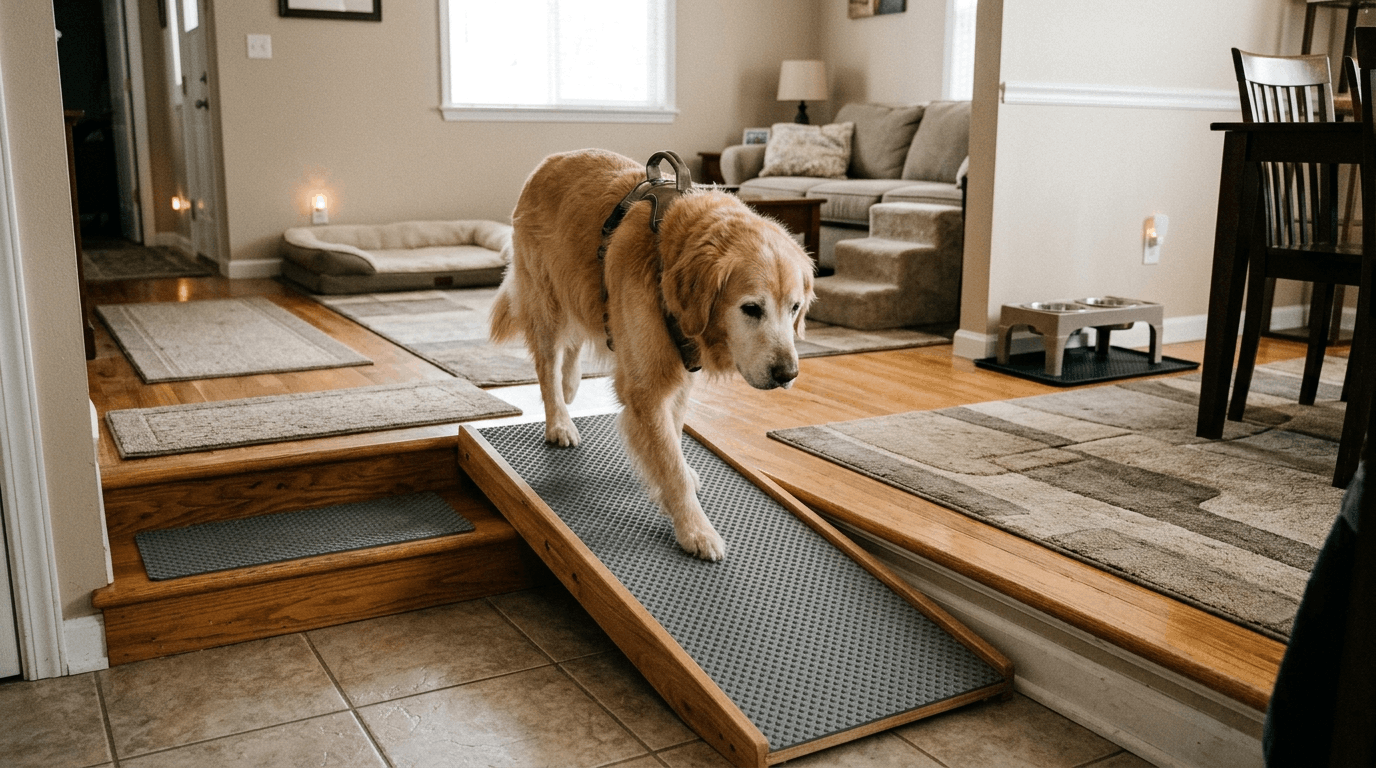
Adding non-slip rugs or mats throughout your home provides immediate support. Focus on high-traffic areas where your dog spends most of their time. Additionally, placing mats near food bowls, beds, and doorways can prevent slips during routine activities.
Carpet runners are also helpful for creating clear pathways. These paths allow your dog to move confidently from one room to another. In addition, rubber-backed mats offer extra grip and stay securely in place. By improving traction, you reduce the risk of falls and injuries while encouraging safe movement.
Making Stairs And Elevated Areas Accessible
Stairs and elevated surfaces can become major obstacles for dogs with mobility issues. Climbing stairs puts pressure on joints, which can lead to discomfort or injury. Therefore, addressing these areas is essential when planning dog mobility home modifications.
Installing ramps is one of the most effective solutions. Ramps provide a gradual incline that reduces strain on your dog’s legs. They can be used indoors for stairs or outdoors for entryways. Additionally, portable ramps offer flexibility and can be moved as needed.
For smaller height differences, pet stairs may be a suitable option. These are especially useful for accessing beds, couches, or vehicles. However, ensure that the steps are sturdy and covered with non-slip material.
Blocking access to steep or unsafe stairs may also be necessary. Using baby gates can prevent accidents and keep your dog safe. By making these adjustments, you create a more accessible environment that supports your dog’s mobility.
Creating Comfortable Resting Areas
Rest is essential for dogs with mobility challenges, as it helps reduce pain and support recovery. Therefore, comfortable resting areas are a crucial part of dog mobility home modifications.
Orthopedic dog beds are highly recommended because they provide support for joints and pressure points. These beds help distribute weight evenly, which reduces discomfort during rest. Additionally, placing beds in easily accessible locations ensures your dog does not have to struggle to lie down.
Raised beds can also be beneficial for some dogs, as they reduce the effort required to stand up. However, it is important to choose a height that suits your dog’s abilities. Soft bedding and warm blankets can further enhance comfort, especially for dogs with arthritis.
Positioning resting areas close to family activity can also provide emotional comfort. Dogs feel more secure when they are near their owners. By focusing on rest and comfort, dog mobility home modifications support both physical and emotional well-being.
Adjusting Feeding And Daily Essentials
Simple adjustments to feeding areas can make daily routines easier for your dog. For example, raised food and water bowls reduce the need to bend down, which can be painful for dogs with joint issues. Therefore, incorporating these into your dog mobility home modifications can improve comfort during meals.
Ensure that feeding stations are placed on non-slip surfaces to prevent movement. This helps your dog maintain balance while eating or drinking. Additionally, keeping essential items within easy reach reduces unnecessary movement.
Organizing your home to minimize obstacles is another important step. Clear pathways allow your dog to move freely without the risk of tripping. By simplifying daily routines, dog mobility home modifications make life easier for both you and your pet.
Supporting Movement With Assistive Tools
In some cases, additional support may be needed to help your dog move comfortably. Assistive tools can complement dog mobility home modifications and provide extra stability.
Harnesses with handles allow you to assist your dog when walking or climbing stairs. These are especially useful for dogs recovering from surgery or dealing with severe mobility issues. Additionally, mobility slings can provide temporary support for the hind legs.
Wheelchairs or carts may be recommended for dogs with more advanced conditions. These devices enable dogs to stay active and maintain independence. While they may require an adjustment period, they can significantly improve quality of life.
Combining these tools with effective dog mobility home modifications creates a comprehensive approach to care. Together, they help your dog stay active while reducing strain and discomfort.
Maintaining A Safe And Supportive Environment
Safety should always remain a top priority when making changes at home. Regularly check for hazards such as loose rugs, sharp edges, or cluttered spaces. These can pose risks for dogs with limited mobility.
Lighting is another factor to consider. Well-lit areas help your dog navigate more easily, especially at night. Motion-sensor lights can be particularly useful in hallways or near stairs.
Temperature control also plays a role in comfort. Cold environments can worsen joint stiffness, while excessive heat may cause fatigue. Therefore, maintaining a stable indoor climate supports overall well-being.
Consistency is key when implementing dog mobility home modifications. Keeping your home layout predictable helps your dog feel more confident. Over time, these changes become part of their routine, making daily life smoother and less stressful.
Conclusion
Dog mobility home modifications offer a practical and effective way to improve your dog’s quality of life. By addressing flooring, accessibility, comfort, and daily routines, you create a supportive environment that reduces strain and encourages independence. While mobility challenges can be difficult, thoughtful changes can make a significant difference.
With patience and careful planning, you can transform your home into a safe space that meets your dog’s needs. More importantly, these modifications help your dog stay active, comfortable, and confident. In the end, dog mobility home modifications are not just about convenience—they are about providing the care and support your pet deserves.
FAQ
1. What are the most important changes for dogs with mobility issues?
Improving traction, adding ramps, and providing supportive bedding are among the most effective adjustments.
2. Can small changes really make a difference?
Yes, even simple updates like non-slip mats can greatly improve safety and confidence.
3. Are ramps better than stairs for dogs?
Ramps are often better because they reduce joint strain and are easier to navigate.
4. Should I use assistive tools at home?
Assistive tools can provide additional support, especially for dogs with severe mobility challenges.
5. How do I know if my dog needs home adjustments?
Signs include difficulty walking, slipping, hesitation with stairs, or reduced activity levels.