Balancing work and dog care can feel like walking a tightrope with no safety net. You want to give your best at work, but you also want to make sure your dog feels loved, supported, and emotionally secure. Many dog owners struggle with guilt, especially those with breeds known for strong emotional bonds, like poodles, retrievers, or shepherds. If you’ve ever rushed out the door with a heavy heart, you’re not alone.
The good news? You can balance work and dog care without guilt. All it takes is a thoughtful routine, smart choices, and a deeper understanding of what your dog genuinely needs. Dogs crave connection, but they also crave structure. When you design your day intentionally, the guilt fades and confidence grows. What you’ll discover here is that this balance is more achievable than you might think. Let’s walk through it together.
Understanding Your Dog’s Real Needs
Every dog has basic emotional and physical needs, but the intensity can vary. For example, poodles are famously intelligent and deeply attached to their humans. If you have one, you know they read your moods like a book. That sensitivity often intensifies owner guilt. But here’s the truth: dogs don’t need nonstop attention; they need predictable attention.
Understanding what truly matters to your dog helps you avoid unnecessary stress. Daily structure gives them a sense of safety. Short but meaningful interactions can be more powerful than long, distracted ones. When your dog sees a consistent pattern—morning walk, evening play, bedtime routine—they relax. And when they relax, you relax.
Instead of worrying about hours spent apart, focus on the quality of the time you spend together. This approach strengthens your bond without adding pressure to your already busy day.
Creating a Consistent Daily Routine
A steady routine works wonders for dogs. They’re creatures of habit, and when they know what to expect, everything feels less chaotic. You don’t need an elaborate schedule; you just need consistency.
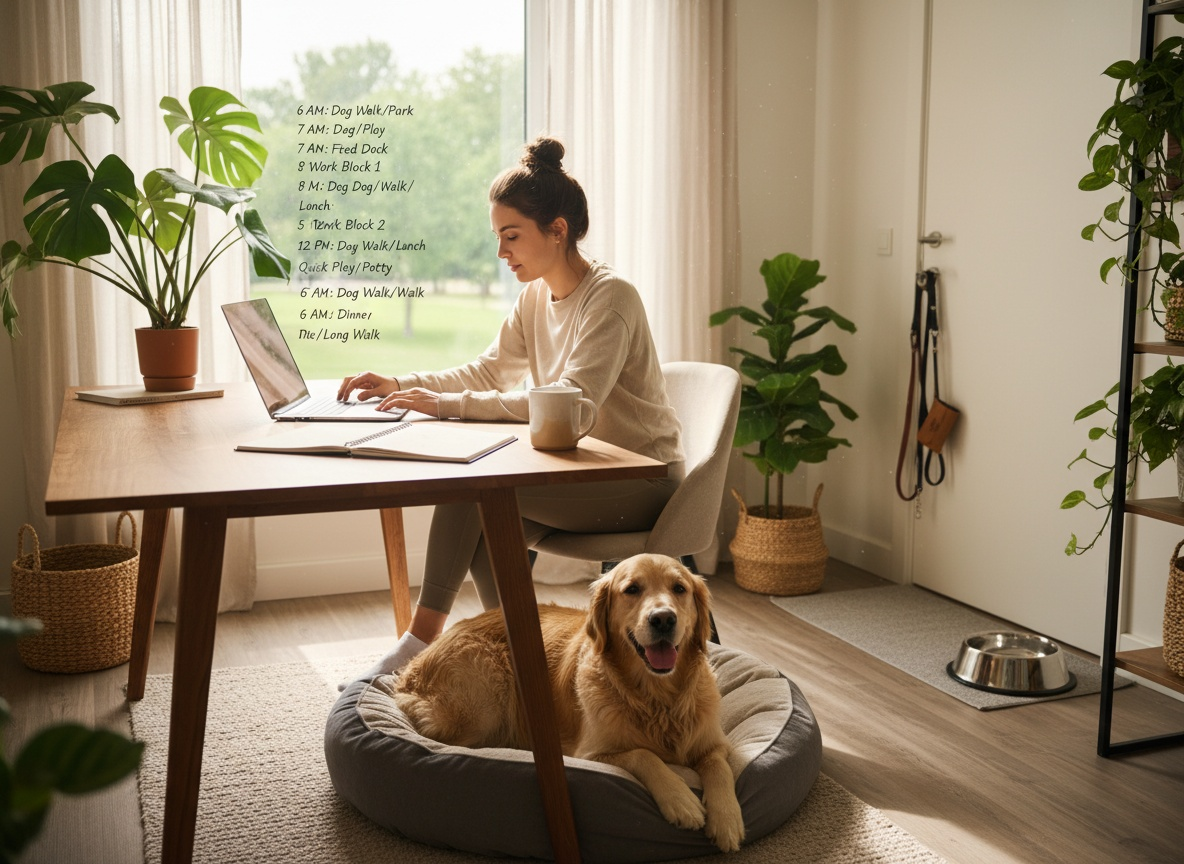
Start with mornings. Even on busy days, a short walk and five minutes of focused affection create emotional grounding for your dog. While you’re at work, maintain a predictable pattern. If you use a dog walker, aim for the same time every day. If you leave puzzle toys, choose them consistently.
Evenings can be your chance to reconnect. Maybe it’s a quick game of fetch or a slow, relaxing walk. That routine signals to your dog that no matter how busy your day gets, you will always return with intention.
Transitioning into these routines doesn’t need to be stressful. Think of it as weaving small moments of connection throughout the day, creating a safety net of reassurance your dog can rely on.
Smart Ways to Keep Your Dog Engaged While You Work
Dogs with high intelligence or energy, such as poodles, thrive when their minds stay busy. Mental stimulation reduces anxiety, improves confidence, and keeps boredom-based behaviors at bay.
Here’s where smart engagement comes in. Rotate puzzle toys, hide treats for scent-tracking games, or use interactive feeders to turn mealtimes into enrichment sessions. These activities extend beyond simple entertainment—they create purpose. Your dog gets the satisfaction of working through challenges, much like you do in your own day.
Another great option is background audio. Calming playlists or dog-friendly TV channels can provide a comforting sense of company. Many owners also use treat-dispensing cameras to check in. These tools reduce guilt while helping you stay connected from afar.
Even small touches matter. A poodle curled up with a familiar blanket carrying your scent may feel secure all afternoon. It’s these tiny details that make the biggest difference.
Using Breaks and Transitions to Strengthen Your Bond
If you work from home, balancing your schedule is both easier and trickier. Your dog sees you, but that doesn’t always mean you’re available. This is where transition moments play an important role.
Use breaks wisely. A quick cuddle session, a short stretch together, or a trip to the backyard can instantly recharge both of you. These moments help your dog feel included without demanding full-time attention.
If you work outside the home, use arrival and departure rituals strategically. A calm goodbye reduces anxiety, while a warm—but not overly hyped—hello creates emotional stability. Those transitions help shape your dog’s behavior throughout the day. They learn when it’s time to settle and when it’s time to reconnect.
Building a Support System to Reduce Guilt
You don’t have to do everything alone. Building a support system gives your dog additional sources of trust and comfort. Even highly attached breeds, like poodles, benefit from multiple positive relationships.
A dog walker or trusted sitter can break up the day. A neighbor can become a familiar face during quick check-ins. Doggy daycare can fill social needs, especially for energetic or playful dogs. With the right people in place, your dog gains enrichment, and you gain peace of mind.
You might also find support in simple tools: automated feeders, water fountains, cooling mats, or outdoor runs. When used thoughtfully, these items help create a safe, consistent environment for your dog even when you aren’t home.
Rather than feeling guilty, think of it as expanding your dog’s social circle and enriching their daily life.
Letting Go of the Guilt and Focusing on What Matters
Guilt can creep in when you feel torn between responsibilities. But remember this: dogs are incredibly adaptable. They don’t measure your love in hours; they measure it in presence. When you’re with them, be fully with them. When you’re working, trust that your routine, preparation, and support system are enough.
Shift your mindset from “I’m not doing enough” to “I’m doing what works.” This shift frees you from needless emotional weight. It also helps you make better, more intentional decisions for your dog and yourself.
The secret to balancing work and dog care without guilt isn’t about perfection. It’s about consistency, mindfulness, and compassion—for your dog, and for yourself.
Conclusion
Balancing work and dog care without guilt becomes easier when you understand what your dog genuinely needs, create consistent routines, use effective enrichment, and build a supportive environment. Your dog doesn’t need perfection—they need reliability, presence, and connection. When you focus on those essentials, the guilt fades and confidence grows. You have the power to shape a life where both your career and your dog can thrive, side by side.
FAQ
1. How do I know if my dog is happy while I’m at work?
A relaxed body, normal appetite, and calm behavior when you return are good indicators your dog feels secure and content throughout the day.
2. How long can I leave my dog alone during the workday?
Most adult dogs can stay alone for 6–8 hours with proper breaks, enrichment, and a consistent routine.
3. Do certain breeds struggle more when left alone?
Yes. Breeds like poodles, shepherds, and spaniels often bond deeply with their humans and may need extra mental stimulation.
4. Will hiring a dog walker reduce separation anxiety?
A walker can help break up the day and create comforting structure, which often helps ease anxiety over time.
5. What’s the best way to reduce guilt about leaving my dog?
Create a predictable routine, enrich your dog’s environment, and focus on quality time when you’re home.