Finding the right calming dog products can feel overwhelming when your dog pants, paces, barks, hides, shakes, or struggles to settle. Many owners want a quick fix, especially when anxiety affects daily life. However, the best solution usually comes from matching the product to your dog’s specific stress trigger. A dog afraid of thunder may need different support than a dog with separation anxiety, travel stress, or general nervous energy.
Dogs can become anxious for many reasons. Some react to loud noises, while others feel stressed by visitors, car rides, grooming, vet visits, or being left alone. In addition, rescue dogs or highly sensitive breeds may need extra reassurance as they adjust to their environment. Because anxiety looks different from dog to dog, no single product works for every pet. Still, several options can genuinely help when used correctly and consistently.
The goal is not to sedate your dog or cover up a serious problem. Instead, the best calming tools help your dog feel safer, more grounded, and better able to cope. Some products create comfort through pressure, scent, chewing, sound, or routine. Others support relaxation through ingredients that may promote calm behavior. When you combine the right product with patience and training, your dog has a better chance of feeling secure.
Why Dogs Need Calming Support
Anxiety is more than bad behavior. A dog that chews the door, whines in the crate, barks at every sound, or hides during storms may be trying to manage fear. Therefore, it helps to look at the emotion behind the action. Once you understand what your dog feels, you can choose calming dog products that support the real problem instead of just reacting to the symptom.
Some dogs show obvious signs of stress. They may tremble, drool, pace, tuck their tail, or refuse food. Other dogs show anxiety in quieter ways. For example, they may lick their paws, follow you from room to room, avoid certain spaces, or become unusually clingy. Because these signs can also point to pain or illness, sudden behavior changes should always be taken seriously.
Calming tools work best when they fit into a predictable routine. Dogs feel more secure when they know what to expect. For example, using a calming bed only during storms may help, but using it daily as a safe resting place may work even better. Likewise, a chew toy may calm a dog during alone time if the dog already has a positive association with it.
It is also important to set fair expectations. Some products help quickly, while others need repeated use. A pressure wrap may calm one dog during fireworks, yet another dog may dislike wearing it. A calming chew may help mild stress, but it may not be enough for severe panic. As a result, you may need to test options carefully and observe your dog’s response.
Before buying several calming dog products, think about your dog’s main trigger. Does your dog panic when alone? Does noise cause the problem? Is your dog restless at night? Does travel create stress? This simple question helps narrow the search and saves money. More importantly, it helps your dog get support that actually matches the situation.
Comfort Products That Help Dogs Feel Safe
Comfort-based calming products are often a great starting point because they support your dog without relying on supplements. These items focus on security, pressure, scent, or a soothing resting space. For many dogs, that physical comfort can make stressful moments easier.
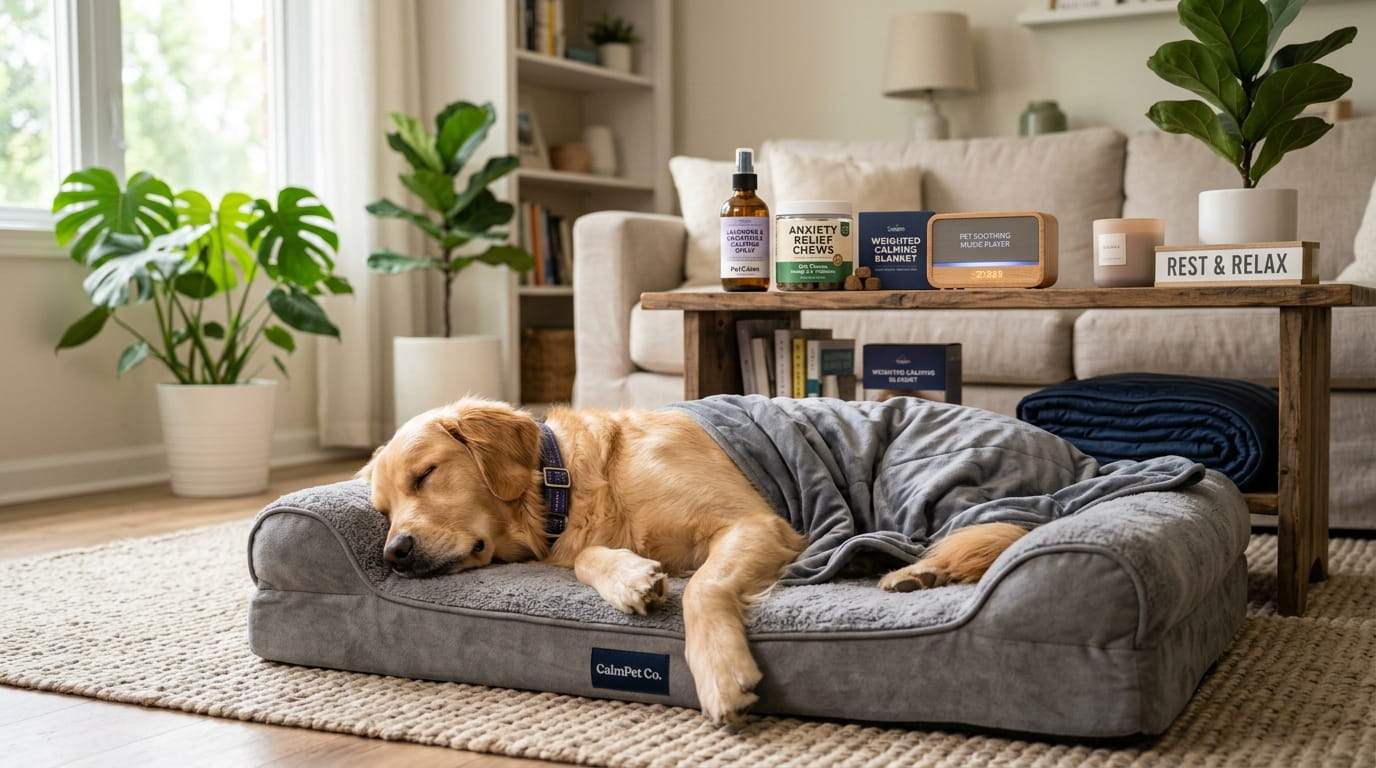
Calming beds are among the most popular options. These beds often have raised edges, soft materials, and a nesting shape that lets dogs curl up. Many anxious dogs enjoy feeling surrounded because it creates a cozy boundary. However, size matters. A bed should be large enough for your dog to stretch but snug enough to feel secure. If the bed is too flat or too large, it may not offer the same comfort.
Crate covers and den-style spaces can also help. Some dogs relax when they have a quiet place away from household noise. A covered crate, soft mat, or dedicated corner can become a safe zone. However, the crate should never feel like punishment. Instead, pair it with treats, calm praise, and relaxed time. Over time, your dog may choose that space when they need a break.
Pressure wraps are another useful option. These products apply gentle, steady pressure around the dog’s body. Some owners use them during storms, fireworks, travel, or vet visits. Although they do not work for every dog, they can help dogs that respond well to being held or swaddled. For best results, introduce the wrap during calm moments first. That way, your dog does not only associate it with scary events.
Pheromone diffusers and sprays may also support relaxation. These products copy comforting chemical signals that can help some dogs feel safer. They may be useful during moves, new routines, crate training, or stressful household changes. However, they usually work best as part of a wider calming plan. They are not magic, but they can make the environment feel more reassuring.
For dogs that struggle with noise, sound machines or calming music can help soften sudden sounds. White noise may reduce the impact of traffic, neighbors, thunder, or hallway noise in apartments. In addition, calm background sound can create a more predictable environment. This can be helpful for dogs that startle easily or react to every small noise.
Comfort items should feel familiar before stressful events happen. Therefore, do not wait until fireworks night to introduce a new bed, wrap, or diffuser. Let your dog explore the product during normal days. Then, when stress appears, the product already feels safe. This approach can make calming dog products more effective because they become part of your dog’s normal comfort routine.
Chews, Treats, and Supplements for Calm Behavior
Calming chews and supplements are easy to use, which is why many owners try them first. These products often include ingredients such as L-theanine, casein, tryptophan, chamomile, valerian root, melatonin, or other calming blends. Some dogs respond well to them, especially during mild stress. However, results vary, and quality can differ between brands.
The biggest mistake is expecting a chew to fix severe anxiety by itself. A supplement may help take the edge off, but it cannot teach your dog to feel safe alone or stop fearing storms overnight. Therefore, calming treats work best when paired with training, routine, and environmental support. For example, a chew before a car ride may help, but gradual car training can make the experience less frightening over time.
Timing also matters. Many calming chews need time to take effect. If your dog already feels panicked, the product may not work as well. For predictable events, such as grooming, guests, travel, or fireworks, give the product according to label directions before stress begins. However, always follow dosage instructions carefully. More is not better, and giving too much can cause side effects.
Ingredients deserve close attention. Some calming products contain herbs or compounds that may not suit every dog. Puppies, seniors, pregnant dogs, dogs on medication, and dogs with liver, kidney, heart, or seizure issues need extra caution. Because of that, it is smart to ask your veterinarian before using supplements, especially if your dog has health concerns.
CBD products are also common in the calming category. Many owners are curious about them, but quality, labeling, and effects can vary widely. In addition, CBD may interact with medications or cause unwanted effects in some pets. So, speak with a veterinarian before trying it. Choose pet-specific products only, and avoid anything with unsafe additives.
Some dogs benefit more from long-lasting chews than calming supplements. Chewing can be naturally soothing because it gives dogs a job and helps release tension. Durable chew toys, lick mats, stuffed food toys, and safe dental chews can keep your dog focused during stressful moments. For example, a frozen lick mat may help during grooming, nail trims, or crate time.
Food-based enrichment can be especially helpful for separation-related stress. A dog that receives a stuffed toy only when you leave may build a positive routine around alone time. However, this works best for mild cases. If your dog panics, refuses food, or tries to escape, you may need professional help. In those cases, calming dog products should support a behavior plan, not replace one.
Training Tools That Support Relaxation
The most effective calming solutions often include training. Products can reduce stress, but training changes how your dog feels about a trigger. This matters because anxiety often grows when dogs repeatedly face situations they cannot handle. With gentle training, you can help your dog build confidence step by step.
Puzzle toys are excellent tools for mental focus. They encourage dogs to sniff, lick, paw, and problem-solve. This kind of activity can reduce boredom and help active dogs settle. A tired mind often leads to calmer behavior, especially for dogs that become restless indoors. However, puzzles should match your dog’s skill level. If they are too hard, frustration may increase.
Lick mats can also support relaxation. Licking is repetitive and soothing for many dogs. You can spread dog-safe soft food on the mat and use it during baths, grooming, crate practice, or quiet time. For longer use, freeze the mat before offering it. This gives your dog a calm activity that lasts longer and encourages stillness.
Snuffle mats work well for dogs that love using their nose. These mats hide small treats or kibble in fabric folds, which encourages slow searching. Sniffing can help some dogs decompress after excitement or stress. In addition, it provides gentle mental exercise without intense physical activity. This can be useful for dogs recovering from injury or dogs that need calm indoor enrichment.
Training mats or place beds can teach dogs where to relax. Over time, your dog learns that the mat means calm behavior, rewards, and safety. This can help during meals, visitors, work calls, or busy household moments. Although it takes practice, the payoff can be strong. Your dog gains a clear job instead of guessing what to do.
For leash-reactive dogs, calming support may include better walking gear. A well-fitted harness can reduce strain and improve control. However, equipment should not rely on pain or fear. Avoid tools that punish anxiety, because they may make stress worse. Instead, use comfortable gear and reward calm choices. This helps your dog feel safer around triggers.
Training-based calming dog products are most useful when they build positive habits. A puzzle, mat, or chew is not just a distraction. It can become part of a larger routine that teaches your dog how to settle. When your dog knows what to do, stressful moments often become easier to manage.
Choosing the Best Option for Your Dog
The best product depends on the type and intensity of your dog’s anxiety. For mild stress, a calming bed, lick mat, chew toy, or pheromone diffuser may be enough. For predictable events, a pressure wrap or calming chew may help.
Start with your dog’s trigger and choose one or two products at a time. This helps you see what actually works. If you add five new things in one week, you may not know which product helped. Also, introduce each item during calm periods. A product that appears only during scary moments may become part of the fear pattern.
Watch your dog’s body language. Relaxed signs may include softer eyes, normal breathing, loose posture, resting, taking treats, or choosing to lie down. Stress signs may include yawning, lip licking, panting, pacing, shaking, hiding, drooling, or trying to escape. These clues tell you whether the product helps or adds pressure.
Safety should always come first. Choose the right size for beds, wraps, toys, and chews. Supervise new chew toys until you know how your dog uses them. Avoid products with small parts if your dog destroys toys quickly. Also, check supplement labels carefully and avoid combining several calming supplements unless your veterinarian approves.
Severe anxiety needs more than store-bought help. If your dog hurts themselves, damages doors, cannot be left alone, refuses food during stress, or panics often, contact your veterinarian or a qualified behavior professional. In some cases, prescription support may be the kindest option. This does not mean you failed. It means your dog needs a deeper plan.
It also helps to support your dog’s daily lifestyle. Regular exercise, predictable meals, enough sleep, and calm routines can reduce stress. However, more calm routines can reduce stress. However, more activity is not always the answer. Some dogs become more anxious when overstimulated. Balance matters. Gentle walks, sniffing time, quiet enrichment, and rest can work better than constant excitement.
When comparing calming dog products, avoid claims that sound too perfect. No product can guarantee instant peace for every dog. Real progress usually comes from consistency. You may see small signs first, such as shorter barking, faster recovery, or better sleep. Those small improvements matter because they show your dog is learning to cope.
Conclusion
The best calming dog products are the ones that match your dog’s needs, feel safe to use, and fit into a consistent routine. Some dogs respond beautifully to cozy beds, pressure wraps, pheromone diffusers, lick mats, or chew toys. Others may benefit from calming supplements when used carefully. However, the most reliable results often come from combining products with training, patience, and a better understanding of your dog’s triggers.
Your dog is not trying to be difficult when they act anxious. They are communicating discomfort, fear, or uncertainty. Therefore, your job is to notice the pattern and offer support that helps them feel secure. Start simple, watch their response, and make changes slowly. If anxiety feels intense or unsafe, ask your veterinarian for guidance.
With the right approach, calming dog products can make daily life easier for both of you. They can help your dog settle during storms, relax at home, travel with less stress, and recover more quickly after excitement. Most importantly, they can become part of a calmer, kinder routine that helps your dog feel protected and understood.
FAQ
- What Type of Calming Product Works Best for Dogs?
The best option depends on your dog’s trigger. Some dogs relax with a soft bed or pressure wrap, while others do better with chew toys, lick mats, sound machines, or supplements. Start with the most obvious stress trigger and choose a product that supports that situation.
- Are Calming Treats Safe for Every Dog?
Not always. Many dogs tolerate calming treats well, but some ingredients may not suit puppies, seniors, pregnant dogs, or dogs with medical conditions. Also, supplements can interact with medications. Ask your veterinarian before using them if your dog has health concerns.
- Can a Calming Bed Help With Anxiety?
Yes, a calming bed may help dogs that enjoy curling up, nesting, or resting against soft raised edges. However, it may not solve severe anxiety alone. It works best when used as a familiar safe space every day, not only during stressful events.
- How Long Do Calming Chews Take to Work?
Timing depends on the product and your dog’s body. Many chews need to be given before the stressful event begins. Always follow the label directions, and do not increase the amount unless your veterinarian recommends it.
- When Should I Get Professional Help for My Anxious Dog?
Get help if your dog panics, injures themselves, destroys doors or crates, refuses food during stress, or cannot recover after triggers. A veterinarian or qualified behavior expert can help create a safer plan for serious anxiety.