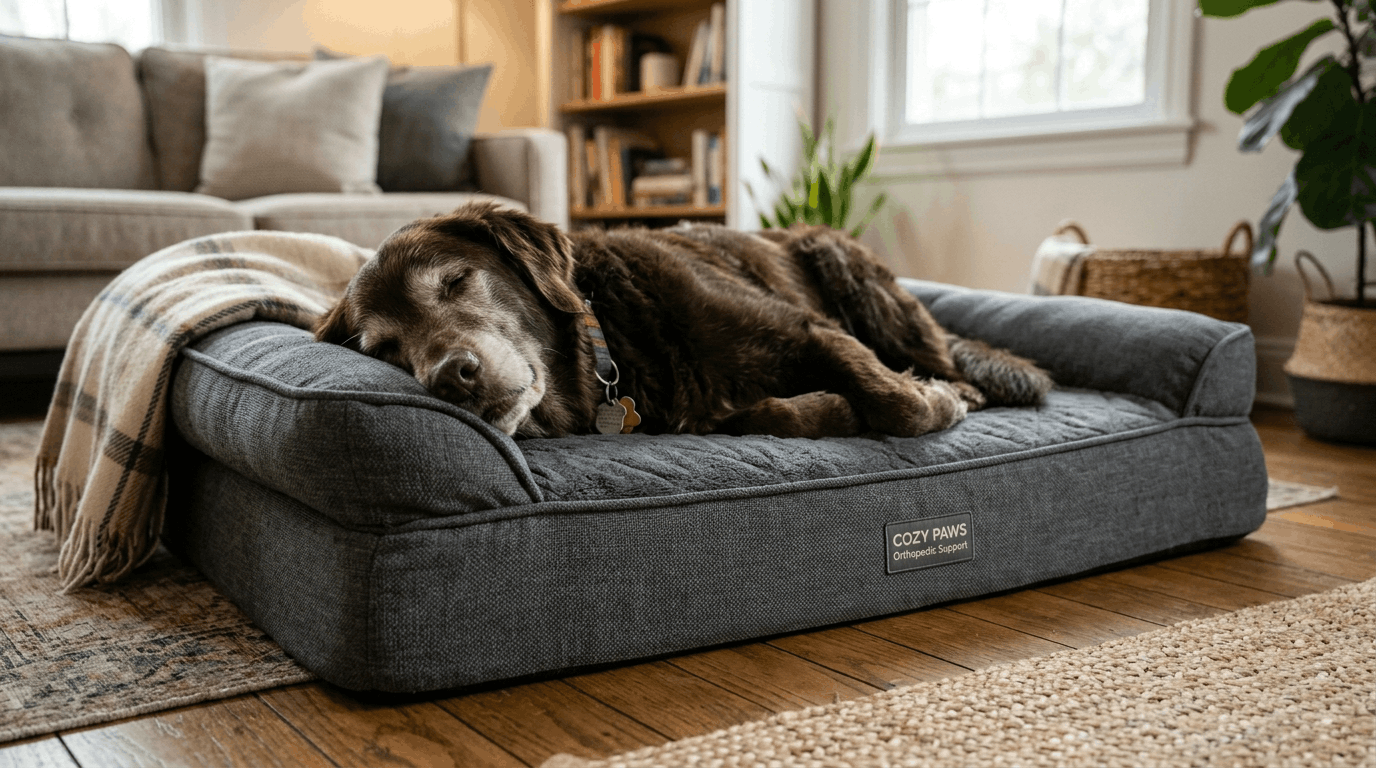
Dogs with arthritis often struggle silently with stiffness, sore joints, reduced mobility, and restless sleep. Many owners notice their dogs moving slower, hesitating before standing, or avoiding hard surfaces completely. While medication and veterinary care help significantly, comfortable sleep support also plays a major role in pain management. Orthopedic dog beds provide cushioning, pressure relief, and joint support that can dramatically improve comfort for aging or arthritic dogs.
Many standard beds flatten quickly and fail to support heavier body weight properly. As a result, sore joints press directly against hard flooring during rest. Over time, poor sleep surfaces may worsen discomfort and stiffness. However, quality orthopedic dog beds help distribute body weight evenly while reducing pressure on sensitive areas.
A supportive bed does more than improve sleep. It may also improve mobility, energy levels, mood, and overall quality of life for dogs dealing with arthritis or joint pain.
Why Arthritis Makes Sleep More Difficult
Arthritis causes chronic inflammation inside the joints.
As cartilage breaks down, movement becomes painful and stiffness increases. Older dogs often struggle to find comfortable sleeping positions because hard surfaces place pressure directly on painful joints.
Additionally, arthritic dogs frequently wake up stiff after resting too long on unsupportive bedding. Rising from the floor becomes increasingly difficult as inflammation worsens.
Orthopedic dog beds help minimize these problems by cushioning pressure points while supporting the spine, hips, shoulders, and elbows more effectively.
How Orthopedic Beds Support Joint Health
Supportive beds work differently than standard dog cushions.
High-quality orthopedic foam molds gently around the body instead of collapsing underneath it. This design helps distribute weight more evenly across the surface.
Because pressure decreases around sore joints, dogs often rest more comfortably and move more easily after waking up.
Orthopedic dog beds also reduce strain on aging muscles and connective tissues during sleep. Better rest may support improved recovery and reduced stiffness overall.
Memory Foam Provides Better Pressure Relief
Memory foam remains one of the best materials for arthritic dogs.
Unlike traditional stuffing, memory foam responds to body heat and weight gradually. It contours around joints while maintaining consistent support underneath the dog.
Thicker foam generally performs better for large or heavy dogs because it prevents bottoming out against the floor.
Many premium orthopedic dog beds use high-density foam layers specifically designed for long-term durability and pressure relief.
Older Dogs Need More Cushioning
Senior dogs naturally lose muscle mass with age.
As muscle protection decreases around the joints, pressure points become more sensitive during rest. Thin beds or hard floors may increase discomfort significantly.
Extra cushioning helps reduce direct pressure on hips, elbows, knees, and shoulders. Soft yet supportive surfaces often improve sleep quality noticeably in aging dogs.
Orthopedic dog beds become especially important for large breeds because their body weight places more strain on arthritic joints.
Raised Edges Can Improve Comfort
Some dogs feel more secure with bolstered bed edges.
Raised sides provide head and neck support while encouraging comfortable sleeping positions. Many arthritic dogs enjoy leaning against supportive edges while resting.
Additionally, bolsters may help dogs feel safer and more relaxed emotionally.
However, beds with extremely high sides may become difficult for severely arthritic dogs to enter comfortably. Low-entry designs usually work best for mobility issues.
Bed Thickness Matters More Than Many Owners Realize
Thin beds rarely provide adequate arthritis support.
A supportive orthopedic bed should contain enough foam depth to protect joints fully from hard flooring underneath. Larger dogs usually require thicker foam than smaller breeds.
Many orthopedic dog beds designed for arthritis include foam layers between four and seven inches thick.
Proper thickness helps maintain support long-term without flattening too quickly.
Cooling Features Help Arthritic Dogs
Many arthritic dogs feel worse in warm conditions.
Heat may increase inflammation and discomfort, especially in older dogs with thick coats or limited mobility. Cooling gel foam or breathable fabrics help regulate body temperature more effectively during sleep.
Additionally, cooler sleeping surfaces often improve sleep quality during warmer months.
Orthopedic dog beds with cooling materials may benefit dogs prone to overheating or inflammation flare-ups.
Waterproof Covers Protect The Foam
Accidents become more common as dogs age.
Waterproof liners protect foam from urine, drool, moisture, and spills while extending bed lifespan significantly. Removable washable covers also simplify cleaning routines.
Clean bedding helps reduce odors, bacteria, allergens, and skin irritation over time.
Because arthritic dogs spend more time resting, hygiene becomes especially important.
Non-Slip Bottoms Improve Safety
Slippery beds sometimes create additional mobility problems.
Dogs with arthritis already struggle to stabilize themselves when standing or lying down. Beds that slide across hardwood or tile floors may increase injury risk.
Non-slip bottoms help keep orthopedic dog beds secure during movement. Stable surfaces improve confidence while reducing strain on sore joints.
Location Matters Just As Much As The Bed
Even the best bed placement affects comfort.
Position orthopedic beds in quiet, draft-free areas where dogs feel safe and relaxed. Avoid placing beds directly beside cold floors, air vents, or busy walkways whenever possible.
Older arthritic dogs often prefer calm spaces with easy access to water, family members, and outdoor areas.
Comfort improves significantly when resting spaces feel predictable and peaceful.
Large Dogs Need Extra Support
Large breeds often experience severe arthritis earlier in life.
Their heavier body weight increases joint pressure significantly during movement and rest. Thin or low-quality beds usually flatten quickly underneath them.
High-density orthopedic dog beds designed specifically for large breeds provide better long-term support and durability.
Choosing the correct size also matters greatly. Dogs should stretch comfortably without hanging off the edges.
Watch For Signs Your Dog Needs Better Support
Many owners overlook early discomfort signs.
Dogs struggling with poor bedding may circle repeatedly before lying down, hesitate to stand, avoid sleeping areas, or wake frequently during the night. Some dogs also become more irritable due to chronic discomfort and poor sleep quality.
If your dog seems stiff after resting or avoids hard floors completely, supportive bedding may help greatly.
Orthopedic dog beds often improve comfort surprisingly quickly once dogs adjust to them.
Joint Support Helps Prevent Pressure Sores
Dogs with limited mobility sometimes develop pressure sores.
Hard surfaces place constant pressure on elbows, hips, and bony areas during prolonged resting periods. Over time, skin irritation and sores may develop.
Supportive foam reduces concentrated pressure while improving circulation around sensitive areas.
This protection becomes especially important for senior dogs spending long periods resting daily.
Easy Access Designs Reduce Strain
Some beds become difficult for arthritic dogs to use.
High edges or unstable surfaces may discourage dogs from entering comfortably. Low-profile orthopedic beds often work best for dogs with severe stiffness or weakness.
Easy access reduces unnecessary strain during transitions between standing and resting.
Supportive Sleep Improves Daily Mobility
Better sleep often improves movement throughout the day.
Dogs that rest comfortably usually wake with less stiffness and greater willingness to move. While orthopedic beds do not cure arthritis, they often reduce secondary discomfort caused by poor sleep support.
Many owners notice improved energy, easier standing, and more relaxed behavior after upgrading bedding.
Orthopedic dog beds support overall comfort by reducing overnight joint stress consistently.
Durability Saves Money Long-Term
Cheap beds often flatten within months.
Once foam collapses, joint support disappears quickly. Investing in durable orthopedic foam usually provides better long-term value because the bed maintains its structure much longer.
High-quality orthopedic dog beds may initially cost more, but they often outlast multiple cheaper alternatives.
Washable Covers Improve Hygiene
Arthritic dogs sometimes drool, shed heavily, or experience accidents.
Removable machine-washable covers simplify maintenance greatly. Clean bedding helps reduce allergens, bacteria, odors, and skin irritation over time.
Frequent washing also keeps resting spaces more comfortable and sanitary.
Dogs Need Time To Adjust
Some dogs immediately love new beds while others adjust gradually.
Place familiar blankets or favorite toys on the bed to encourage comfort. Additionally, reward calm resting behavior positively during the transition period.
Patience usually helps dogs accept supportive bedding naturally.
Pair Beds With Other Arthritis Support Strategies
Bedding works best alongside comprehensive arthritis management.
Weight control, moderate exercise, veterinary care, joint supplements, massage, physical therapy, and anti-inflammatory support may all improve comfort together.
Orthopedic dog beds become one important piece of a larger joint care routine.
Preventing Future Joint Stress Matters Too
Supportive beds help younger dogs as well.
Large breeds, highly active dogs, and breeds prone to joint issues may benefit from orthopedic support before severe arthritis develops. Preventive support may reduce long-term strain on joints gradually over time.
Comfortable sleep surfaces help protect the body during years of repeated movement and aging.
Choosing The Right Size Is Essential
Beds that are too small reduce support effectiveness.
Dogs should stretch fully without body parts hanging off the edges. Larger sleeping surfaces also allow dogs to reposition comfortably throughout the night.
Measure your dog while sleeping naturally before purchasing new bedding.
Orthopedic dog beds work best when the entire body receives consistent support.
Arthritis affects nearly every aspect of a dog’s daily comfort, including sleep quality, mobility, mood, and energy levels. Supportive bedding cannot eliminate arthritis completely, yet it can dramatically reduce pressure, stiffness, and discomfort during rest. Orthopedic dog beds provide cushioning and joint support that many aging dogs desperately need as they grow older. Choosing the right materials, thickness, size, and design often makes a noticeable difference in overall comfort and quality of life. Most importantly, dogs that sleep comfortably usually move more confidently and enjoy daily life more fully. Investing in proper joint support is one of the most practical ways owners can improve long-term comfort for arthritic dogs.
FAQ
1. Are orthopedic beds really better for arthritic dogs?
Yes, supportive foam helps reduce pressure on painful joints during rest.
2. What type of foam works best for joint support?
High-density memory foam usually provides the best pressure relief and durability.
3. How thick should supportive dog beds be?
Larger dogs generally benefit from thicker foam between four and seven inches deep.
4. Can orthopedic beds help younger dogs too?
Yes, supportive bedding may help protect joints before severe arthritis develops.
5. How often should dog bed covers be washed?
Most covers should be cleaned weekly or whenever they become dirty or damp.