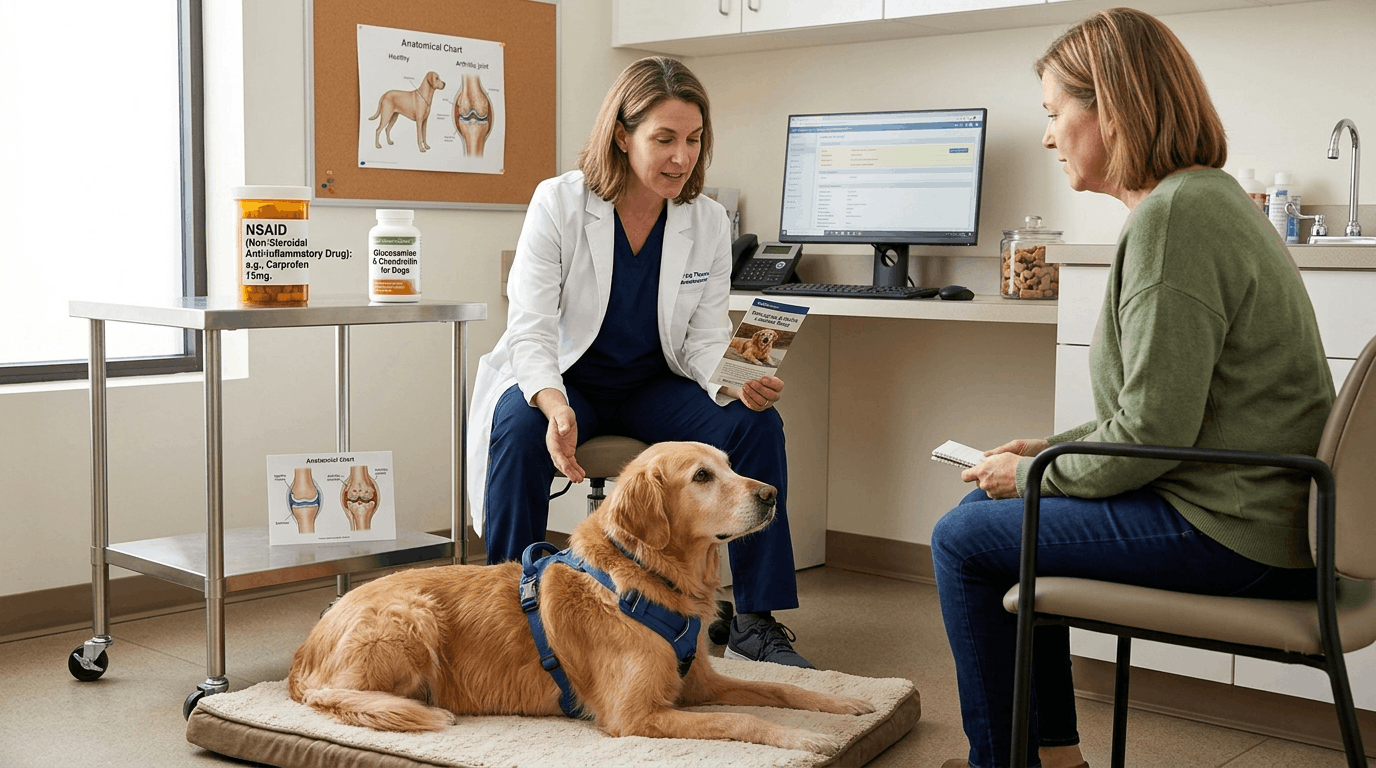
Arthritis is one of the most common health problems affecting older dogs. As joints become inflamed and cartilage wears down, many dogs begin to struggle with stiffness, discomfort, and reduced mobility. Fortunately, prescription medications for dog arthritis can help manage pain and improve daily movement when used correctly. Modern veterinary medicine now offers several treatment options designed to support long-term comfort and mobility in dogs dealing with joint disease.
Many dog owners first notice subtle changes in behavior before receiving a diagnosis. A dog may hesitate before climbing stairs, move more slowly after resting, or avoid jumping onto furniture. In some cases, dogs become less active during walks or seem less enthusiastic about playtime. Because arthritis develops gradually, symptoms often worsen slowly over time.
Joint pain affects more than mobility alone. Chronic discomfort can influence sleep quality, mood, appetite, and emotional well-being. Consequently, untreated arthritis may significantly reduce a dog’s overall quality of life. That is why many veterinarians recommend early intervention whenever signs of joint discomfort appear.
Prescription medications for dog arthritis are often part of a larger treatment plan that may also include weight management, physical therapy, supplements, and controlled exercise. Together, these strategies help reduce inflammation while improving comfort and movement.
Understanding How Arthritis Develops
Arthritis occurs when cartilage inside the joints begins breaking down over time. Cartilage normally acts as a protective cushion between bones. However, as that cushioning weakens, bones begin rubbing together more directly. This friction causes inflammation, stiffness, and pain.
Aging naturally increases arthritis risk, although several other factors also contribute. Previous injuries, obesity, genetics, and breed size all influence joint health. Larger breeds often experience arthritis earlier because their joints endure greater physical stress throughout life.
Prescription medications for dog arthritis aim to reduce inflammation, control pain signals, and improve joint function. Some medications work quickly to relieve discomfort, while others focus more on long-term management.
Veterinarians usually diagnose arthritis through physical examinations, mobility evaluations, and imaging tests such as X-rays. Early diagnosis often leads to better long-term outcomes because treatment can begin before severe joint damage develops.
Many owners mistakenly believe slowing down is simply a normal part of aging. While aging affects activity levels naturally, significant stiffness or pain should never be ignored.
Nonsteroidal Anti-Inflammatory Drugs
Nonsteroidal anti-inflammatory drugs, commonly called NSAIDs, remain among the most frequently prescribed treatments for arthritis in dogs. These medications help reduce inflammation while relieving pain inside affected joints.
Prescription medications for dog arthritis often begin with NSAIDs because they usually provide noticeable improvement relatively quickly. Many dogs regain mobility and energy within days after starting treatment.
Common veterinary NSAIDs include carprofen, meloxicam, deracoxib, and firocoxib. These medications are specifically formulated for canine use and should only be administered under veterinary supervision.
Although NSAIDs can be highly effective, monitoring remains important. Long-term use may affect liver, kidney, or digestive health in some dogs. Therefore, veterinarians often recommend periodic blood testing to monitor organ function during treatment.
Owners should also watch for side effects such as vomiting, diarrhea, reduced appetite, or unusual lethargy. Prompt veterinary attention helps prevent complications if side effects appear.
Pain Control Beyond NSAIDs
Some dogs require additional pain relief beyond standard anti-inflammatory medications. In these situations, veterinarians may combine multiple therapies to improve comfort more effectively.
Prescription medications for dog arthritis sometimes include nerve pain medications such as gabapentin. This medication helps reduce pain signals traveling through the nervous system and may improve comfort in dogs with chronic joint pain.
Amantadine is another medication occasionally used alongside NSAIDs. It works differently from traditional pain relievers and may help improve pain control in difficult cases.
Muscle relaxants may also benefit dogs experiencing muscle tension due to chronic discomfort. When joints become painful, surrounding muscles often tighten as the body attempts to compensate for instability.
Combination therapy often allows lower doses of individual medications, which may help reduce side effect risks while improving overall pain management.
Monoclonal Antibody Treatments
One of the newer advances in veterinary medicine involves monoclonal antibody injections designed specifically for arthritis pain. These treatments target nerve growth factor, which plays a major role in transmitting pain signals associated with osteoarthritis.
Prescription medications for dog arthritis now include injectable therapies such as bedinvetmab, which many veterinarians use for chronic arthritis management. These injections often provide pain relief for several weeks at a time.
Many owners appreciate this option because injections usually require less frequent dosing compared to daily oral medications. Additionally, monoclonal antibody treatments may carry fewer digestive side effects than some traditional drugs.
Dogs receiving these injections often show improved movement, greater willingness to exercise, and increased comfort during daily activities. However, results vary between individuals.
Veterinarians typically evaluate overall health and medical history before recommending injectable arthritis therapies.
The Importance of Weight Management
Medication alone rarely solves arthritis completely. Excess body weight significantly increases pressure on already damaged joints, which can worsen pain and inflammation.
Prescription medications for dog arthritis work far more effectively when combined with healthy weight management. Even modest weight loss often improves mobility noticeably in overweight dogs.
Veterinarians frequently recommend controlled calorie intake alongside joint treatment plans. In many cases, reducing body weight decreases the amount of medication required over time.
Balanced nutrition also supports overall joint health. Diets rich in omega-3 fatty acids may help reduce inflammation naturally, while joint-support ingredients such as glucosamine and chondroitin may provide additional benefits.
Owners should avoid excessive treats and table scraps because hidden calories contribute quickly to weight gain.
Physical Therapy and Rehabilitation
Exercise may seem counterintuitive for arthritic dogs, yet controlled movement actually supports joint health. Physical therapy helps maintain muscle strength, flexibility, and joint stability while reducing stiffness.
Prescription medications for dog arthritis often work best when paired with rehabilitation programs. Medication reduces pain, while therapy improves mobility and physical function.
Hydrotherapy remains especially popular because water supports body weight while allowing low-impact exercise. Underwater treadmills and swimming exercises help dogs move comfortably without excessive joint strain.
Stretching exercises, massage therapy, and laser therapy may also support arthritis management. These approaches improve circulation and reduce muscle tension surrounding painful joints.
Consistency matters greatly during rehabilitation. Short, regular sessions often produce better results than occasional intense exercise.
Recognizing When Medication Is Needed
Not every dog with mild stiffness requires prescription treatment immediately. However, ongoing pain should never be ignored. Dogs naturally hide discomfort, which means symptoms often appear more subtle than owners expect.
Prescription medications for dog arthritis may become necessary when mobility declines noticeably or daily activities become difficult. Signs often include limping, difficulty standing, slower walking speed, reluctance to jump, and visible stiffness after resting.
Behavior changes can also signal chronic pain. Some dogs become less social or more irritable because discomfort affects emotional well-being.
Veterinarians assess mobility, pain severity, and overall quality of life before recommending medication. Early intervention often helps preserve activity levels longer.
Waiting too long may allow pain to worsen unnecessarily, which can reduce muscle strength and overall function over time.
Potential Side Effects and Safety Concerns
Like all medications, arthritis treatments carry potential risks. However, veterinary supervision helps minimize complications significantly.
Prescription medications for dog arthritis should never be shared between pets or substituted with human medications unless specifically directed by a veterinarian. Many human pain relievers can be extremely toxic to dogs.
Owners should follow dosage instructions carefully and avoid increasing doses independently. More medication does not always mean better pain relief and may increase side effect risks substantially.
Regular veterinary checkups remain essential during long-term arthritis treatment. Bloodwork helps monitor organ health while allowing medication adjustments when necessary.
Owners should also report any unusual symptoms quickly. Vomiting, appetite loss, diarrhea, excessive thirst, or behavioral changes may indicate medication intolerance requiring attention.
Creating a Long-Term Arthritis Management Plan
Arthritis is generally a progressive condition, which means long-term management becomes extremely important. Although medications cannot completely reverse joint damage, they often improve comfort dramatically.
Prescription medications for dog arthritis work best as part of a broader care strategy rather than a standalone solution. Combining medication with weight control, exercise, supplements, and supportive home adjustments usually provides stronger results.
Orthopedic beds, ramps, and non-slip flooring can reduce strain on painful joints. Small environmental changes often improve daily comfort significantly.
Consistency also matters greatly. Dogs receiving regular medication, exercise, and supportive care often maintain better mobility than those receiving inconsistent treatment.
Owners should remain patient throughout the process because treatment adjustments sometimes take time. Veterinarians may need to modify dosages or combine therapies to achieve the best results.
Helping Dogs Maintain Quality of Life
Arthritis changes how dogs move and interact with the world around them. However, proper treatment can help many dogs continue enjoying active and fulfilling lives for years.
Prescription medications for dog arthritis often restore comfort levels enough for dogs to enjoy walks, playtime, and social interaction again. Improved mobility also supports emotional well-being because dogs feel more confident and engaged.
Owners play a major role in long-term success. Careful observation, consistent routines, and veterinary communication all contribute to effective arthritis management.
The goal of treatment is not simply extending lifespan. It is improving comfort, preserving mobility, and supporting happiness throughout the aging process. Dogs experiencing less pain often show remarkable improvements in mood, energy, and daily enthusiasm.
Modern veterinary medicine continues advancing rapidly, giving owners more options than ever before. With proper care, many arthritic dogs continue living joyful and active lives despite chronic joint disease.
FAQ
1. How do veterinarians usually treat arthritis pain in dogs?
Veterinarians commonly use anti-inflammatory medications, pain relievers, weight management, and physical therapy together for better results.
2. Are NSAIDs safe for long-term use in dogs?
Many dogs tolerate veterinary NSAIDs well, although regular monitoring is important to reduce risks involving the liver, kidneys, or stomach.
3. Can arthritis medication improve a dog’s mobility quickly?
Some dogs show noticeable improvement within a few days, while others require gradual treatment adjustments over time.
4. Why should dogs never receive human pain medications?
Certain human medications can cause severe toxicity in dogs and should only be given under direct veterinary supervision.
5. Do joint supplements replace veterinary arthritis treatments?
Supplements may support joint health, but severe arthritis often requires professional medical treatment for effective pain management.