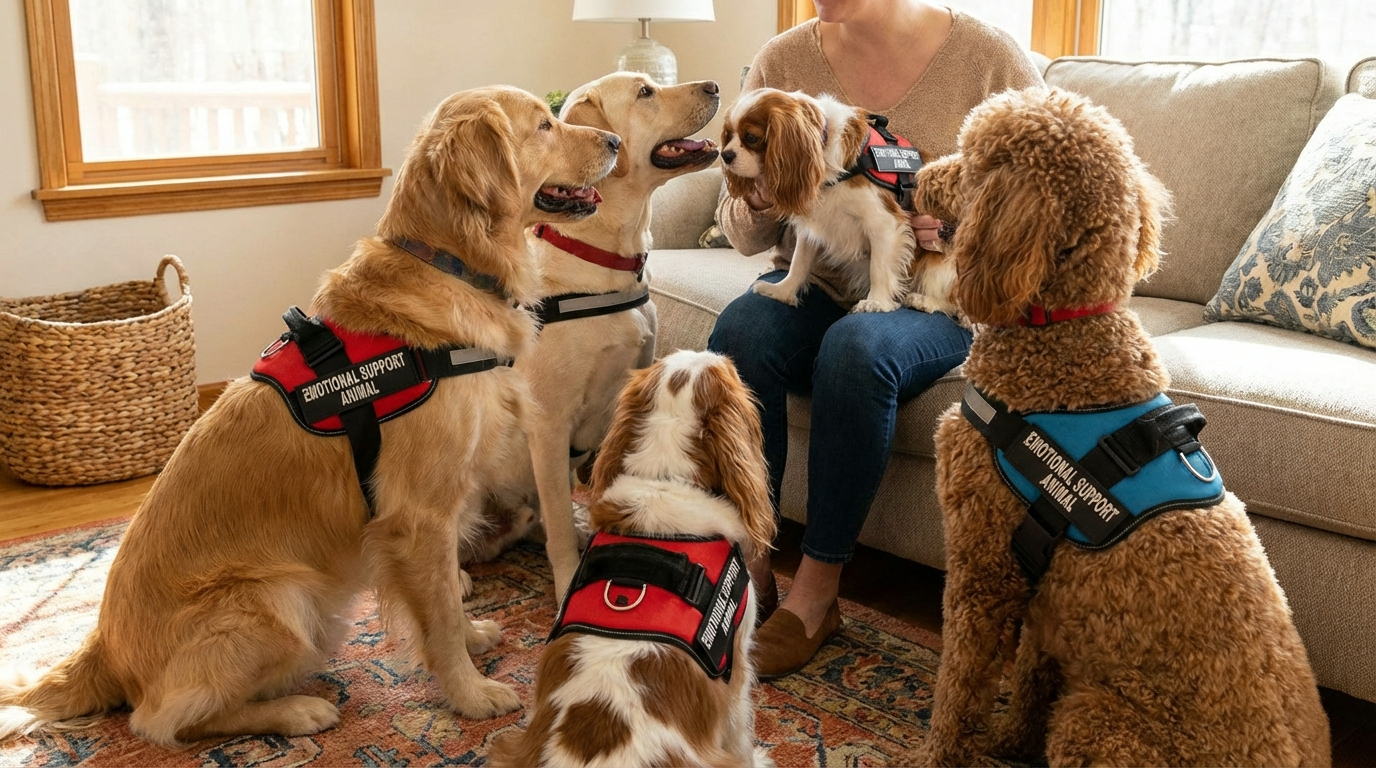
Some dogs seem to understand feelings without being told. They stay close during hard moments. They sense changes in mood. They offer quiet comfort when words fail. This natural ability is why certain emotional support dog breeds stand out.
Emotional support animals are not trained to perform tasks like service dogs. Instead, their value lies in presence. Their calm behavior, affectionate nature, and emotional awareness help people cope with anxiety, depression, trauma, or chronic stress.
Not every dog is suited for this role. Temperament matters more than size or strength. Patience, sensitivity, and adaptability make the difference. While any breed can offer love, some breeds consistently excel in emotional support roles.
This article explores emotional support dog breeds that are especially well-suited for companionship and emotional grounding. It also explains what makes a breed effective and how to choose the right match for your lifestyle.
What Makes Emotional Support Dog Breeds Effective
Emotional support dog breeds share certain behavioral traits. These characteristics allow them to provide comfort naturally, without specialized task training.
Calmness is essential. Dogs that remain steady in new or stressful situations help regulate human emotions. Reactivity can increase anxiety rather than reduce it.
Affection also plays a role. Breeds that enjoy physical closeness often provide deeper emotional reassurance. A gentle lean or quiet cuddle can be grounding.
Adaptability matters as well. Emotional support dogs often live in apartments, travel frequently, or encounter varied routines. Flexibility helps them adjust smoothly.
Lastly, emotional awareness sets top breeds apart. Some dogs instinctively respond to emotional shifts. They stay near when sadness appears. They engage when energy drops.
When these traits combine, emotional support becomes effortless rather than forced.
Labrador Retrievers as Emotional Support Dogs
Labrador Retrievers consistently rank among the best emotional support dog breeds. Their friendly nature and emotional intelligence make them exceptional companions.
Labs are known for their steady temperament. They remain calm under pressure and respond well to emotional cues. This stability helps create a sense of safety.
Affection comes naturally to them. They enjoy closeness without being overwhelming. This balance suits people who need support without constant stimulation.
Additionally, Labs adapt easily to different environments. Whether in a busy household or quiet apartment, they adjust quickly.
Their eagerness to please also strengthens emotional bonds. Interaction feels cooperative rather than demanding.
For many people, a Labrador becomes an emotional anchor.
Golden Retrievers and Emotional Support
Golden Retrievers share many qualities with Labradors, yet their emotional sensitivity often runs deeper.
These dogs form strong emotional bonds with their owners. They are gentle, intuitive, and deeply affectionate. Their presence often feels soothing.
Golden Retrievers excel at reading body language. They respond to sadness with quiet companionship. During anxious moments, they remain steady and reassuring.
Their patience makes them suitable for individuals experiencing emotional fluctuations. Sudden changes rarely unsettle them.
Because of their predictable temperament, Goldens are frequently recommended by mental health professionals.
They offer warmth without judgment, which makes emotional healing feel safer.
Poodles as Intelligent Emotional Support Dog Breeds
Poodles are often underestimated in emotional roles. However, their intelligence and sensitivity make them excellent emotional support dog breeds.
They are highly attuned to human behavior. Changes in mood rarely go unnoticed. This awareness allows timely emotional responses.
Poodles also thrive on connection. They bond deeply with their owners and enjoy interactive companionship.
Another advantage involves adaptability. Poodles come in standard, miniature, and toy sizes. This variety allows emotional support in many living situations.
Their low-shedding coats also suit people with allergies, expanding accessibility.
Mental stimulation matters for Poodles. When engaged properly, they become exceptionally attentive emotional companions.
Cavalier King Charles Spaniels for Emotional Support
Few breeds embody gentle affection like the Cavalier King Charles Spaniel.
These dogs were bred for companionship. Their primary instinct involves closeness and emotional connection.
Cavaliers often seek physical contact. They enjoy sitting on laps, leaning gently, or resting nearby. This proximity provides comfort during emotional distress.
Their calm demeanor supports relaxation. Loud reactions are rare. Stressful environments affect them less than many breeds.
Additionally, Cavaliers respond well to routine. Predictability helps reinforce emotional stability for both dog and owner.
For individuals seeking constant yet gentle support, this breed excels.
German Shepherds as Emotional Support Animals
German Shepherds are commonly associated with working roles. However, they can also serve as powerful emotional support dog breeds.
Their loyalty is unmatched. Once bonded, they remain deeply attentive to their owner’s emotional state.
German Shepherds often position themselves protectively. This behavior creates a sense of security, especially for individuals with anxiety or PTSD.
Intelligence enhances their emotional responsiveness. They quickly learn behavioral patterns and emotional cues.
While they require structured exercise, mental engagement strengthens emotional connection.
When matched with the right owner, German Shepherds offer both emotional grounding and confidence reinforcement.
French Bulldogs and Emotional Support
French Bulldogs may appear playful, yet they offer surprising emotional support.
Their relaxed energy suits people with lower activity levels. They enjoy companionship without demanding intense exercise.
French Bulldogs form strong attachments. They prefer being close and often follow their owners throughout the home.
Their humorous expressions also provide emotional relief. Laughter plays a role in emotional well-being.
Because they adapt well to apartments, French Bulldogs fit urban lifestyles easily.
For those needing consistent presence rather than high activity, this breed provides steady emotional comfort.
Border Collies as Emotional Support Dog Breeds
Border Collies are highly intelligent and emotionally perceptive. This combination makes them effective emotional support dog breeds for active individuals.
They notice subtle behavioral changes. Emotional shifts rarely escape their attention.
Border Collies thrive on engagement. Mental stimulation strengthens emotional bonds.
However, they require structure. Without proper activity, anxiety may develop.
When needs are met, Border Collies become deeply responsive emotional companions.
They work best for individuals who enjoy interactive routines and purposeful connection.
Small Emotional Support Dog Breeds
Size does not limit emotional capacity. Many small breeds excel in emotional support roles.
Breeds such as Maltese, Shih Tzu, and Havanese offer consistent affection and adaptability.
Smaller dogs often remain close physically. This proximity can be grounding during emotional distress.
They travel easily and fit compact living spaces. This flexibility reduces logistical stress.
Additionally, their expressive behavior enhances emotional communication.
For individuals seeking portable companionship, small emotional support dog breeds are highly effective.
Matching Emotional Support Dog Breeds to Lifestyle
Choosing among emotional support dog breeds involves more than breed reputation.
Energy level matters. A high-energy dog may overwhelm someone seeking calm. Conversely, a low-energy breed may frustrate an active owner.
Living space also influences suitability. Apartments favor adaptable, quieter breeds.
Allergies, work schedules, and emotional needs should guide selection.
Importantly, individual temperament matters more than breed alone. Not every dog within a breed behaves identically.
Spending time together before commitment helps ensure compatibility.
Emotional Support Dog Breeds and Mental Health Benefits
Emotional support dog breeds provide measurable mental health benefits.
They reduce cortisol levels. They increase oxytocin release. These changes promote calm and connection.
Routine care also provides structure. Feeding, walking, and grooming create daily rhythm.
Additionally, emotional support dogs reduce isolation. Social interaction often increases naturally.
For individuals managing anxiety or depression, these benefits accumulate over time.
Consistency rather than perfection drives emotional improvement.
Legal Considerations for Emotional Support Dogs
Emotional support dogs differ from service animals legally.
They do not require task training. However, documentation from a licensed mental health professional is often required.
Housing protections may apply. Air travel regulations vary by region.
Understanding local laws prevents misunderstandings.
Proper behavior remains essential regardless of legal status.
Respectful ownership supports broader acceptance of emotional support animals.
Conclusion
Emotional support dog breeds offer more than companionship. They provide stability, comfort, and emotional grounding during challenging moments. While many breeds can fulfill this role, certain breeds consistently excel due to temperament, sensitivity, and adaptability. Choosing the right emotional support dog involves understanding both breed tendencies and personal needs. When matched thoughtfully, the bond created becomes a powerful source of emotional resilience and daily comfort.
FAQ
1. What qualifies a dog as an emotional support animal?
A dog qualifies through a mental health professional’s recommendation, not specialized task training.
2. Are emotional support dog breeds the same as service dogs?
No. Service dogs perform trained tasks, while emotional support dogs provide comfort through presence.
3. Can any breed become an emotional support dog?
Yes, though certain breeds are more naturally suited due to temperament.
4. Do emotional support dogs require special training?
Formal training is not required, but good behavior and socialization are essential.
5. How do I choose the right emotional support dog breed?
Consider temperament, lifestyle compatibility, and emotional needs rather than breed popularity alone.