When you notice your dog slowing down, struggling to stand, or hesitating before climbing stairs, it can be both heartbreaking and confusing. However, the good news is that simple Home Modifications for Dogs can dramatically improve their comfort and quality of life. Whether your dog is aging, recovering from injury, or dealing with chronic conditions like arthritis, your home environment plays a major role in how easily they can move. By making thoughtful adjustments, you can help your dog stay active, safe, and confident every day.
Mobility issues in dogs often develop gradually. At first, you might see subtle signs like stiffness after rest or difficulty jumping onto furniture. Over time, these challenges can become more noticeable. Therefore, acting early with Home Modifications for Dogs can prevent further strain and reduce the risk of injury. Even small changes can make a meaningful difference, especially when they support your dog’s natural movement.
One of the most important areas to address is flooring. Slippery surfaces such as tile or hardwood can be difficult for dogs with weak joints or limited strength. As a result, dogs may slip, hesitate, or avoid moving altogether. Adding non-slip rugs or rubber mats provides better traction and helps your dog feel more secure. This is one of the easiest and most effective Home Modifications for Dogs because it directly improves stability and confidence.
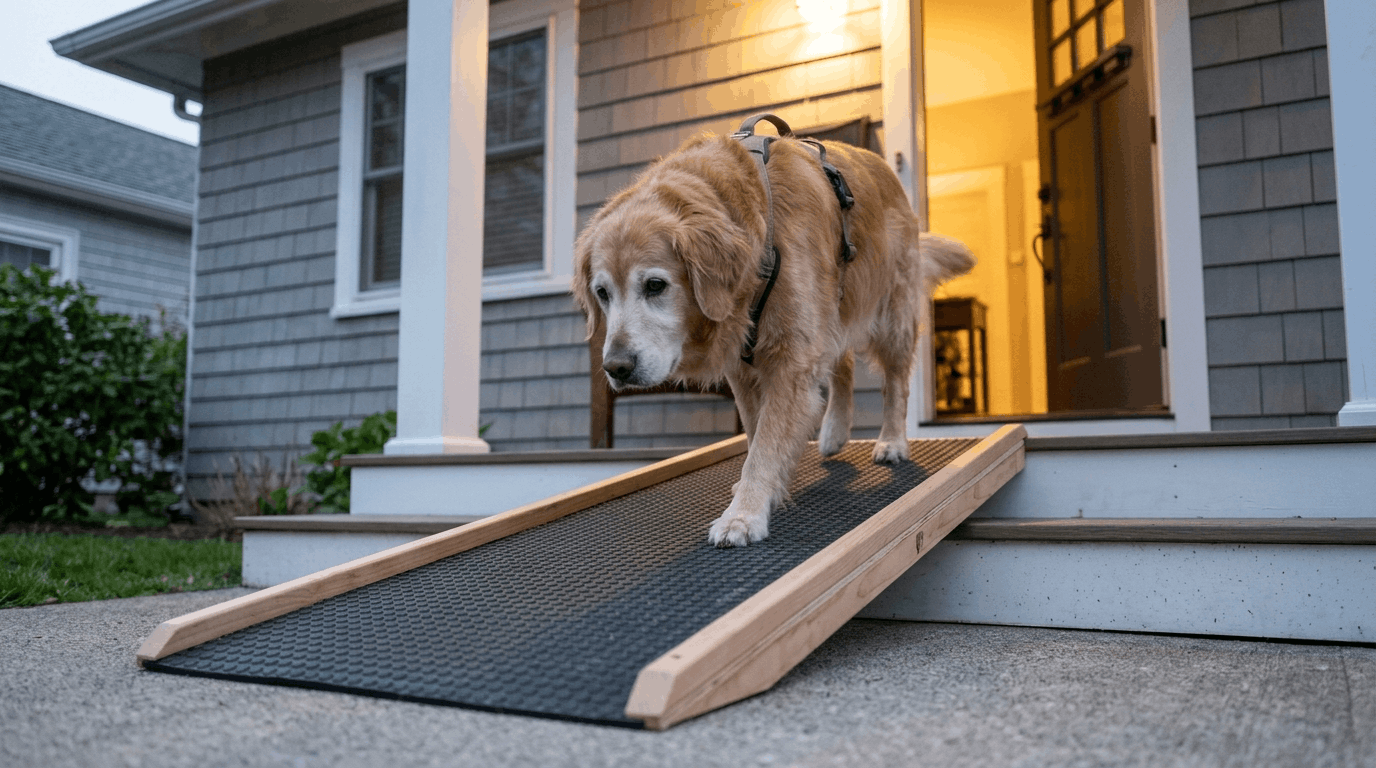
In addition to flooring, access to favorite spaces should be considered. Dogs often love resting on couches or sleeping in elevated beds. However, jumping can become painful or even dangerous for dogs with mobility issues. Therefore, installing pet ramps or stairs is a smart solution. These tools allow your dog to reach comfortable spots without putting stress on joints. When used consistently, they reduce the risk of injury and support long-term mobility.
Creating A Safer Living Environment
Beyond flooring and furniture, creating a safe layout is essential when implementing Home Modifications for Dogs. Start by removing obstacles that could cause trips or falls. Items like loose cords, clutter, or small furniture pieces can become hazards, especially for dogs with limited vision or coordination. By keeping pathways clear, you help your dog move more freely and confidently.
Lighting also plays an important role. Older dogs often experience vision decline, which can make navigation difficult. Therefore, improving lighting in hallways, staircases, and commonly used areas can reduce confusion and accidents. Night lights are particularly helpful for dogs that move around during the evening. This simple adjustment enhances visibility and supports safer movement.
Another key consideration is access to essentials. Food bowls, water dishes, and resting areas should be easy to reach. Placing these items on the same level of the home reduces unnecessary strain. In some cases, raised food bowls can also help, especially for dogs with neck or joint issues. These adjustments may seem minor, but they are vital Home Modifications for Dogs that improve daily comfort.
Supporting Mobility With Helpful Tools
While home layout changes are important, supportive tools can further enhance mobility. Orthopedic dog beds are one of the most valuable additions. These beds provide cushioning and support for joints, helping reduce pressure and discomfort. As a result, dogs can rest more comfortably and recover more effectively after activity.
Harnesses designed for mobility support are another helpful option. These allow you to assist your dog when walking, climbing stairs, or getting into a car. Unlike traditional collars, these harnesses distribute weight evenly and reduce strain. When used correctly, they provide both safety and reassurance.
Additionally, paw grips or dog socks can improve traction on smooth surfaces. These are especially useful for dogs that struggle with balance. Combined with other Home Modifications for Dogs, these tools create a more supportive environment that encourages movement rather than limiting it.
Adjusting Daily Routines for Better Comfort
Home changes alone are not enough. Adjusting your dog’s daily routine also plays a key role in managing mobility issues. For example, shorter, more frequent walks are often better than long, strenuous outings. This approach keeps your dog active without causing fatigue or discomfort. Regular movement helps maintain muscle strength, which is essential for mobility.
Feeding schedules and hydration should also be monitored closely. Proper nutrition supports joint health and overall well-being. In addition, maintaining a healthy weight reduces pressure on joints. Therefore, combining Home Modifications for Dogs with proper care creates a balanced approach to managing mobility challenges.
Grooming routines may also need adjustment. Keeping nails trimmed improves traction and reduces the risk of slipping. Similarly, regular brushing helps maintain skin health and comfort. These small habits contribute to your dog’s overall ease of movement.
When To Consider Advanced Modifications
In more severe cases, additional Home Modifications for Dogs may be necessary. For example, blocking off stairs with gates can prevent accidents. If your home has multiple levels, you may need to create a dedicated living space on one floor. This reduces the need for climbing and keeps your dog safe.
For dogs with significant mobility limitations, slings or wheelchairs can provide support. While these options require adjustment, they allow dogs to maintain independence and enjoy daily activities. With proper guidance, many dogs adapt quickly and regain confidence.
It is also important to work closely with your veterinarian. They can recommend treatments, therapies, or medications that complement your home modifications. Together, these strategies create a comprehensive plan that addresses both physical and environmental needs.
Conclusion
Making Home Modifications for Dogs with mobility issues is one of the most caring decisions you can make as a pet owner. These changes not only improve safety but also restore confidence and independence. By focusing on flooring, accessibility, supportive tools, and daily routines, you create an environment where your dog can thrive despite physical challenges.
Every dog deserves comfort and dignity, especially as they age or recover from injury. With thoughtful adjustments and consistent care, you can help your dog enjoy a better quality of life. In the end, these modifications are not just about convenience. They are about showing your dog that they are supported, loved, and valued every step of the way.
FAQ
- What are the easiest ways to help a dog with mobility problems at home?
Adding non-slip rugs, improving lighting, and using ramps are simple and effective changes. - Do all older dogs need home adjustments?
Not all, but many benefit from small changes that support comfort and prevent injury. - Are dog ramps better than stairs?
Ramps are often easier on joints, especially for dogs with arthritis or severe mobility issues. - Can mobility aids help dogs stay active longer?
Yes, tools like harnesses and wheelchairs can support movement and extend activity levels. - When should I consult a vet about mobility issues?
If your dog shows consistent difficulty moving, pain, or sudden changes, consult a vet promptly.