Low-impact exercises for dogs can significantly improve comfort and mobility in pets living with arthritis. While joint pain limits movement, complete inactivity often makes stiffness worse. Therefore, gentle and controlled activity becomes essential for long-term joint health.
Arthritis causes inflammation, cartilage breakdown, and discomfort. As a result, many dogs hesitate to walk, climb stairs, or play. However, carefully selected low-impact exercises for dogs support muscle strength without placing excessive stress on painful joints.
This guide explores safe movement strategies, practical routines, and helpful tips to protect aging or arthritic pets. Moreover, it explains how to balance activity and rest for the best results.
Understanding Arthritis in Dogs
Arthritis, also called osteoarthritis, develops when joint cartilage wears down over time. Consequently, bones rub together, causing inflammation and pain.
Common signs include:
- Stiffness after rest
- Limping
- Reduced enthusiasm for walks
- Difficulty standing up
- Sensitivity to touch
Although arthritis cannot be cured, symptoms can be managed. Medication may help, but movement plays a crucial role. Therefore, low-impact exercises for dogs remain a cornerstone of arthritis care.
When muscles stay strong, they support joints better. Additionally, circulation improves, which helps reduce stiffness.
Before beginning any routine, consult your veterinarian. Proper evaluation ensures exercises match your dog’s condition.
Why Gentle Movement Matters
It may seem logical to let an arthritic dog rest constantly. However, prolonged inactivity weakens muscles. Weak muscles fail to stabilize joints effectively.
Therefore, structured low-impact exercises for dogs promote balance and flexibility. Gentle activity lubricates joints by stimulating synovial fluid production.
Moreover, movement helps control weight. Excess weight increases joint pressure significantly. Even a small reduction eases discomfort.
Consistency remains key. Short, daily sessions often work better than occasional long workouts.
By incorporating safe exercises into routine care, you enhance comfort while protecting joint integrity.
Leash Walking on Soft Surfaces
Controlled leash walking ranks among the safest low-impact exercises for dogs with arthritis.
Choose flat, soft surfaces like grass or dirt paths. Avoid concrete when possible. Hard ground increases joint stress.
Begin with short walks, perhaps five to ten minutes. Gradually increase duration based on comfort level.
Watch for fatigue or limping. If stiffness worsens afterward, reduce intensity.
Steady pacing supports muscle tone and circulation. Additionally, walking strengthens bonding between you and your pet.
Because it remains predictable and manageable, leash walking forms the foundation of most arthritis-friendly exercise plans.
Swimming and Hydrotherapy
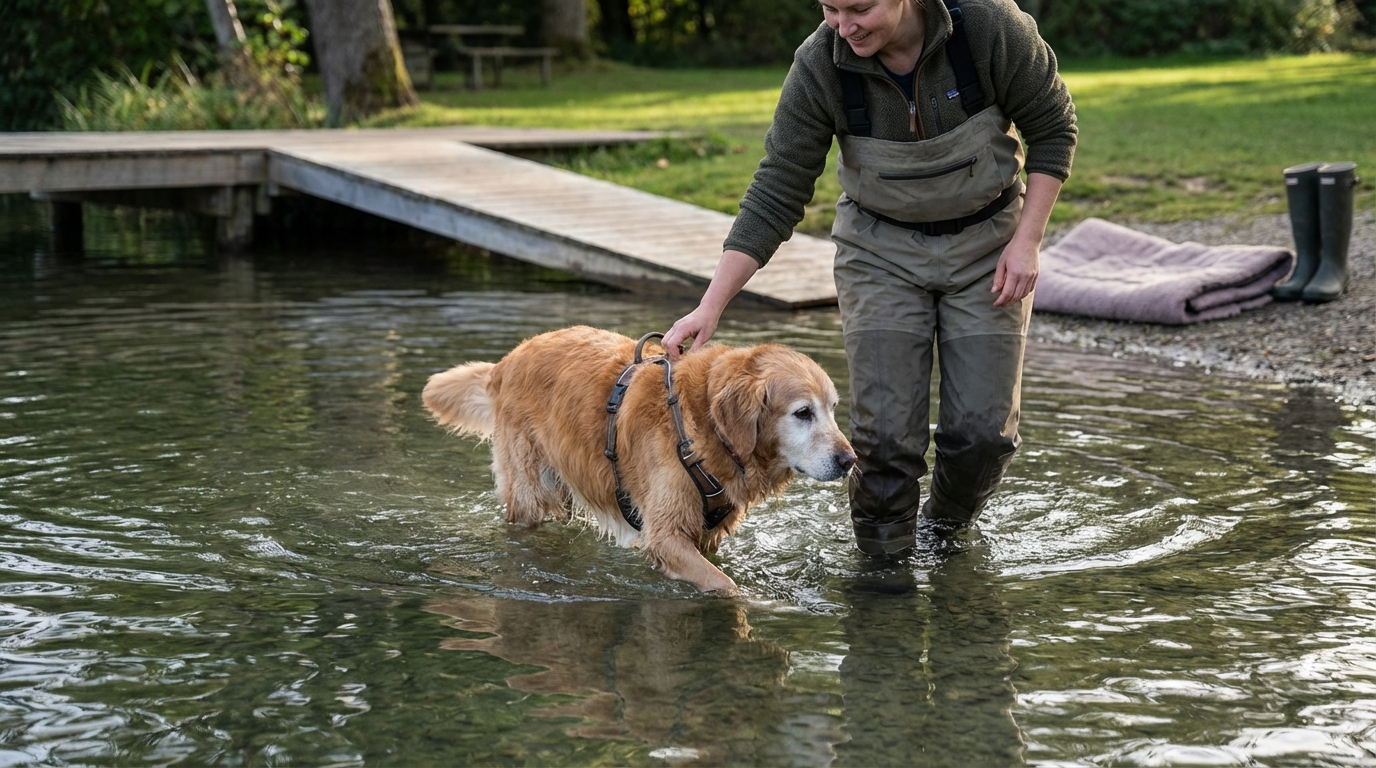
Water reduces joint load dramatically. Therefore, swimming stands out among the most effective low-impact exercises for dogs.
In water, body weight decreases. Muscles work without bearing full pressure. Consequently, mobility improves safely.
Hydrotherapy centers offer underwater treadmills. These controlled environments provide guided resistance and professional supervision.
If swimming at home, ensure calm water and close supervision. Always prioritize safety.
Many dogs show improved flexibility and endurance after regular aquatic sessions. Moreover, water therapy often increases confidence in hesitant movers.
For arthritic pets, swimming delivers both physical relief and mental stimulation.
Gentle Range-of-Motion Exercises
Passive range-of-motion movements involve carefully flexing and extending joints.
These exercises should be performed under veterinary guidance initially. Improper technique may cause discomfort.
Slowly move the limb within a comfortable range. Never force motion.
Range-of-motion work complements low-impact exercises for dogs by maintaining flexibility. Additionally, it prevents joint stiffness from worsening.
Regular sessions may improve circulation and reduce tension in surrounding tissues.
When done gently and consistently, these movements enhance comfort significantly.
Sit-to-Stand Repetitions
Controlled sit-to-stand exercises strengthen hind leg muscles.
Encourage your dog to sit, then stand slowly. Use treats for motivation.
Keep repetitions low initially. Gradually increase as strength improves.
This exercise builds muscle support around hips and knees. Therefore, it reduces strain during daily movement.
Among practical low-impact exercises for dogs, this option requires no equipment and fits easily into routine training sessions.
However, stop immediately if your dog struggles or shows discomfort.
Balance and Stability Work
Balance exercises activate stabilizing muscles.
Use a folded towel or low cushion to create mild instability. Encourage your dog to stand on it briefly.
Keep sessions short. Always supervise closely.
Balance training enhances coordination. Moreover, it strengthens smaller muscles that support joints.
Because intensity remains low, this activity complements other low-impact exercises for dogs effectively.
Gradual progression ensures safety and comfort.
Short Fetch Sessions on Soft Ground
Traditional fetch may strain arthritic joints. However, modified versions can work.
Use soft grass and gentle tosses. Avoid high jumps or sudden stops.
Keep sessions brief and controlled. Focus on steady movement rather than speed.
Although fetch involves activity, careful adjustments maintain it within low-impact exercises for dogs guidelines.
Always observe for signs of fatigue.
Slow Hill Walking
Gentle incline walking builds strength without excessive impact.
Choose gradual slopes. Avoid steep hills that strain joints.
Walking uphill activates hind leg muscles. Consequently, joint stability improves.
Descend slowly to reduce pressure.
When integrated carefully, mild incline work enhances the benefits of other low-impact exercises for dogs.
Monitor breathing and comfort levels throughout.
Stretching After Activity
Light stretching supports flexibility.
Gently extend front legs forward. Then carefully stretch hind legs backward.
Avoid sudden pulls.
Stretching helps reduce post-exercise stiffness. Additionally, it maintains joint range.
As part of a balanced routine, stretching complements low-impact exercises for dogs and prevents tightness.
Consistency enhances results over time.
Warm-Up and Cool-Down Importance
Always begin with a brief warm-up walk. This prepares joints for activity.
Similarly, end sessions with slow pacing to cool down.
Warm-ups increase blood flow. Cool-downs prevent stiffness spikes.
Low-impact exercises for dogs become safer when preceded and followed by controlled transitions.
Never start intense movement abruptly.
Monitoring Pain and Progress
Observe your dog closely during and after exercise.
Watch for:
- Increased limping
- Reluctance to move
- Excessive panting
- Whining
If symptoms worsen, consult your veterinarian.
Low-impact exercises for dogs should improve mobility gradually. Sudden setbacks indicate overexertion.
Keep a journal to track progress.
Balanced adjustments ensure long-term success.
Combining Exercise With Other Support
Exercise works best alongside:
- Weight management
- Joint supplements
- Anti-inflammatory medication
- Comfortable bedding
Holistic care amplifies the benefits of low-impact exercises for dogs.
Discuss supplements like omega-3 fatty acids or glucosamine with your vet.
Integrated strategies enhance comfort and mobility.
Creating a Weekly Routine
Structure supports consistency.
Example plan:
- Daily short walks
- Two swimming sessions weekly
- Sit-to-stand exercises every other day
- Gentle stretching after activity
Adjust based on tolerance.
Low-impact exercises for dogs must remain adaptable. Therefore, tailor routines to energy levels and medical advice.
Gradual improvement often appears within weeks.
When to Seek Professional Rehabilitation
Some dogs benefit from certified canine rehabilitation specialists.
Therapists design personalized programs. Additionally, they monitor progress safely.
Professional guidance ensures correct technique.
Low-impact exercises for dogs become more targeted when supervised by experts.
Consider referral if arthritis remains severe.
Conclusion: Moving Toward Comfort and Strength
Arthritis limits movement, but thoughtful care restores quality of life. Low-impact exercises for dogs offer a safe path toward improved mobility and reduced stiffness.
Gentle walking, swimming, stretching, and strength-building routines protect joints while strengthening muscles. Moreover, consistent practice supports circulation and flexibility.
Balanced activity prevents muscle loss and maintains independence. However, monitoring remains essential to avoid overexertion.
With veterinary guidance and steady routines, your dog can stay active and comfortable. By prioritizing safe movement, you empower your pet to enjoy life despite arthritis challenges.
FAQ
- How often should arthritic dogs exercise?
Daily gentle movement usually works best, but intensity should match your dog’s comfort level. - Is swimming safe for older pets?
Yes, when supervised properly, aquatic therapy reduces joint strain and supports muscle strength. - Can exercise worsen arthritis?
Improper or high-impact activity can increase pain. However, controlled gentle routines improve mobility. - Should I stop activity during flare-ups?
Reduce intensity during flare-ups and consult your veterinarian if discomfort increases significantly. - Do joint supplements replace exercise?
Supplements support joint health, but movement remains essential for muscle strength and flexibility.