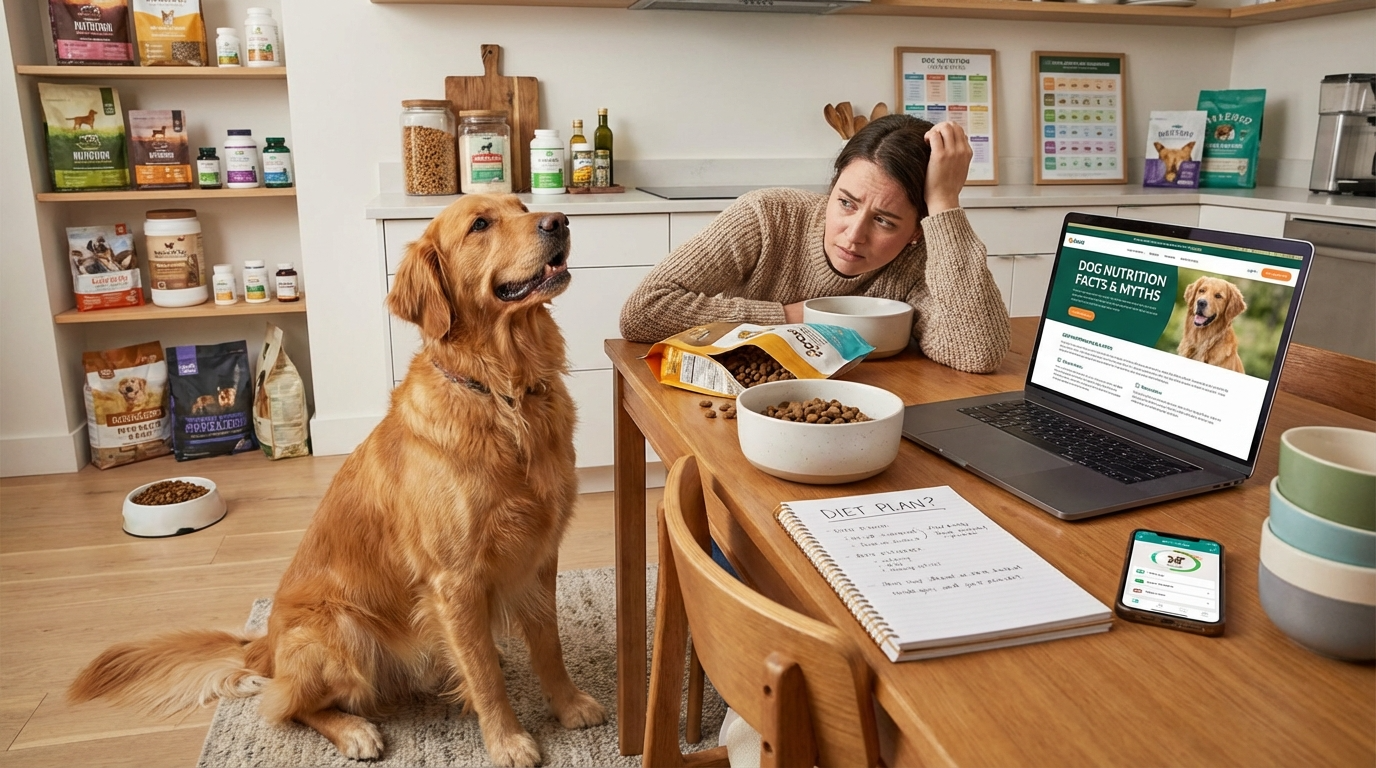
Worrying about dog’s diet has become increasingly common among devoted pet owners. With endless advice online, conflicting ingredient lists, and strong opinions on social media, it is easy to question every food choice you make. However, constant concern may create more stress than solutions.
Caring deeply about your pet’s nutrition shows love and responsibility. Yet, when worrying about dog’s diet turns into anxiety, it can affect both you and your companion. Therefore, it is important to step back, evaluate the facts, and find a balanced approach to canine health.
This guide will help you understand when concern is helpful and when it becomes excessive. Moreover, you will learn how to support your dog’s well-being with confidence rather than fear.
Why Pet Owners Feel So Much Pressure
Modern dog owners face overwhelming information. Every week, new trends appear. Grain-free diets, raw feeding, boutique brands, and homemade meals all claim superior benefits.
Consequently, worrying about dog’s diet can feel unavoidable. Marketing messages often highlight worst-case scenarios. As a result, normal feeding choices may suddenly seem dangerous.
Additionally, social media amplifies extreme stories. One negative experience can appear universal. However, individual cases rarely reflect the broader scientific picture.
Veterinarians emphasize evidence-based nutrition. Yet, online influencers may present opinions as facts. Therefore, confusion grows quickly.
When information overload combines with love for your pet, anxiety naturally increases. Recognizing this pressure helps you regain perspective.
Understanding What Dogs Actually Need
Dogs require balanced nutrition that includes protein, fats, carbohydrates, vitamins, and minerals. Quality commercial diets are carefully formulated to meet established standards.
For most healthy dogs, complete and balanced kibble or wet food provides everything required. Therefore, worrying about dog’s diet without clear medical reasons may not be necessary.
Dogs do not need trendy superfoods. They need consistency and nutritional adequacy. While fresh ingredients sound appealing, balance matters more than novelty.
Additionally, reputable brands conduct feeding trials and maintain quality control. These safeguards reduce the risk of deficiencies.
When you focus on meeting basic nutritional needs, fear often decreases. Clear understanding replaces uncertainty.
When Concern Is Reasonable
Not all concern is excessive. Some situations require closer attention.
You should monitor diet carefully if your dog:
- Has allergies
- Suffers from digestive issues
- Experiences obesity
- Shows chronic skin problems
- Has a diagnosed medical condition
In these cases, worrying about dog’s diet may reflect responsible management. However, guidance should come from a veterinarian rather than online forums.
Food changes should follow medical advice. Abrupt switches can upset digestion. Therefore, gradual transitions remain essential.
Balanced vigilance supports health. Chronic anxiety, however, does not improve outcomes.
The Risks of Overanalyzing Ingredients
Ingredient lists often cause confusion. Owners may scrutinize every word. Meanwhile, they forget that formulation matters more than individual components.
For example, corn and grains are not inherently harmful for most dogs. In fact, they provide digestible energy and nutrients. Yet, fear-based messaging sometimes labels them dangerous.
Worrying about dog’s diet based solely on unfamiliar ingredients can lead to unnecessary food changes. Frequent switching, however, may cause stomach upset.
Instead of focusing on single ingredients, evaluate the overall nutritional profile. Check for statements confirming balanced formulation.
Veterinary nutritionists emphasize that context matters. Therefore, avoid reacting to isolated claims without scientific backing.
How Anxiety Affects Your Dog
Dogs sense emotional shifts. When worrying about dog’s diet becomes intense, your behavior may change.
You might:
- Constantly change food
- Over-monitor eating
- Restrict treats excessively
- React strongly to minor digestive changes
Such patterns create inconsistency. Dogs thrive on routine. Therefore, stability matters more than perfection.
Excessive monitoring can also reduce enjoyment. Mealtimes should feel positive and predictable.
Balanced attention supports both mental and physical health. Calm consistency builds confidence in your choices.
Finding a Healthy Middle Ground
Caring about nutrition is wise. Obsessing over every detail is not.
To find balance:
- Choose a reputable brand
- Consult your veterinarian
- Monitor body condition
- Adjust portions as needed
- Avoid constant diet switching
When worrying about dog’s diet begins to dominate daily thoughts, pause and reassess. Ask whether concerns are evidence-based or fear-driven.
Regular vet visits provide reassurance. Professional guidance often reduces uncertainty.
Moreover, tracking your dog’s energy, coat condition, and stool quality offers practical feedback.
The Role of Treats and Occasional Indulgence
Some owners fear giving treats. However, moderate treats rarely harm healthy dogs.
Use the 10 percent rule. Treat calories should not exceed ten percent of daily intake. Therefore, balance remains intact.
Healthy treat options include small pieces of lean meat or commercial training treats. Avoid toxic foods such as chocolate and grapes.
Worrying about dog’s diet should not eliminate joy. Treats strengthen training and bonding.
When moderation guides choices, guilt disappears. Balanced feeding includes both nutrition and positive experiences.
Homemade and Raw Diet Considerations
Homemade meals appeal to many owners. They offer control and ingredient transparency. However, nutritional imbalances occur easily without professional formulation.
Raw diets also generate debate. Some owners report benefits. Others encounter bacterial risks.
If you choose alternative feeding methods, consult a veterinary nutritionist. Professional planning prevents deficiencies.
Worrying about dog’s diet often intensifies with non-commercial plans. Therefore, expert supervision reduces stress.
Evidence-based decisions protect both health and peace of mind.
Weight Management as a Better Focus
Instead of obsessing over ingredient lists, monitor body condition. Obesity remains one of the most common health issues in dogs.
Check for a visible waistline. Feel for ribs without pressing hard. Adjust portions if weight increases.
Regular exercise supports metabolic health. Therefore, activity matters as much as food quality.
When worrying about dog’s diet shifts toward measurable outcomes like weight and energy levels, concern becomes constructive.
Healthy weight strongly predicts long-term well-being.
Signs You May Be Overthinking Nutrition
Ask yourself these questions:
- Do you switch foods frequently without medical reason?
- Do you feel guilty after every treat?
- Do online opinions override veterinary advice?
- Do you research ingredients obsessively?
If yes, worrying about dog’s diet may have crossed into overanalysis.
Information can empower. However, excessive research often increases doubt.
Trusting credible sources helps restore balance. Choose evidence over emotion.
Building Confidence in Your Choices
Confidence develops through education and experience.
Schedule routine wellness exams. Ask specific questions about your dog’s needs. Keep records of weight and appetite.
When worrying about dog’s diet resurfaces, review objective data. If your dog maintains healthy weight, energy, and digestion, current feeding likely works.
Additionally, remember that no diet guarantees perfection. Genetics, age, and lifestyle all influence health.
Balanced decision-making strengthens long-term consistency.
The Influence of Marketing and Trends
Pet food marketing often appeals to human preferences. Words like “natural,” “premium,” and “ancestral” create strong emotional reactions.
However, regulatory definitions may differ from consumer assumptions. Therefore, evaluate claims critically.
Worrying about dog’s diet sometimes stems from persuasive advertising rather than scientific evidence.
Compare labels carefully. Look for nutritional adequacy statements rather than marketing slogans.
Awareness reduces vulnerability to hype.
When to Seek Professional Guidance
If your dog shows persistent symptoms, consult your veterinarian.
Warning signs include:
- Chronic diarrhea
- Repeated vomiting
- Rapid weight changes
- Severe itching
- Lethargy
In these cases, worrying about dog’s diet becomes appropriate. Medical evaluation identifies underlying causes.
Diagnostic testing may reveal allergies or metabolic conditions. Treatment plans then target specific needs.
Professional care prevents guesswork and reduces anxiety.
Creating a Balanced Feeding Routine
Consistency builds trust. Feed measured portions at regular times.
Store food properly to maintain freshness. Provide clean water daily.
Avoid sudden changes unless medically required. Gradual transitions protect digestive health.
Worrying about dog’s diet lessens when routine becomes predictable. Dogs respond well to stable patterns.
Calm feeding habits foster emotional security.
Conclusion: Care Without Obsession
Loving your dog includes caring about nutrition. However, excessive fear can undermine confidence and enjoyment.
Worrying about dog’s diet becomes counterproductive when it replaces evidence with anxiety. Balanced nutrition, routine veterinary care, and consistent monitoring provide reassurance.
Most healthy dogs thrive on complete, balanced commercial diets. Meanwhile, special cases require professional guidance rather than internet advice.
Ultimately, aim for informed calm rather than perfection. By focusing on measurable health indicators and trusted sources, you support both your dog’s well-being and your own peace of mind.
FAQ
- How can I tell if my dog’s food is appropriate?
Look for balanced nutrition statements, monitor weight, and consult your veterinarian for personalized guidance. - Should I avoid grains completely?
Most dogs digest grains well unless allergies are diagnosed by a professional. - Is homemade food healthier than kibble?
Homemade diets can work if formulated by a veterinary nutritionist to ensure balance. - How often should I change my dog’s food?
Switch diets only when medically necessary or advised by your vet. - Can stress about feeding affect my pet?
Dogs sense emotional tension. Calm, consistent routines support overall well-being.