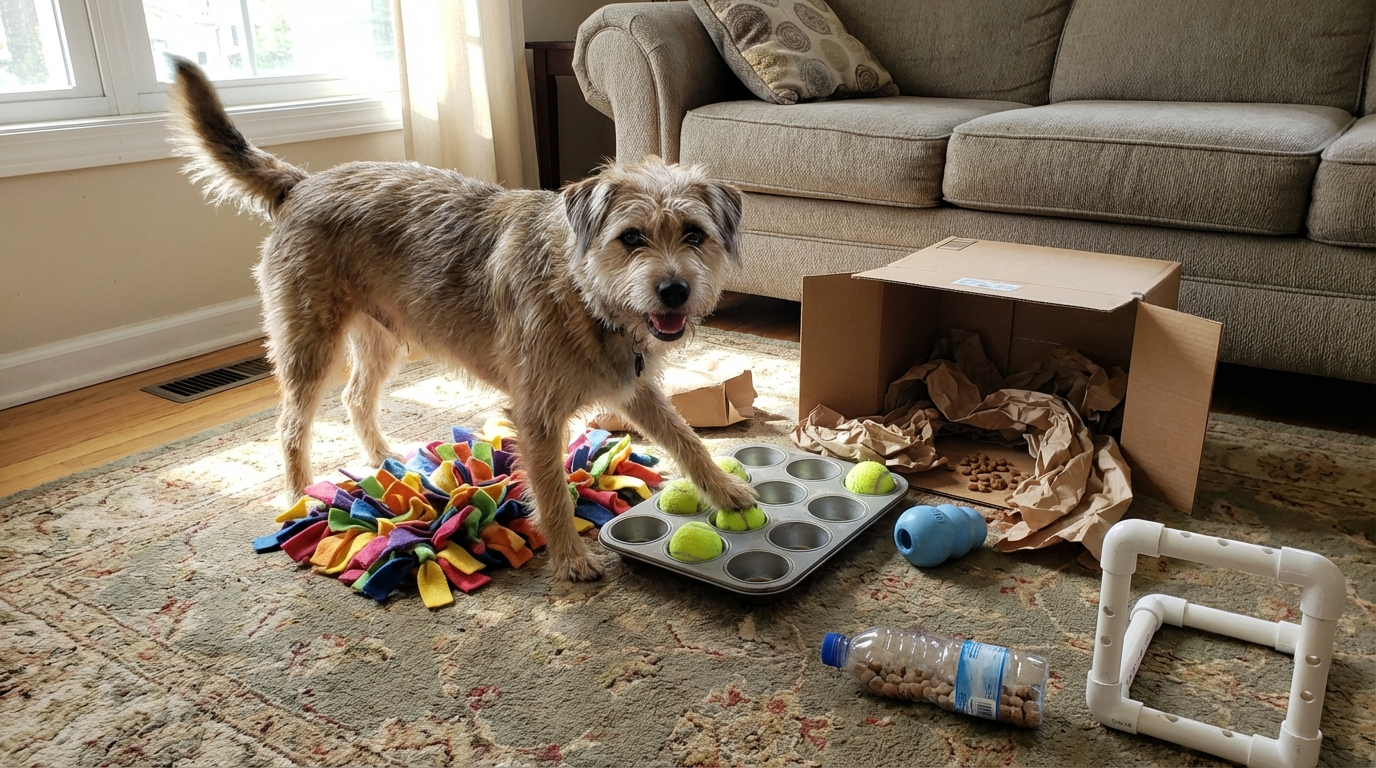
DIY boredom busters for dogs can transform alone time into a safe and enriching experience. Many dogs struggle when left home alone, especially without mental stimulation. However, simple homemade activities can prevent destructive behavior and reduce anxiety.
When dogs feel bored, they may chew furniture, bark excessively, or dig through trash. Therefore, providing structured enrichment keeps their minds active and their energy balanced. DIY boredom busters for dogs do not require expensive gadgets. Instead, they rely on creativity and understanding your pet’s natural instincts.
In this guide, you will discover safe, easy solutions that support your dog’s emotional and physical well-being. Moreover, these activities strengthen independence while keeping your home intact.
Why Dogs Get Bored When Left Alone
Dogs are social animals. In the wild, they live and work in groups. Consequently, long periods of isolation may cause stress.
Without stimulation, boredom quickly sets in. Puppies and high-energy breeds feel it most intensely. However, even calm dogs need mental engagement.
When stimulation drops, problem behaviors rise. Chewing and barking often signal unmet needs. Therefore, addressing boredom directly prevents long-term habits.
DIY boredom busters for dogs target mental stimulation. They redirect natural instincts like sniffing, problem-solving, and foraging.
Understanding the root cause of boredom helps you choose the right activities. With thoughtful preparation, alone time becomes productive rather than stressful.
Food Puzzle Creations at Home
Food-based enrichment taps into a dog’s natural foraging instinct. Therefore, homemade puzzles work exceptionally well.
Towel Treat Roll
Place treats along a towel. Roll it tightly. Then let your dog unroll it to find hidden rewards.
This simple activity encourages problem-solving. Additionally, it slows down fast eaters.
Muffin Tin Challenge
Place treats in muffin tin cups. Cover each space with a tennis ball. Your dog must remove the balls to reach the rewards.
This puzzle requires focus and persistence. Consequently, it keeps dogs busy longer.
Frozen Stuffed Toys
Stuff a durable rubber toy with wet food or peanut butter. Freeze it overnight.
Frozen treats extend engagement time. Moreover, licking provides calming effects.
DIY boredom busters for dogs that involve food often deliver the longest-lasting entertainment.
Scent Games That Stimulate the Brain
Dogs rely heavily on scent. Therefore, nose work exercises drain mental energy effectively.
Hide small treats around a safe room. Start easy. Gradually increase difficulty as your dog improves.
Alternatively, place treats inside cardboard boxes. Let your dog sniff and search.
Scent games build confidence and concentration. Because they mimic natural hunting behavior, dogs find them deeply satisfying.
Among DIY boredom busters for dogs, scent-based activities rank high for mental stimulation.
Safe DIY Chew Projects
Chewing relieves stress and maintains dental health. However, unsupervised chewing requires safe materials.
Offer:
- Durable rubber toys
- Natural chews approved by your vet
- Frozen carrot sticks
Avoid cooked bones or small objects. Safety remains the priority.
Rotating chew items maintains novelty. Therefore, switch options every few days.
DIY boredom busters for dogs should always balance stimulation with safety. Proper supervision during testing ensures the item suits your dog.
Cardboard Box Destruction Station
Many dogs love shredding cardboard. Create a designated box station.
Remove tape and staples first. Place safe treats inside for added interest.
Allow your dog to tear the box apart. Afterward, clean up easily.
This activity channels destructive urges into acceptable outlets. Additionally, it provides physical and mental release.
Cardboard enrichment stands out among DIY boredom busters for dogs because it costs almost nothing.
Interactive Feeding Routines
Instead of serving meals in a bowl, turn feeding into a challenge.
Scatter kibble in the yard for supervised outdoor sessions. Indoors, use snuffle mats or homemade fabric strips.
Scatter feeding encourages sniffing and movement. Consequently, it extends meal duration.
DIY boredom busters for dogs often work best when integrated into daily routines. Mealtime provides an ideal opportunity.
By transforming routine feeding into an activity, you reduce idle time significantly.
Window Watch Station Setup
Some dogs enjoy observing the outside world. Create a safe viewing space.
Place a sturdy perch near a secure window. Ensure screens remain intact.
Visual stimulation can reduce boredom. However, monitor reactions. Some dogs may become overly reactive.
If barking increases, adjust the setup. Balanced exposure works best.
When structured properly, environmental enrichment complements other DIY boredom busters for dogs.
Homemade Tug and Pull Toys
Braided fleece strips create durable tug toys. Simply cut fabric into long strips and braid tightly.
Interactive tug sessions before leaving home release energy. Consequently, your dog rests more peacefully afterward.
Although tug requires supervision, it forms part of a broader enrichment plan.
Energy release combined with mental stimulation strengthens the effectiveness of DIY boredom busters for dogs.
Background Noise for Comfort
Silence can intensify loneliness. Therefore, consider leaving calming music or white noise.
Studies suggest certain classical music may reduce stress in dogs. Additionally, familiar sounds create routine.
Avoid loud television programs. Instead, select steady, soft audio.
Sound enrichment alone will not replace active toys. However, it complements DIY boredom busters for dogs by reducing environmental stress.
Rotation System for Maximum Impact
Dogs quickly adapt to repetitive toys. Therefore, rotation maintains excitement.
Store several enrichment items. Offer two or three at a time. Switch them every few days.
Novelty stimulates curiosity. Consequently, engagement lasts longer.
DIY boredom busters for dogs work best when variety prevents predictability.
Planning ahead ensures fresh stimulation without constant purchasing.
Pre-Departure Exercise Routine
Mental enrichment works best after physical activity.
Before leaving, take your dog for a brisk walk or play session. Burn excess energy first.
A tired dog rests more easily. Therefore, combine exercise with enrichment.
DIY boredom busters for dogs become more effective when your dog begins alone time in a relaxed state.
Structured departure routines also reduce separation anxiety triggers.
Monitoring Safety and Progress
Always observe your dog using new activities initially.
Watch for:
- Swallowing large pieces
- Frustration signals
- Overexcitement
- Aggression toward toys
Remove unsafe items immediately.
Not all dogs respond the same way. Therefore, adjust activities to match personality and energy level.
DIY boredom busters for dogs should evolve over time. Monitor effectiveness and adapt accordingly.
When Boredom Signals Deeper Issues
Occasionally, destructive behavior stems from separation anxiety rather than boredom.
Signs may include:
- Excessive drooling
- Pacing
- Self-harm behaviors
- Constant vocalization
If symptoms persist, consult a veterinarian or behaviorist.
DIY boredom busters for dogs help with mild restlessness. However, clinical anxiety may require professional guidance.
Early intervention prevents worsening behaviors.
Creating a Balanced Alone-Time Routine
Consistency provides comfort. Therefore, maintain regular feeding, walking, and departure schedules.
Offer enrichment shortly before leaving. Avoid dramatic goodbyes.
Calm exits reduce stress. Additionally, reward quiet behavior upon return.
DIY boredom busters for dogs fit best within structured routines. Predictability fosters security.
Over time, your dog associates alone time with engaging activities rather than loneliness.
Conclusion: Turning Alone Time Into Enrichment
Leaving your dog home alone does not have to lead to stress or destruction. With thoughtful planning, alone time becomes productive and calming.
DIY boredom busters for dogs encourage problem-solving, sniffing, chewing, and mental focus. Moreover, they require minimal expense and creativity.
By rotating activities, combining exercise, and monitoring safety, you support both mental and emotional well-being.
Ultimately, enrichment strengthens independence while protecting your home. With consistency and care, your dog can remain happy, relaxed, and engaged even when you are away.
FAQ
- How long can dogs stay home alone safely?
Most adult dogs can stay alone for four to six hours, depending on age and training. - Are homemade puzzles safe for puppies?
Yes, but supervise closely and avoid small parts that could be swallowed. - Can enrichment reduce separation anxiety?
It helps mild cases, but severe anxiety may require professional treatment. - How often should I rotate toys?
Switch items every few days to maintain novelty and engagement. - What signs indicate my dog is still bored?
Persistent chewing, barking, or pacing may signal the need for more stimulation.