Learning how to manage your dog’s weight can feel overwhelming at first. Many pet owners worry about portion sizes, treats, exercise, and long-term health. However, weight control does not have to create daily anxiety. With a clear plan and consistent habits, you can manage your dog’s weight calmly and effectively.
Excess weight increases the risk of joint pain, diabetes, heart strain, and reduced lifespan. Therefore, maintaining a healthy body condition is one of the most important responsibilities of dog ownership. Fortunately, small, steady adjustments often produce lasting results.
In this guide, you will discover practical steps to manage your dog’s weight without guilt, confusion, or constant stress. Moreover, you will learn how to create sustainable routines that support both physical health and emotional balance.
Why Weight Management Matters
Even a few extra pounds can place significant strain on your dog’s body. Joints experience more pressure, which increases arthritis risk. Additionally, excess fat tissue releases inflammatory chemicals that affect overall health.
Dogs with healthy body weight typically show:
- Higher energy levels
- Improved mobility
- Better endurance
- Lower risk of chronic disease
Because prevention works better than correction, early action helps. When you manage your dog’s weight consistently, you reduce future medical complications.
Instead of aiming for perfection, focus on steady improvement. Balanced strategies prevent extreme dieting or sudden food restrictions.
Understanding Ideal Body Condition
Before adjusting food or exercise, evaluate your dog’s current condition. A simple body condition score provides helpful insight.
Look for a visible waist when viewed from above. Feel for ribs beneath a thin layer of fat. Additionally, check for a slight abdominal tuck from the side.
If ribs feel difficult to locate or the waist disappears, weight gain may have occurred. In that case, you can begin steps to manage your dog’s weight gradually.
Veterinarians often use a 1–9 scale to assess body condition. Ask for guidance during annual checkups.
Objective assessment prevents unnecessary stress. Clear data allows calm decision-making.
Portion Control Without Obsession
Overfeeding often happens unintentionally. Measuring food accurately makes a significant difference.
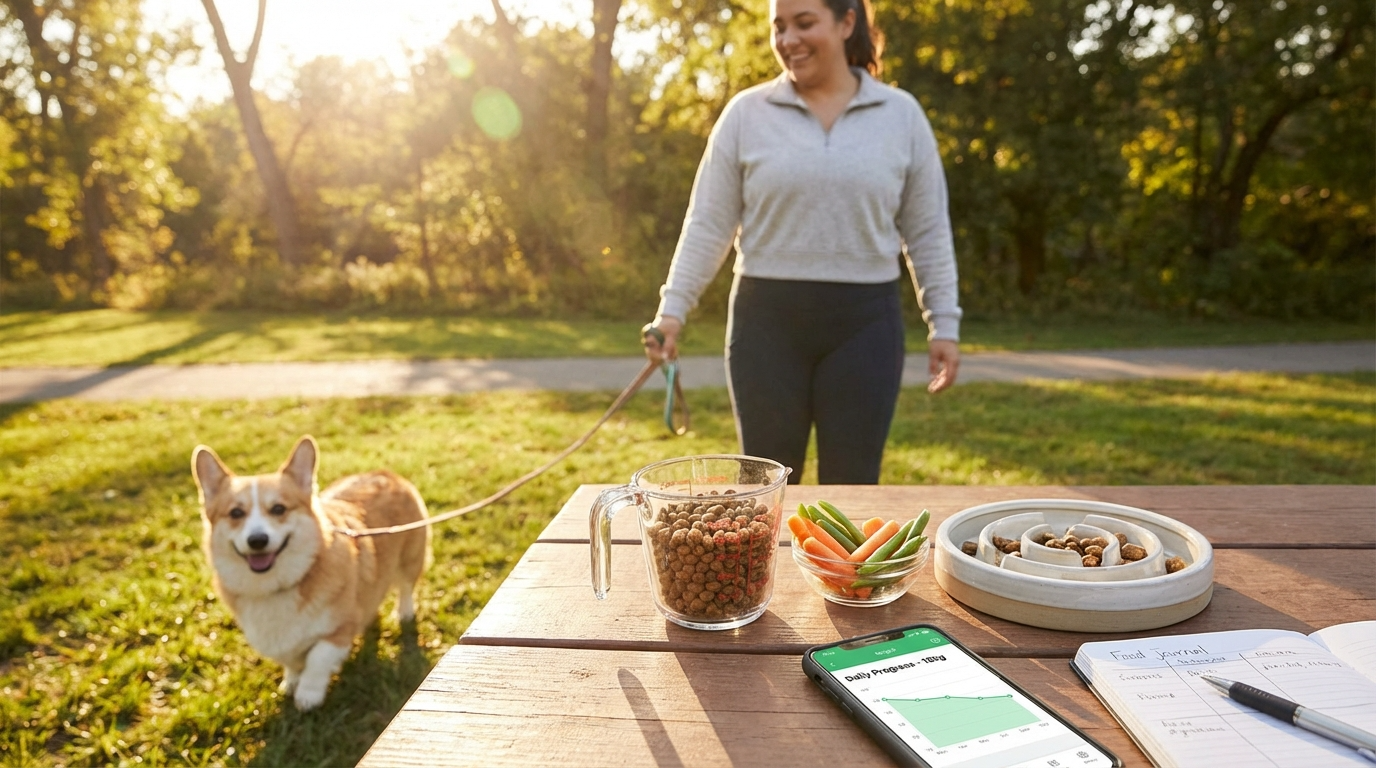
Use a measuring cup or kitchen scale. Avoid estimating portions by eye. Small overages accumulate over time.
However, do not reduce food drastically overnight. Instead, decrease portions gradually by 5 to 10 percent if weight loss is needed.
When you manage your dog’s weight carefully, steady adjustments work better than aggressive restriction.
Monitor appetite and energy levels. If your dog appears lethargic, consult your veterinarian before further reductions.
Consistency matters more than speed.
Choosing Balanced Nutrition
Quality commercial dog foods meet established nutritional standards. Therefore, select a reputable brand formulated for your dog’s age and size.
Weight management formulas often contain fewer calories while maintaining essential nutrients. However, switching foods should occur gradually over several days.
To manage your dog’s weight effectively, focus on calorie intake rather than marketing claims. High-protein diets may help maintain lean muscle during weight loss.
Avoid frequent brand changes unless medically necessary. Stability supports digestive health.
Balanced nutrition builds the foundation for sustainable results.
Treat Management Without Guilt
Treats strengthen bonding and support training. Eliminating them entirely may feel unrealistic.
Instead, apply the 10 percent rule. Treats should not exceed ten percent of daily calorie intake.
Choose lower-calorie options such as:
- Small training treats
- Plain green beans
- Carrot slices
- Lean meat pieces
Break treats into smaller portions. Dogs value frequency more than size.
When you manage your dog’s weight, mindful treat planning prevents accidental overfeeding.
Replace food rewards with praise or play when possible. Variety reduces calorie intake naturally.
Daily Exercise That Fits Your Routine
Physical activity supports calorie balance and muscle strength. However, exercise does not need to be extreme.
Begin with:
- Daily leash walks
- Short play sessions
- Fetch on soft surfaces
- Gentle hill walking
Start slowly if your dog has been inactive. Gradual increases prevent injury.
When you manage your dog’s weight, combine exercise with portion control for best results.
Consistency matters more than intensity. Even fifteen to twenty minutes daily can improve health.
Structured activity also supports mental well-being.
Avoiding Emotional Feeding
Many owners use food to express love. While affection matters, overfeeding can harm long-term health.
Instead of offering snacks automatically, provide:
- Extra playtime
- Belly rubs
- Verbal praise
- Training sessions
To manage your dog’s weight without stress, separate affection from food.
Establish fixed feeding times. Avoid leaving food available all day unless medically recommended.
Clear structure reduces impulsive feeding decisions.
Tracking Progress Calmly
Weigh your dog monthly if possible. Some veterinary clinics offer free weigh-ins.
Keep a simple journal noting:
- Weight
- Portion sizes
- Activity levels
- Energy changes
When you manage your dog’s weight with data, progress becomes measurable.
Avoid daily weighing. Minor fluctuations are normal. Monthly tracking provides clearer trends.
Celebrate small improvements. Positive reinforcement applies to owners as well.
When to Seek Veterinary Guidance
If weight gain persists despite adjustments, consult your veterinarian.
Medical conditions such as hypothyroidism can influence weight. Additionally, certain medications may alter appetite.
Professional evaluation ensures safe planning.
When you manage your dog’s weight under veterinary supervision, you avoid guesswork.
Customized calorie recommendations provide clarity.
Expert advice often reduces stress by offering structured guidance.
Multi-Dog Household Strategies
In homes with multiple dogs, feeding challenges increase.
Feed dogs separately to prevent food stealing. Supervise mealtimes carefully.
Use measured portions for each pet. Avoid free feeding when one dog requires weight loss.
When you manage your dog’s weight in multi-pet households, organization becomes essential.
Structured routines prevent accidental overconsumption.
Consistency ensures fairness and clarity.
Adjusting for Age and Activity Changes
As dogs age, metabolism slows. Therefore, calorie needs may decrease.
Senior dogs often require joint-friendly exercise combined with moderate calorie control.
Puppies and active working dogs need higher energy intake. Tailor feeding accordingly.
When you manage your dog’s weight across life stages, flexibility matters.
Regular reassessment prevents gradual weight gain.
Adapt routines as lifestyle evolves.
Managing Weight Without Stressing Your Dog
Dogs sense emotional tension. If feeding becomes rigid or anxious, mealtimes may lose positivity.
Maintain calm energy during portion measurement. Avoid showing frustration.
Use consistent routines to create predictability.
When you manage your dog’s weight thoughtfully, emotional balance supports success.
Stress reduction benefits both owner and pet.
Healthy habits develop gradually through patience.
Long-Term Lifestyle Over Quick Fixes
Rapid weight loss may harm muscle mass. Therefore, aim for gradual reduction.
One to two percent of body weight per week is generally safe. However, confirm targets with your veterinarian.
When you manage your dog’s weight steadily, sustainable results follow.
Crash dieting often leads to rebound gain.
Focus on long-term consistency rather than short-term numbers.
Habits shape outcomes over time.
Building Confidence as a Responsible Owner
Confidence grows with knowledge and experience.
Review progress periodically. If your dog maintains healthy weight and energy, current strategies work.
When you manage your dog’s weight proactively, you prevent future complications.
Trust balanced routines rather than extreme trends.
Small daily actions create lasting impact.
Conclusion: Calm Consistency Wins
Learning to manage your dog’s weight does not require constant stress or strict control. Instead, balanced nutrition, portion awareness, and regular exercise create steady improvement.
Objective tracking reduces guesswork. Structured routines prevent impulsive decisions. Additionally, veterinary guidance ensures safety when needed.
Rather than focusing on perfection, aim for progress. Gradual adjustments protect muscle mass and support joint health.
Ultimately, calm consistency outperforms dramatic changes. By prioritizing sustainable habits, you support your dog’s long-term health while preserving peace of mind.
FAQ
- How quickly should a dog lose excess weight?
Gradual weight loss of about one to two percent per week is generally safest. - Can treats still be part of a healthy plan?
Yes. Keep treat calories under ten percent of daily intake and choose low-calorie options. - Is exercise alone enough to reduce weight?
Exercise helps, but portion control plays the most important role. - Should I switch to a special diet formula?
Weight-management foods can help, but consult your veterinarian before changing diets. - How often should I check my dog’s body condition?
Evaluate monthly and discuss concerns during routine veterinary visits.