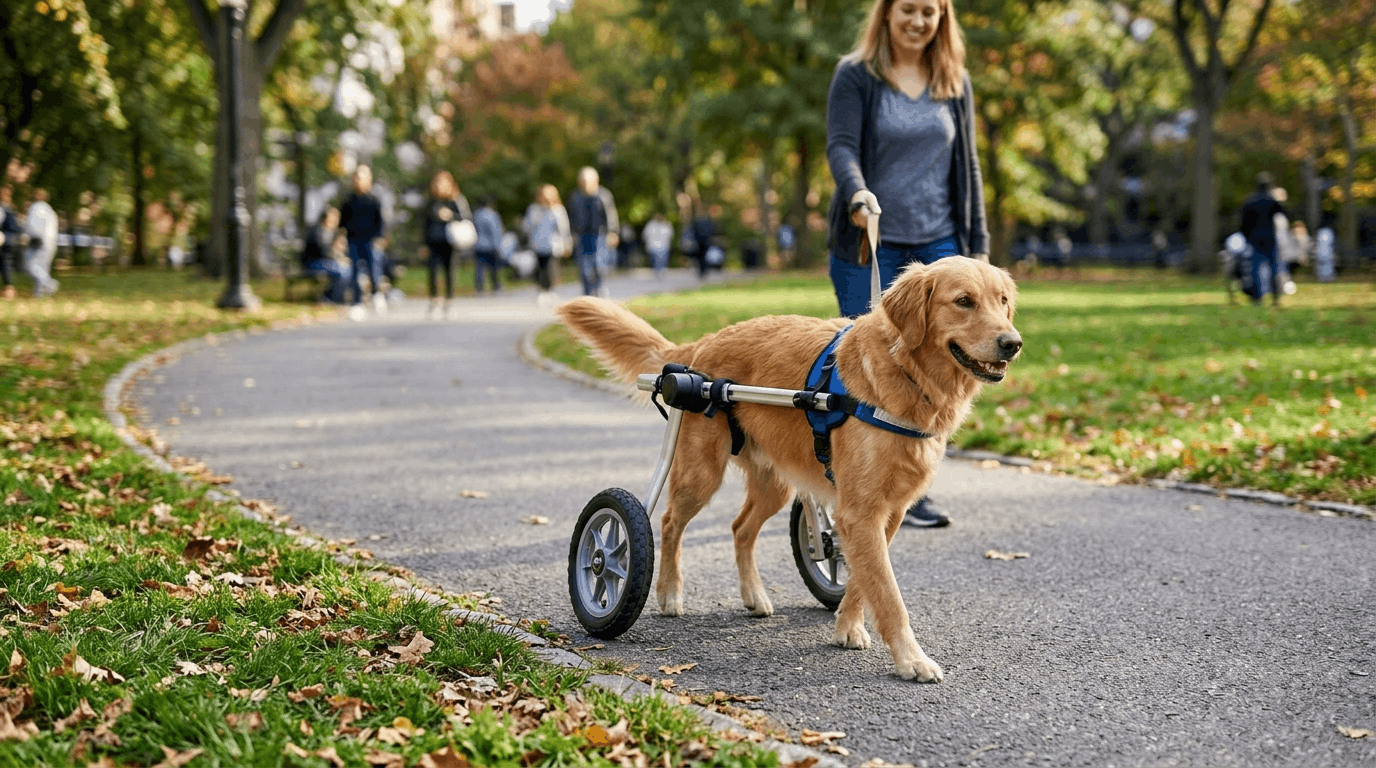
As dogs age, their bodies naturally begin to slow down, and mobility can become a real challenge. Many pet owners notice their once-active companions struggling with stairs, walks, or even standing up. That is where dog mobility aids come in, offering practical solutions that help senior pets stay comfortable and maintain their independence. With the right support, aging dogs can continue to enjoy daily activities without unnecessary pain or frustration.
Dog mobility aids are designed to reduce strain on joints and muscles while improving stability. Because senior dogs often deal with arthritis, hip dysplasia, or general weakness, these tools can make a significant difference in their quality of life. More importantly, they allow pet owners to provide care that adapts to their dog’s changing needs, ensuring both safety and comfort at home and outdoors.
Understanding Mobility Challenges in Senior Dogs
As dogs grow older, several physical changes affect how they move. Joint stiffness becomes more common, and muscle strength gradually decreases. Therefore, even simple tasks like climbing onto a couch or walking across slippery floors can become difficult. These challenges often develop slowly, so they may go unnoticed until the problem becomes more severe.
Dog mobility aids help address these issues by providing targeted support. For example, some devices focus on improving balance, while others assist with lifting or weight distribution. Because every dog is different, understanding your pet’s specific condition is essential before choosing the right aid. This approach ensures that the support you provide is both effective and comfortable.
Types of Dog Mobility Aids Available
There is a wide range of dog mobility aids available, each designed to solve a specific problem. One of the most common options is a support harness. These harnesses allow you to gently lift or guide your dog, especially when navigating stairs or getting into a car. They are easy to use and provide immediate relief for dogs with weak hind legs.
Another popular choice is a dog wheelchair. These devices are ideal for pets with more severe mobility limitations. By supporting the rear or entire body, wheelchairs enable dogs to move freely without putting pressure on painful joints. As a result, many dogs regain confidence and enjoy outdoor time again.
Ramps and stairs are also essential dog mobility aids, particularly for homes with elevated surfaces. Instead of jumping, dogs can walk up a gentle incline, which reduces stress on their joints. Additionally, non-slip mats and orthopedic beds can improve stability and comfort indoors, making daily life easier for aging pets.
Choosing The Right Support For Your Dog
Selecting the best dog mobility aids requires careful consideration. First, assess your dog’s current mobility level. If your pet only needs occasional assistance, a harness or ramp may be sufficient. However, if mobility is significantly impaired, a wheelchair or more advanced solution might be necessary.
Next, consider your dog’s size and weight. Proper fit is crucial, as poorly fitted dog mobility aids can cause discomfort or even worsen existing issues. Measuring your dog accurately and following manufacturer guidelines can help you avoid these problems. Additionally, look for durable materials that provide both support and long-term reliability.
It is also helpful to consult your veterinarian. Professional advice can guide you toward the most suitable dog mobility aids based on your pet’s health condition. This step ensures that you are not only addressing symptoms but also supporting overall well-being.
Benefits Of Using Mobility Aids Early
Many pet owners wait until mobility issues become severe before exploring solutions. However, introducing dog mobility aids early can prevent further strain and improve your dog’s comfort. By supporting joints and muscles sooner, you reduce the risk of injuries caused by slips or overexertion.
Early use of dog mobility aids also helps dogs adjust more easily. When introduced gradually, these tools become a natural part of their routine. As a result, your pet is more likely to accept and benefit from the support provided. This proactive approach can significantly enhance your dog’s quality of life as they age.
Making Your Home Senior-Dog Friendly
While dog mobility aids play a crucial role, your home environment also matters. Small adjustments can make a big difference in your dog’s daily comfort. For instance, placing non-slip rugs on smooth floors can prevent accidents and improve stability. Similarly, keeping essential items within easy reach reduces unnecessary movement.
Combining these changes with dog mobility aids creates a supportive environment that promotes independence. For example, using ramps alongside comfortable bedding allows your dog to rest and move without strain. These thoughtful modifications not only improve safety but also reduce stress for both you and your pet.
Emotional And Physical Well-Being
Mobility challenges do not only affect a dog’s physical health; they can also impact emotional well-being. Dogs that struggle to move may become less active and more withdrawn. Therefore, providing dog mobility aids can help restore confidence and encourage engagement in daily activities.
When dogs regain the ability to move comfortably, they often show noticeable improvements in mood and behavior. Walks become enjoyable again, and interaction with family members increases. This positive change highlights the importance of addressing mobility issues promptly and effectively.
Maintaining And Monitoring Progress
Once you introduce dog mobility aids, it is important to monitor your dog’s progress. Regularly check for signs of improvement or discomfort. Adjustments may be necessary as your dog’s condition changes, ensuring continued effectiveness and comfort.
Cleaning and maintaining dog mobility aids is equally important. Keeping equipment in good condition not only extends its lifespan but also ensures your dog’s safety. Routine care helps you get the most value from your investment while providing consistent support for your pet.
Conclusion
Dog mobility aids offer a practical and compassionate way to support senior pets as they navigate the challenges of aging. By choosing the right tools and introducing them at the right time, you can help your dog stay active, comfortable, and confident. Although aging is inevitable, the way you respond to it can make all the difference.
Ultimately, the goal is to enhance your dog’s quality of life while strengthening the bond you share. With the right combination of care, environment, and dog mobility aids, your senior pet can continue to enjoy their golden years with dignity and ease.
FAQ
1. When should I start using mobility support for my dog?
It is best to start when you notice early signs of stiffness or difficulty moving, rather than waiting for severe issues.
2. Are wheelchairs comfortable for older dogs?
Yes, when properly fitted, they can improve movement and reduce discomfort significantly.
3. Can small dogs benefit from support equipment?
Absolutely, dogs of all sizes can benefit depending on their mobility needs.
4. Do I need a vet’s advice before choosing equipment?
Consulting a veterinarian is recommended to ensure you select the most suitable option.
5. How can I make my home safer for a senior dog?
Adding non-slip surfaces, ramps, and supportive bedding can greatly improve safety and comfort.