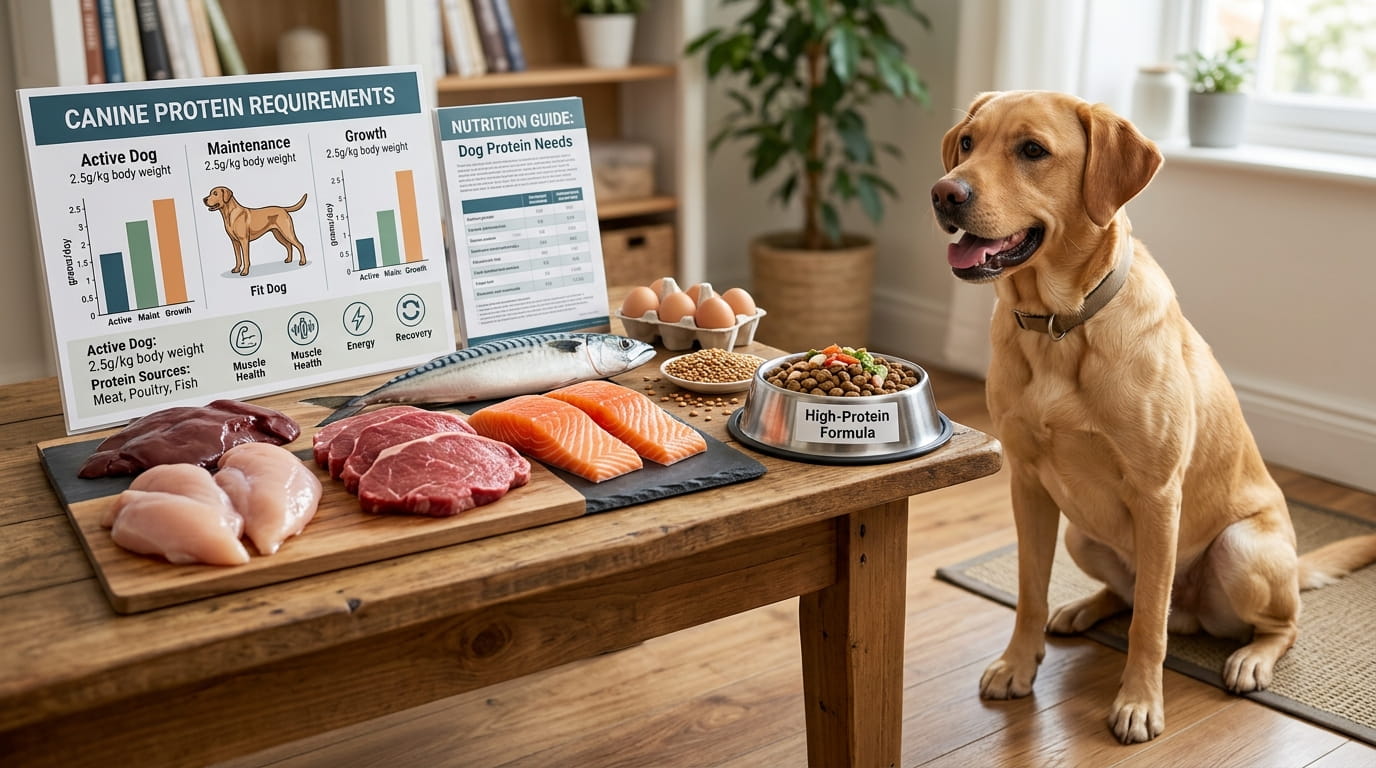
Protein is one of the most talked-about nutrients in dog food, yet many owners still feel unsure about how much their dog actually requires. Some bags promote high-protein formulas, while others focus on balanced nutrition, weight control, or sensitive digestion. Because of that, it can feel hard to know what is helpful and what is just marketing. Understanding dog protein needs gives you a clearer way to look at labels, compare foods, and feed your dog with more confidence.
At the most basic level, protein helps your dog build and maintain muscle, repair tissue, support the immune system, and produce important enzymes and hormones. However, more protein is not always automatically better. Your dog’s ideal intake depends on age, size, activity level, body condition, health status, and the quality of the protein source. A growing puppy, for example, has different needs than a calm senior dog. Likewise, a working breed that runs daily may need more support than a small indoor companion.
Still, protein should never be viewed in isolation. A dog’s diet also needs the right balance of fat, carbohydrates, vitamins, minerals, fiber, and water. When those nutrients work together, your dog can use protein more efficiently. As a result, the question is not simply, “How much protein is in this food?” Instead, the better question is, “Does this food provide enough high-quality protein for my dog’s real life?”
Why Protein Matters So Much for Dogs
Protein is made from amino acids, which are often described as building blocks for the body. Dogs need amino acids to maintain lean tissue, recover from normal activity, support healthy skin, and keep their coat strong. While the body can make some amino acids on its own, others must come from food. These are called essential amino acids, and they are one reason protein quality matters so much.
When you think about dog protein needs, it helps to picture protein as daily maintenance. Every day, your dog’s body repairs tiny amounts of muscle, renews cells, and supports normal immune function. Even a relaxed dog resting at home still needs enough protein for those internal processes. Therefore, protein is not only for athletic dogs or large breeds. It matters for every dog, from puppies to seniors.
Protein also plays a major role in satiety, which means it can help dogs feel satisfied after eating. This is especially useful for dogs that always seem hungry or need help managing weight. However, calories still matter. A food can be rich in protein and still lead to weight gain if portions are too large. For that reason, feeding the right amount of food is just as important as choosing the right formula.
Another key point is digestibility. Some protein sources are easier for dogs to digest and use than others. Chicken, turkey, beef, fish, lamb, eggs, and certain carefully processed meals can all provide valuable protein when used in a complete and balanced food. Plant proteins can also contribute amino acids, although they may not always offer the same amino acid profile as animal-based sources. Because of this, the full recipe matters more than one ingredient on the front of the package.
Many owners assume that a higher number on the guaranteed analysis always means better nutrition. Yet that number does not tell the whole story. It shows crude protein, not how well your dog can digest or use that protein. In addition, wet food and dry food cannot be compared directly without considering moisture content. Since canned food contains much more water, its protein percentage may look lower even when it provides a meaningful amount on a dry matter basis.
What Affects How Much Protein Your Dog Needs
Your dog’s life stage is one of the biggest factors. Puppies need protein to support growth, tissue development, and healthy body structure. Because they are building new muscle and organs, their nutritional needs are more demanding than those of many adult dogs. Large-breed puppies also need careful balance, since too much overall energy and poor mineral balance may affect healthy growth. So, puppy food should be chosen for complete growth support, not just high protein.
Adult dogs usually need enough protein to maintain lean muscle and daily body function. However, not all adult dogs live the same lifestyle. A very active dog may burn more energy and place more demand on muscles. Therefore, dog protein needs often rise when dogs hike, run, train, compete, herd, hunt, or work regularly. On the other hand, a low-activity dog may not need a performance-style food, especially if extra calories cause weight gain.
Body condition also matters. Overweight dogs still need adequate protein, particularly during weight loss. In fact, protein can help protect lean muscle when calories are reduced. However, the overall diet must be portion-controlled and appropriate for weight management. If a dog loses weight too quickly or eats too little protein, muscle loss may become a concern. That is why weight-loss plans should focus on controlled calories, steady progress, and nutrient density.
Senior dogs deserve special attention. In the past, many people believed older dogs should automatically eat low-protein diets. Today, the conversation is more careful. Many healthy senior dogs benefit from enough high-quality protein to maintain muscle as they age. Since muscle loss can affect mobility and strength, protein remains important in later life. However, senior dogs with certain medical conditions may need a veterinarian-guided diet, especially if kidney or liver disease is involved.
Health status can change everything. Dogs with food allergies, digestive problems, kidney disease, pancreatitis, liver disease, or other conditions may need a specific nutrition plan. Therefore, dog protein needs should always be considered alongside your dog’s medical history. A healthy adult dog and a dog with a diagnosed illness may require very different feeding strategies. When health concerns exist, your veterinarian should guide the decision.
Pregnant and nursing dogs also have higher nutritional demands. Their bodies support both their own health and the needs of developing or nursing puppies. As a result, they often need more calories and more carefully balanced nutrients, including protein. However, this is another situation where complete and balanced food matters more than simply choosing the highest-protein option on the shelf.
How to Read Protein on Dog Food Labels
Dog food labels can be helpful, but they can also be confusing. The guaranteed analysis lists crude protein as a percentage, but that percentage is affected by moisture. Dry food usually contains far less water than canned food, so the protein number often looks higher. Wet food may appear lower in protein because so much of the can is moisture. Therefore, comparing the two directly can lead to the wrong conclusion.
To understand dog protein needs more accurately, look beyond the front label and check whether the food is complete and balanced for your dog’s life stage. This statement is usually more useful than marketing words like “premium,” “natural,” or “high protein.” A complete and balanced food should provide the essential nutrients dogs need when fed as directed. However, your dog’s individual condition still matters.
Ingredients can also offer clues, although they do not tell the full nutritional story by themselves. Named animal proteins, such as chicken, salmon, beef, turkey, lamb, or egg, are familiar sources many owners recognize. Meals, such as chicken meal or fish meal, can also be concentrated protein sources when produced responsibly. However, ingredient order is based on weight before processing, so fresh meat may appear high on the list partly because it contains water.
It is also smart to consider how your dog responds to the food. Healthy digestion, steady energy, good stool quality, a shiny coat, and stable body weight are all useful signs. Of course, no single sign proves a food is perfect. Still, your dog’s day-to-day condition can tell you a lot. If your dog has frequent loose stools, itching, dull coat, poor appetite, or unexplained weight changes, it may be time to review the diet with a professional.
Portion size affects protein intake too. Even if a food contains a good protein level, your dog may not get enough nutrients if the portion is too small. Likewise, oversized portions may provide too many calories. For this reason, feeding guides are only a starting point. You may need to adjust portions based on weight, body condition, activity, and your veterinarian’s advice.
Treats can also change the balance. If your dog eats many low-protein treats, table scraps, or extras, those foods may crowd out the nutrition from a complete diet. Ideally, treats should make up only a small part of daily calories. This helps keep your dog’s main food responsible for most protein, vitamins, and minerals. In practical terms, dog protein needs are easier to meet when the main diet stays consistent.
Signs Your Dog May Need a Diet Review
A dog that does not get enough usable protein may show changes over time. These can include muscle loss, poor coat quality, low energy, slow recovery after activity, or general weakness. However, these signs can also point to many other health problems. Therefore, you should not assume protein is the only issue. A veterinary checkup is important when symptoms appear or persist.
Weight changes are another reason to look closely at food. If your dog is losing weight without trying, the diet may not provide enough calories, protein, or digestible nutrients. However, unexplained weight loss can also signal illness. On the other hand, if your dog is gaining weight, the food may be too calorie-dense, portions may be too large, or activity may be too low. In that case, switching to a higher-protein food without adjusting calories may not solve the problem.
Coat and skin changes can also raise questions. Protein supports skin and coat health, but allergies, parasites, grooming habits, seasonal changes, and medical conditions can also affect appearance. If your dog’s coat becomes dry, brittle, thin, or dull, review the full diet rather than focusing only on protein. Essential fatty acids, vitamins, and minerals may also play a role.
Energy levels matter too. A dog that tires quickly may need a diet adjustment, especially if activity has increased. However, fatigue can come from pain, heart issues, anemia, infection, or age-related changes. Because of that, nutrition should be part of the discussion, not the only explanation. This balanced view keeps your dog safer and helps you avoid guessing.
Digestive comfort is another practical clue. Some dogs do better with certain protein sources than others. For example, one dog may thrive on chicken, while another may do better with salmon or lamb. If your dog has sensitive digestion, sudden food changes can make symptoms worse. So, any switch should be gradual unless your veterinarian gives different instructions. Slowly mixing the new food with the old food over several days can help your dog adjust.
For dogs with suspected food sensitivities, changing proteins randomly may not be enough. Your veterinarian may recommend a structured elimination diet or a hydrolyzed protein formula. This is especially important because many over-the-counter foods can contain multiple protein sources. Without a clear plan, it becomes difficult to know what actually helps.
Finding the Right Balance for Your Dog
The best way to think about dog protein needs is to match the diet to the dog in front of you. A healthy, active adult dog may do well on a food with moderate to higher protein, especially if the calories fit their lifestyle. A less active dog may need a balanced maintenance food that supports muscle without overfeeding energy. Meanwhile, a puppy, pregnant dog, nursing dog, senior dog, or dog with health problems may need a more specific approach.
Quality should come before extremes. A food with a sensible protein level from digestible sources may be better than a formula that simply advertises a very high percentage. Also, balance matters because protein works with other nutrients. Fat provides energy and supports skin and coat health. Carbohydrates and fiber can support digestion and stool quality. Vitamins and minerals help with countless body processes. So, a strong dog food formula should support the whole dog.
Your dog’s breed and size may also influence your decision. Large and giant breeds can be prone to joint stress, so maintaining lean muscle without excess weight is important. Small dogs may need calorie-dense food because they often eat smaller portions. Athletic dogs may need more energy and recovery support. Still, breed alone should not determine everything. Individual condition matters more than general breed assumptions.
It is also helpful to check your dog’s body condition regularly. You should usually be able to feel the ribs with light pressure, but they should not be sharply visible in most healthy dogs. Your dog should have a visible waist when viewed from above and a tuck behind the ribs when viewed from the side. If you are unsure, your veterinarian can show you how to assess body condition at home.
As your dog changes, the diet may need to change too. A dog that was once highly active may slow down with age. A puppy eventually becomes an adult. A senior dog may start losing muscle or develop a health condition. Because of that, dog protein needs are not fixed forever. It is wise to reassess food at major life stages and after changes in weight, activity, or health.
Owners also need to be careful with homemade diets. While homemade meals can be appealing, they are easy to get wrong without professional formulation. Meat alone is not a complete diet. Dogs also need the right balance of calcium, phosphorus, essential fats, vitamins, and trace minerals. If you want to feed homemade food, work with a veterinary nutrition professional to create a complete recipe.
Raw diets also require caution. Some owners choose them because they believe raw food is more natural or protein-rich. However, raw diets can carry safety risks for dogs and people, especially in homes with children, seniors, pregnant people, or immunocompromised family members. They can also be nutritionally unbalanced if not carefully prepared. So, discuss the risks and benefits with your veterinarian before making that choice.
Supplements are rarely the first answer. If your dog already eats a complete and balanced diet, adding protein powders or extra meat may throw off calories and nutrient balance. In some cases, it can also worsen digestive issues. Instead, start by choosing the right main food and feeding the correct portion. Then, use supplements only when a veterinarian recommends them.
Conclusion
So, how much protein does your dog really need? The honest answer is that it depends on the dog. Age, size, activity level, body condition, health, and food quality all play a role. While protein is essential, the goal is not to chase the highest number on the label. The goal is to feed enough high-quality, digestible protein within a complete and balanced diet that fits your dog’s real needs.
When you understand dog protein needs, you can make better choices without getting distracted by marketing claims. Look at your dog’s life stage, watch their body condition, review the food label, and pay attention to how they feel and function. Most importantly, ask your veterinarian for guidance when your dog has health issues, major weight changes, or special dietary needs.
A good diet should help your dog stay strong, comfortable, active, and satisfied. With the right balance, protein becomes more than a number on a bag. It becomes part of a thoughtful feeding plan that supports your dog’s health every day.
FAQ
- How Do I Know if My Dog Is Getting Enough Protein?
Your dog may be getting enough protein if they maintain healthy muscle, steady energy, good coat quality, normal stools, and an ideal body condition. However, these signs do not replace veterinary advice. If your dog loses muscle, becomes weak, or has ongoing coat or digestion problems, schedule a checkup.
- Do Puppies Need More Protein Than Adult Dogs?
Yes, puppies usually need more nutritional support than adult dogs because they are growing quickly. However, their diet must be complete and balanced for growth. Large-breed puppies need especially careful nutrition, so choose a food designed for their life stage and size.
- Is High-Protein Dog Food Always Better?
No, high-protein food is not automatically better for every dog. Some active dogs may benefit from more protein, while others need a moderate formula with controlled calories. The best choice depends on your dog’s age, weight, activity, and health status.
- Should Senior Dogs Eat Less Protein?
Not always. Many healthy senior dogs need enough quality protein to help maintain muscle as they age. However, seniors with kidney disease, liver disease, or other medical concerns may need a special diet. Ask your veterinarian before reducing protein for an older dog.
- Can Too Much Protein Hurt My Dog?
For many healthy dogs, excess protein is less concerning than excess calories or poor diet balance. However, dogs with certain medical conditions may need controlled protein levels. Because every dog is different, it is best to review dog protein needs with your veterinarian when health concerns are present.
Featured Image Alt Text:
Dog eating healthy food from a bowl while owner reviews dog protein needs.