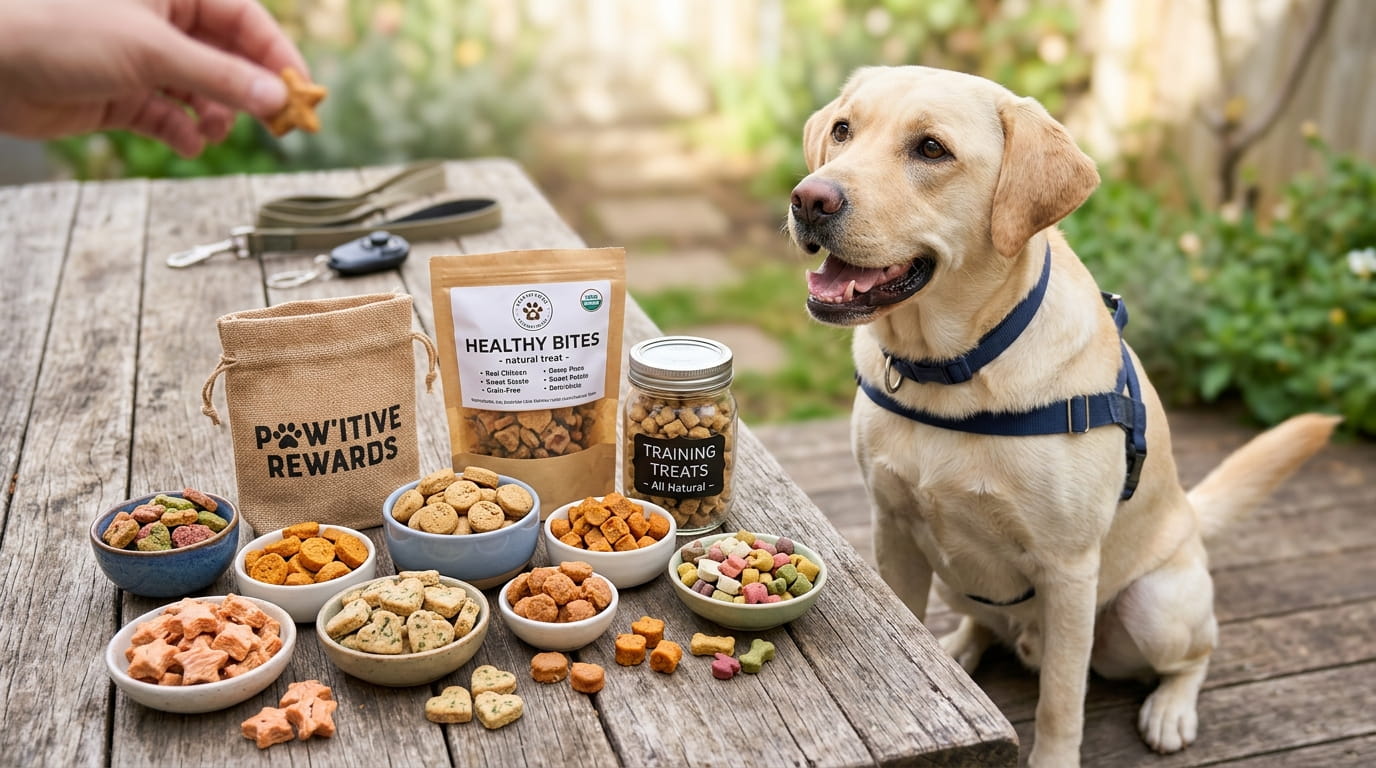
The best dog training treats do more than taste good. They help your pup stay focused, excited, and ready to learn, especially during short training sessions at home or outdoors. Dogs repeat behaviors that bring rewards, so the right treat can turn a simple cue into a clear, positive experience. However, not every treat works well for training. Some are too large, too dry, too bland, or too rich for frequent use. Because of this, choosing treats with the right size, texture, smell, and nutrition can make a big difference in your dog’s progress.
Training works best when your dog feels rewarded quickly. A treat should be small enough to eat in one bite, soft enough to chew fast, and interesting enough to keep attention. If your dog spends several seconds crunching a biscuit, the lesson can lose momentum. On the other hand, a soft, flavorful reward helps you mark the behavior and move right into the next repetition. This is why many trainers prefer small, moist treats for teaching new skills.
Motivation also depends on the dog. Some puppies will work for basic kibble, while others need a stronger reward in busy places. A quiet kitchen session may only require a simple treat. However, walking past dogs, people, traffic, or squirrels may require something more exciting. Therefore, the best choice is not always the most expensive treat. Instead, it is the treat your dog values in that exact training moment.
Treats should also support your dog’s overall health. Training can involve many rewards, especially when teaching a new cue. So, calories add up quickly. Small portions matter. It also helps to choose simple ingredients, avoid unnecessary fillers, and match treats to your dog’s age, size, and digestion. With a thoughtful approach, rewards can support learning without upsetting your dog’s stomach or affecting weight.
What Makes a Training Treat Truly Effective
The best dog training treats are usually small, soft, easy to handle, and highly appealing. Size matters because training often involves repetition. If every reward is large, your dog may fill up fast or take in too many calories. Small treats allow you to reward often without overfeeding. In many cases, a pea-sized piece is enough for a small dog, while a slightly larger piece may work for a bigger pup.
Texture is just as important. Soft treats work well because dogs can eat them quickly. This keeps the training rhythm smooth. Crunchy treats are not always bad, but they can slow things down. If your dog needs to stop, chew, and search for crumbs, attention may drift. For focused sessions, soft rewards often create better timing and clearer communication.
Smell also plays a major role. Dogs experience the world through their noses, so a treat with a strong scent can be far more motivating than a plain biscuit. This does not mean it needs to be unhealthy. Many simple foods, such as small pieces of cooked chicken or freeze-dried meat, can be very appealing. However, every dog is different. Some dogs love cheese, while others prefer salmon, turkey, peanut butter flavor, or their regular food.
The best dog training treats should also be easy for you to use. If treats crumble, stain your hands, or make a mess in your pocket, you may use them less consistently. A good training reward should fit easily in a pouch, break into smaller pieces, and stay fresh during the session. Convenience matters because the easier it is to reward on time, the better your dog will understand what earned the treat.
Another key feature is digestibility. Training treats should not cause gas, loose stool, itching, or vomiting. If your dog has a sensitive stomach, choose simple recipes with fewer ingredients. Also, introduce new treats slowly. Even a high-quality treat can cause problems if your dog eats too much too fast. Therefore, moderation is part of smart reward-based training.
How to Match Treats to Your Dog’s Motivation Level
Not every training moment needs the same reward. In fact, using treat value wisely can improve focus and reduce overfeeding. Low-value rewards are simple treats your dog likes but does not find thrilling. These can include regular kibble or basic small training bites. They work well for easy cues in calm settings, such as sit, touch, or name recognition in your living room.
Medium-value treats are more exciting. These may include soft meat-flavored bites, small pieces of dog-safe fruit, or a favorite commercial reward. They are useful when distractions increase slightly. For example, you might use them in the yard, on a quiet sidewalk, or during a group class. Because the environment is harder, the reward should feel more worthwhile.
High-value treats are the most powerful rewards. These are foods your dog finds especially exciting, such as tiny pieces of cooked chicken, turkey, low-fat cheese, or freeze-dried liver. They are useful for recall, leash work around distractions, vet handling practice, crate training, or any behavior your dog finds challenging. However, high-value treats should still be used in small portions.
The best dog training treats often come from a mix of these reward levels. If you use only the most exciting treat all the time, it may lose some impact. Also, your dog may start refusing lower-value rewards. Instead, save special treats for harder moments. This keeps training fresh and helps your dog learn that big focus can lead to big rewards.
You can think of treats like payment for effort. A simple sit in the kitchen may earn a small reward. Coming when called away from another dog deserves something better. This approach feels fair to your dog and helps you compete with distractions. As a result, your pup learns that listening to you is worth it, even when the world feels exciting.
It also helps to notice your dog’s mood. A tired, nervous, or overstimulated dog may not take food at all. In that case, the problem may not be the treat. Your dog may need distance, rest, or an easier setup. Good training is not about forcing motivation. Instead, it is about creating the right environment, then using rewards that match the challenge.
Ingredients Worth Looking For
Simple ingredients are often a smart choice when buying or preparing treats. Many dogs do well with rewards made from real meat, fish, pumpkin, sweet potato, peanut butter without xylitol, oats, or other dog-safe ingredients. The goal is not perfection. Rather, it is to choose treats that your dog enjoys and tolerates well.
Protein-based treats can work especially well because they often smell strong and feel satisfying. Chicken, turkey, beef, lamb, salmon, and liver are common options. However, some dogs have food sensitivities. If your dog reacts poorly to one protein, try another with your vet’s guidance. For dogs with known allergies, choose treats that match their approved diet.
The best dog training treats should fit your dog’s calorie needs. This is especially important for small breeds, senior dogs, and dogs that gain weight easily. Training rewards may seem tiny, but they can add up over several sessions. To manage this, you can break treats into very small pieces, use part of your dog’s meal as rewards, and keep sessions short.
Avoid treats with ingredients your dog should not eat. Xylitol is especially dangerous and may appear in some peanut butter or sugar-free products. Also, avoid chocolate, grapes, raisins, onions, garlic-heavy foods, alcohol, caffeine, and anything heavily salted or seasoned. If you are unsure about an ingredient, check with your veterinarian before offering it.
For puppies, choose soft treats that are gentle on developing teeth and easy to digest. Puppy stomachs can be sensitive, so simple is usually better. Additionally, puppies need balanced nutrition for growth. Treats should support training, not replace meals. A good rule is to keep rewards small and use them mainly during focused learning moments.
Natural does not always mean safe, so stay practical. Some treats marketed as natural may still be too fatty, too hard, or too rich for frequent training. Very hard chews can also be poor choices during active lessons because they take too long to eat. For training, fast rewards work better than long-lasting snacks.
Best Treat Types for Different Training Goals
The best dog training treats for basic obedience are usually small soft bites or pieces of kibble. These work well for sit, down, stay, touch, and polite greeting practice. Since these skills often require many repetitions, you want rewards that are easy to portion. If your dog is already motivated by kibble, that can be a great choice for indoor work.
For recall training, use higher-value rewards. Coming when called is one of the most important skills your dog can learn. Because the world offers many distractions, the reward should feel exciting. Tiny pieces of cooked chicken, freeze-dried meat, or a favorite soft treat can help your dog feel that returning to you is always worthwhile.
For leash training, choose treats that are easy to deliver while moving. Soft pieces work well because your dog can eat them quickly and keep walking. Treats that crumble or require chewing can interrupt the flow. During loose leash practice, timing matters. Reward your dog when they walk near you, check in, or move away from a distraction.
For crate training, you may need treats that feel comforting and positive. Small soft rewards can help your dog enter the crate, settle, and build a good association. However, you can also use safe food-stuffed toys when your dog is resting inside. Just remember that a training treat and a long-lasting enrichment snack serve different purposes.
For grooming and handling practice, use treats your dog finds very rewarding. Nail trims, ear checks, brushing, and vet-style handling can feel strange or stressful. High-value rewards can help your dog stay calmer and build trust. Go slowly, reward often, and stop before your dog feels overwhelmed. Over time, this can make care routines much easier.
The best dog training treats for outdoor distractions are usually smellier and more exciting than indoor rewards. Parks, sidewalks, and busy areas are full of competing sounds and scents. Therefore, a plain biscuit may not be enough. If your dog ignores treats outside, try increasing distance from distractions first. Then use a more valuable reward once your dog can focus again.
How to Use Treats Without Overfeeding
Treats are helpful, but they should not take over your dog’s diet. Most dogs do best when treats make up only a small part of daily calories. Since training can involve many rewards, portion control matters. Fortunately, you can keep your dog motivated without giving large pieces.
Start by cutting treats smaller than you think you need. Dogs care more about the reward experience than the size of each piece. A tiny soft bite can still feel exciting, especially when delivered with happy praise. For small dogs, very small pieces are essential. For large dogs, small rewards still work well during repeated practice.
You can also use your dog’s regular food as part of training. Measure daily meals, then set aside some kibble for rewards. This method works well for dogs that enjoy their food. It also helps prevent extra calories. However, when training around distractions, you may still need higher-value treats for better focus.
Rotate rewards to keep interest high. Use kibble for easy cues, soft treats for moderate challenges, and special rewards for difficult tasks. This variety keeps your dog engaged. It also helps you avoid relying on rich treats too often. As a result, training stays motivating and balanced.
Watch your dog’s body condition over time. If your dog gains weight, reduce treat size, shorten sessions, or replace some treats with meal portions. You can also use life rewards, such as praise, play, sniffing, toys, or access to the yard. Food is powerful, but it is not the only reward dogs enjoy.
The best dog training treats should support your dog’s progress without creating health concerns. If your dog has diabetes, pancreatitis, kidney disease, allergies, obesity, or another medical condition, ask your vet which treats are safe. A dog with special needs may still enjoy training, but the reward plan should fit their health.
Common Mistakes Dog Owners Make With Treats
One common mistake is using treats that are too boring for the situation. A dog may take kibble indoors but ignore it outside. That does not mean the dog is stubborn. It often means the environment is more rewarding than the food. In that case, use a better treat, reduce distractions, or make the task easier.
Another mistake is making treats too large. Big pieces slow training and add calories fast. They can also make dogs thirsty or full before the session ends. Smaller rewards allow more practice, which helps learning. Remember, training is about timing and repetition, not treat size.
Some owners also wait too long to reward. Timing helps your dog understand which behavior earned the treat. If your dog sits, then jumps, then gets the reward, they may connect the reward with jumping. Therefore, mark the right behavior with a word like “yes” or a clicker, then give the treat quickly.
Using treats as a bribe can also cause problems. A bribe appears before the behavior and becomes part of the cue. A reward comes after the behavior and strengthens it. At first, you may lure your dog with food to teach a movement. However, fade the lure quickly. Then reward after your dog responds.
The best dog training treats work even better when paired with clear communication. Say the cue once, reward the behavior you want, and keep sessions short. If your dog loses focus, end on an easy win. This builds confidence and keeps training fun.
Finally, avoid using treats to push your dog into scary situations. Food can help create positive associations, but it should not force a dog past their comfort zone. If your dog is afraid, create distance, lower the pressure, and reward calm choices. This approach builds trust and leads to better long-term results.
Conclusion
The best dog training treats are small, soft, appealing, easy to use, and suited to your dog’s needs. They help your pup focus, learn faster, and enjoy the training process. However, the right treat depends on the situation. A simple reward may work at home, while a busy park may require something more exciting.
Good training also depends on timing, consistency, and thoughtful portions. Treats should be small enough for frequent use and tasty enough to matter. They should also fit your dog’s digestion, weight goals, age, and health needs. When you choose wisely, rewards become a powerful tool instead of an extra snack.
Most importantly, treats should make training feel positive for both of you. When your dog understands that listening leads to something good, learning becomes easier. With patience, practice, and the best dog training treats for each situation, your pup can stay motivated and build skills that last.
FAQ
- What treats work best for puppy training?
Soft, tiny, easy-to-chew treats usually work best for puppies. Choose simple ingredients and avoid anything too rich, hard, salty, or difficult to digest.
- Can I use kibble as a training reward?
Yes, kibble can work well in calm settings, especially if your dog likes it. For harder tasks or distractions, you may need a higher-value reward.
- How many rewards can I give during training?
You can give several small rewards during short sessions, but keep portions tiny. Also, adjust meals if your dog gets many treats throughout the day.
- Why does my dog ignore treats outside?
Outdoor distractions may be more exciting than the food. Try moving farther away, using a smellier reward, and practicing easier cues first.
- Are homemade rewards safe for dogs?
Homemade rewards can be safe when you use dog-friendly ingredients. Avoid xylitol, chocolate, grapes, raisins, onions, heavy seasoning, and high-fat foods.