If you share your home with a dog, you already know that those bright eyes and wagging tail can convince you to offer a taste of almost anything you’re eating. But here’s the truth: many everyday foods that feel perfectly safe for humans can pose serious risks for our pets. Understanding the most dangerous foods for dogs helps you avoid scary vet visits, protect your dog’s long-term health, and enjoy the peace of mind that comes with being prepared. In this guide, we’ll walk through the most harmful foods, explain why they’re risky, and help you create safer habits around your home.
Dogs explore the world with their noses and mouths. Because of this, they don’t always understand what’s good or bad for them. That responsibility falls on us. And while the list of dangerous foods for dogs can feel overwhelming, it becomes much easier when broken down into clear categories. You’ll quickly see patterns and learn which foods always require caution.
Before diving into specific items, keep one thing in mind: every dog is different. Some dogs may react strongly to even tiny amounts of a toxic food, while others show symptoms only after a larger dose. Because of this unpredictability, avoiding these dangerous foods altogether is always the safest choice.
Chocolate and Caffeine: Why These Favorites Turn Toxic Fast
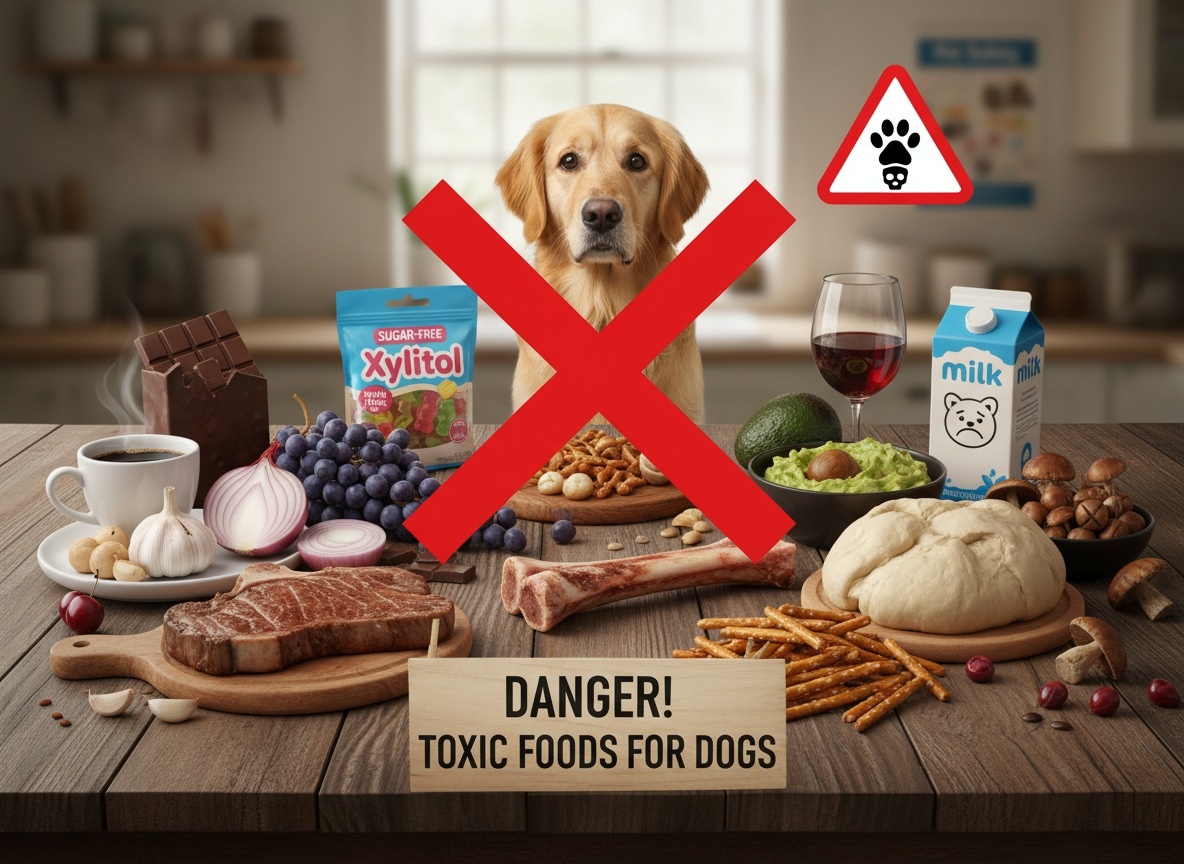
Chocolate often tops the list of dangerous foods for dogs. You may have heard that it’s toxic, but many owners still underestimate how dangerous it can be. Chocolate contains theobromine and caffeine, two stimulants that dogs process very slowly. Even a small amount can trigger vomiting, diarrhea, elevated heart rate, tremors, or seizures. Dark chocolate and baking chocolate are particularly hazardous because they contain higher concentrations of these chemicals.
Caffeine is just as risky. That means coffee grounds, espresso beans, energy drinks, and even certain sodas can harm your dog. You might not realize it, but caffeine hides in more products than you’d expect. A curious dog sniffing around the trash can easily ingest enough to cause a medical emergency.
Because these ingredients act quickly, you should contact a vet immediately if your dog consumes chocolate or caffeinated products. Even if your dog seems fine at first, symptoms often build over time.
Grapes and Raisins: Tiny Fruits, Huge Consequences
Grapes and raisins are some of the most dangerous foods for dogs, even though scientists still don’t fully understand why they’re toxic. What we do know is that grapes can cause sudden kidney failure in dogs. The reaction doesn’t depend on a dog’s size or the number of grapes eaten. Some dogs become gravely ill from a single raisin, while others show delayed symptoms after eating several.
Early signs of grape or raisin toxicity often include vomiting, lethargy, and abdominal pain. If untreated, kidney function declines quickly, and the damage may be irreversible. Because these symptoms can appear hours later, taking action right away is essential.
Onions, Garlic, and the Entire Allium Family
Onions and garlic are delicious additions to human meals, but they’re dangerous foods for dogs because they damage red blood cells. This damage leads to anemia, which can become severe if not treated promptly. The risk doesn’t stop with raw onions or garlic. Cooked, powdered, dehydrated, and even concentrated extracts all pose the same threat.
You’ll find onion and garlic powder in many soups, sauces, gravies, spice blends, and processed foods. That makes it easy for dogs to ingest them accidentally. Even small doses over time can add up and cause harm.
If your dog is exposed to these foods, symptoms may not appear immediately. They often develop gradually through weakness, pale gums, rapid breathing, and fatigue. Because the damage builds slowly, many owners don’t realize the cause until it becomes serious.
Xylitol: The Hidden Sweetener That Can Trigger Emergencies
Xylitol is one of the most dangerous foods for dogs because it acts fast and hides in countless products. You’ll find it in sugar-free gum, baked goods, peanut butter, toothpaste, cough syrups, vitamins, drink mixes, and even some protein bars. While harmless to humans, xylitol triggers a rapid release of insulin in dogs. This causes a dangerous drop in blood sugar, known as hypoglycemia.
Symptoms often start within minutes. A dog may appear unsteady, confused, shaky, or extremely tired. Without urgent treatment, seizures or liver damage can follow. Because xylitol poisoning progresses quickly, immediate veterinary help is crucial.
To protect your dog, check ingredient labels for xylitol or its newer alternative names like birch sugar. Safe storage habits make all the difference here because dogs will chew through packages if curious enough.
Alcohol and Raw Yeast Dough: A Dangerous Combination
Alcohol is a well-known toxin for dogs. Even small amounts can cause dangerously low blood pressure, confusion, vomiting, and difficulty breathing. Dogs are much more sensitive to alcohol than humans, so spilled wine, unmonitored cocktails, or fermented fruit can create serious risks.
Raw yeast dough is another overlooked danger. When a dog eats raw dough, the yeast continues rising inside the stomach. This causes painful bloating and the release of alcohol through fermentation. What seems like a minor kitchen accident can escalate into an emergency quickly. If you’re baking at home, always keep rising dough well out of reach.
Macadamia Nuts and Other Toxic Nuts
Some nuts are safe for dogs in small quantities, but macadamia nuts rank among the most dangerous foods for dogs. Even a few nuts can lead to muscle tremors, vomiting, fever, hind-leg weakness, or confusion. Researchers aren’t entirely sure why macadamia nuts are toxic, but the effects appear quickly and can last for days.
Other nuts, like walnuts and pecans, are often contaminated with mold that produces tremorgenic toxins. These toxins affect your dog’s nervous system and can lead to severe neurological symptoms. To stay safe, avoid giving your dog any nuts unless specifically recommended by your vet.
Fatty Foods and Cooked Bones: Hidden Hazards at Mealtime
Many dog owners enjoy sharing bits of meat or leftovers with their pets. While this feels harmless, fatty foods can trigger pancreatitis. This painful condition inflames the pancreas and can require hospitalization. Foods like bacon, sausage, fried items, gravy, or excess fat trimmed from meat create unnecessary risks.
Cooked bones also pose dangers for dogs. They splinter easily, which can puncture the digestive tract or become lodged in the throat. Raw bones may be safer in some cases, but even those require supervision and guidance from a veterinarian. The safest option is to stick with dog-specific treats and chews.
Artificial Sweeteners, Additives, and Ultra-Processed Foods
Highly processed foods often contain artificial sweeteners, flavor enhancers, and preservatives. While not all are toxic, many can upset your dog’s digestive system or contribute to long-term health issues. Certain sweeteners besides xylitol may cause stomach pain or diarrhea. Artificial flavors and dyes can trigger allergies or skin problems.
Ultra-processed snacks like chips, cookies, or salty crackers also upset a dog’s electrolyte balance. These foods contain high sodium levels that stress a dog’s heart and kidneys. Dogs simply don’t need these additives, and avoiding them is always the smarter choice.
Avocados, Fruit Pits, and Seeds
Avocados contain a compound called persin. While dogs are less sensitive to persin than birds or horses, avocados still aren’t recommended. The flesh can cause stomach upset, and the pits present choking hazards.
Fruit pits, such as those in peaches, plums, and cherries, can obstruct the digestive tract. Some pits also contain cyanide, a fast-acting toxin. Apple seeds carry small amounts of cyanide too, though a dog must eat a large amount for danger to arise.
The simplest rule is often the safest one: always remove pits, seeds, and cores before offering any fruit to your dog. When in doubt, choose fruits like blueberries or strawberries, which are much safer.
Moldy Foods and Spoiled Ingredients
Dogs may be less picky than humans, but moldy or spoiled foods are dangerous foods for dogs. Certain molds produce tremorgenic mycotoxins that affect the nervous system. A dog who eats contaminated food may develop tremors, seizures, or extreme agitation.
Spoiled meats, dairy, and leftovers also contain high levels of bacteria. Just like in humans, these can cause vomiting, dehydration, and gastrointestinal distress. Always store food properly and dispose of anything questionable right away.
How to Keep Your Dog Safe Around Dangerous Foods
Preventing exposure to dangerous foods for dogs is easier when you build simple habits. Start by keeping unsafe items out of reach. Use closed cabinets, pantry bins, and sealed containers. Dogs are talented problem-solvers when motivated by food, so assume they’ll try to get into anything left unattended.
Teach family members, especially children, about toxic foods. Kids often enjoy sharing snacks with pets and may not know the risks. When hosting guests, give them quick guidelines so they don’t accidentally slip your dog a treat.
You can also create safe zones during meals and parties. A dog bed or designated spot teaches your pup to relax away from the table. This reduces begging and limits the chance of accidental feeding.
Finally, learn the symptoms of food poisoning. If your dog appears off, restless, or uncomfortable after eating something, it’s better to contact your vet sooner rather than later. Rapid response often prevents more serious complications.
When to Call the Vet Immediately
Even with careful planning, accidents happen. If you think your dog ate a dangerous food, the safest step is to call your veterinarian or an emergency animal hospital immediately. Acting quickly makes a huge difference in treatment success. Provide as much information as possible—what your dog ate, the estimated amount, and the time of ingestion.
You can also contact a pet poison hotline for guidance. These helplines walk you through symptoms to watch for and steps to take. Having the number saved on your phone is incredibly helpful during stressful situations.
Safe Alternatives to Common Human Foods
The good news? You don’t have to eliminate all human foods from your dog’s life. Many healthy alternatives make excellent snacks. Carrots, green beans, blueberries, cucumber slices, and plain cooked chicken are generally safe. When introducing any new food, start small and monitor your dog’s reaction.
Choosing these options instead of dangerous foods for dogs allows you to share bonding moments without compromising safety. Your dog still feels included, and you gain peace of mind.
Conclusion
Keeping your dog safe doesn’t mean living in fear. It means knowing which foods pose real risks and building simple habits that prevent accidents. When you understand the most dangerous foods for dogs, you feel confident making better choices every day. You also protect your pup from avoidable emergencies and create a healthier, happier life together. A little knowledge goes a long way, and your dog depends on you to stay informed, attentive, and prepared.
FAQ
- What should I do if my dog eats chocolate?
Contact your veterinarian immediately. Even small amounts can be dangerous, and early treatment is critical. - Are all nuts unsafe for dogs?
Not all nuts are toxic, but many pose choking hazards or contain harmful compounds. Macadamia nuts are especially dangerous. - Can dogs eat grapes if they’ve had them before without issues?
No. Grape toxicity is unpredictable. Even one grape can cause kidney failure, so always avoid them. - Is garlic powder as harmful as fresh garlic?
Yes. Garlic powder is concentrated and can damage red blood cells just like fresh garlic. - What human foods are safe for dogs?
Carrots, blueberries, cucumbers, plain chicken, and green beans are generally safe when given in moderation.