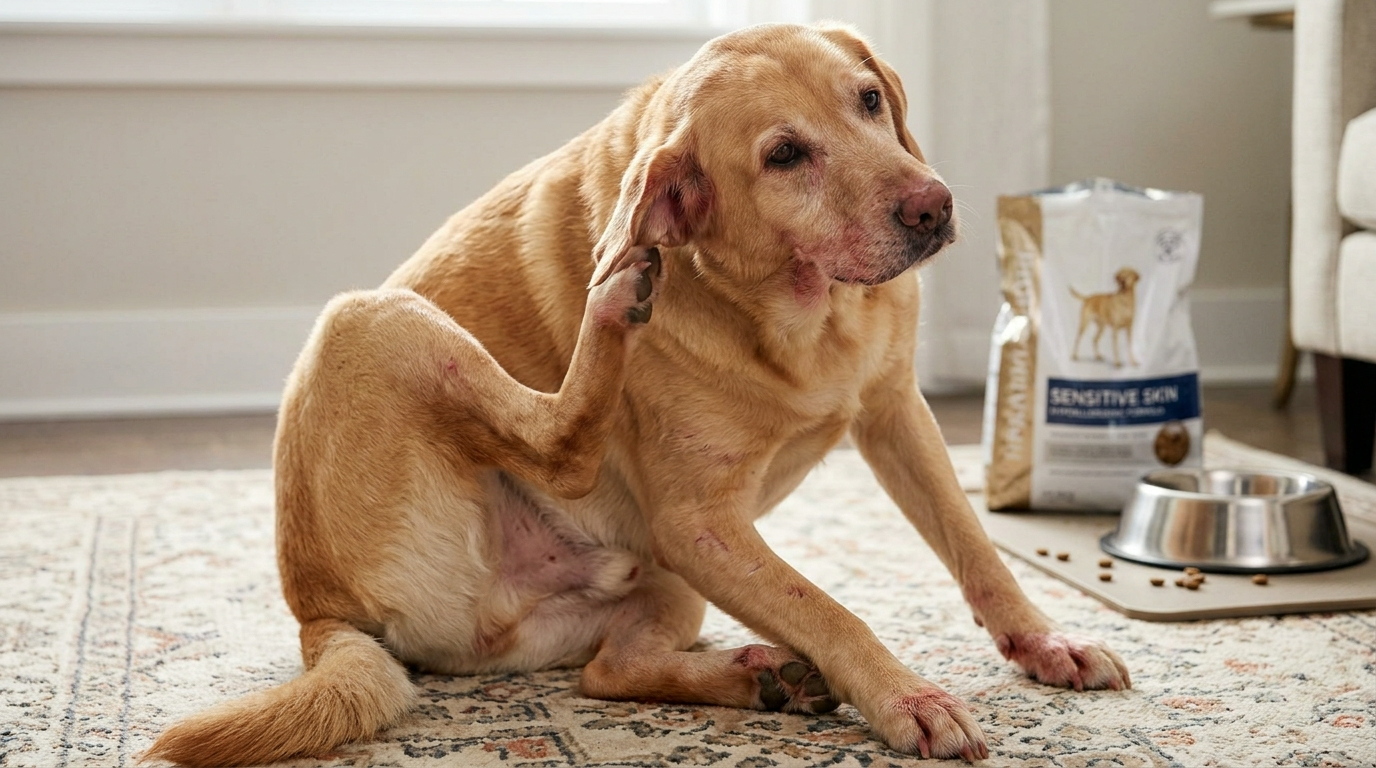
Persistent scratching can frustrate both dogs and owners. In many cases, dog itching food allergies play a significant role in ongoing skin irritation. Because food sensitivities often go unnoticed, symptoms may continue for months before owners identify the root cause.
While fleas and environmental triggers are common culprits, diet-related reactions should not be ignored. Identifying whether food contributes to your dog’s discomfort requires careful observation and patience. Fortunately, with the right approach, most dogs experience noticeable improvement.
Understanding Why Dogs Itch
Itching, also known as pruritus, signals irritation beneath the skin. However, the cause varies widely. External parasites, seasonal pollen, and cleaning products can all trigger inflammation.
Food reactions create a different response pattern. Instead of appearing seasonally, symptoms often persist year-round. Because the trigger remains in the diet daily, inflammation continues.
Dog itching food allergies occur when the immune system misidentifies a protein as harmful. Consequently, the body releases inflammatory chemicals. These chemicals irritate the skin, ears, and digestive tract.
Recognizing patterns becomes essential. Therefore, tracking symptoms over time helps narrow potential causes.
Common Symptoms Linked to Diet
Food-related reactions show specific warning signs. Although scratching remains the most obvious symptom, other indicators frequently appear.
Red, inflamed skin often develops around paws and ears. Additionally, frequent ear infections may signal dietary triggers.
Some dogs lick their paws excessively. Others rub their faces on furniture or carpet. Because inflammation spreads internally, digestive upset may accompany skin issues.
Dog itching food allergies sometimes cause chronic diarrhea or soft stools. Flatulence and vomiting may also occur.
While symptoms vary, consistent irritation without seasonal changes often points toward food sensitivity.
Proteins That Commonly Trigger Reactions
Dogs can develop sensitivities to many ingredients. However, certain proteins appear more frequently in allergic cases.
Beef ranks among the top triggers. Chicken, dairy, and wheat also commonly cause reactions. Because these ingredients appear in many commercial foods, exposure remains constant.
Dog itching food allergies often develop after prolonged exposure to one protein. Therefore, even long-fed diets can suddenly cause problems.
Novel proteins, such as duck or venison, sometimes offer relief. Hydrolyzed protein formulas also reduce immune reactions because the proteins break into smaller fragments.
Switching foods without guidance may delay improvement. Consequently, veterinary advice remains essential.
How Food Allergies Differ From Environmental Allergies
Environmental allergies fluctuate with seasons. For example, pollen spikes during spring and fall.
In contrast, dog itching food allergies produce year-round symptoms. Because diet remains stable, inflammation rarely subsides.
Ear infections linked to diet also recur frequently. Meanwhile, environmental triggers often improve indoors or during certain months.
Distinguishing between the two may require testing and elimination trials. Therefore, careful evaluation prevents misdiagnosis.
The Elimination Diet Process
The elimination diet stands as the gold standard for diagnosing dietary allergies. However, it requires strict commitment.
First, choose a limited-ingredient or prescription hydrolyzed diet. Feed only that formula for 8 to 12 weeks. No treats, table scraps, or flavored medications should interrupt the trial.
Dog itching food allergies typically improve within this period if diet causes the reaction. Skin healing may take time, so patience remains critical.
After improvement appears, reintroduce previous ingredients slowly. If symptoms return, the trigger becomes clear.
Although this process feels lengthy, it provides accurate answers.
Supporting Skin Health During the Trial
While identifying triggers, soothing irritated skin helps improve comfort.
Omega-3 fatty acids reduce inflammation. These supplements support skin barrier repair and coat health.
Regular bathing with veterinary-approved shampoos also relieves surface irritation. However, avoid overbathing, as it may dry the skin further.
Dog itching food allergies often improve faster when supportive care complements dietary changes.
Additionally, maintaining a clean environment reduces secondary infections.
Secondary Infections and Complications
Chronic scratching damages skin barriers. Consequently, bacteria and yeast can overgrow.
Ear infections frequently accompany dietary reactions. Signs include head shaking, odor, and discharge.
Because inflammation weakens defenses, secondary infections require treatment. Antibiotics or antifungal medications may be necessary.
Addressing dog itching food allergies early reduces complications and prevents recurring infections.
Prompt treatment also shortens recovery time.
Long-Term Management Strategies
Once identified, managing dietary allergies becomes straightforward. Avoid known triggers consistently.
Read ingredient labels carefully. Manufacturers sometimes change formulas without notice. Therefore, regular label checks remain important.
Dog itching food allergies may reappear if exposure occurs accidentally. Vigilance prevents flare-ups.
Some dogs tolerate limited quantities of trigger ingredients after long avoidance. However, reintroduction should occur only under veterinary supervision.
Consistency ensures long-term success.
Grain-Free vs Hypoallergenic Diets
Many owners assume grain-free foods solve itching. However, grains rarely cause true allergies.
Protein sources usually trigger immune reactions. Therefore, simply removing grains may not resolve symptoms.
Dog itching food allergies respond better to novel or hydrolyzed proteins rather than grain-free marketing trends.
Choosing veterinary-formulated diets ensures nutritional balance and safety.
Consulting a professional prevents unnecessary diet experimentation.
The Role of Supplements
Certain supplements support immune balance and skin repair.
Probiotics promote healthy gut flora. Because immune cells reside heavily in the digestive system, gut health influences skin health.
Vitamin E and zinc also assist skin regeneration. However, dosing should follow veterinary guidance.
Dog itching food allergies improve faster when internal and external support work together.
Balanced nutrition strengthens the immune response over time.
Monitoring Progress
Track improvements carefully. Note changes in scratching frequency, ear health, and digestion.
Photographs help compare skin condition over weeks. Additionally, maintaining a food diary reveals patterns.
Dog itching food allergies often require gradual healing. Therefore, small improvements indicate positive direction.
If symptoms persist despite strict diet control, revisit the diagnosis.
Regular checkups ensure adjustments occur promptly.
When Testing May Help
Blood and saliva tests claim to detect food sensitivities. However, elimination diets remain more reliable.
Testing may identify environmental triggers more accurately. Still, results for food allergens often lack precision.
Dog itching food allergies respond best to controlled dietary trials rather than rapid testing methods.
Discuss options thoroughly before investing in commercial kits.
Preventing Future Flare-Ups
Once triggers become clear, prevention focuses on consistency.
Avoid switching foods frequently. Sudden changes stress the digestive system.
Store treats separately to prevent mix-ups. Inform family members about dietary restrictions.
Dog itching food allergies remain manageable with structured routines.
Clear communication prevents accidental exposure.
Quality of Life Improvements
Chronic itching disrupts sleep and mood. Dogs may become irritable or withdrawn.
After dietary adjustments, energy often returns. Additionally, coat shine improves.
Dog itching food allergies no longer dominate daily comfort once managed properly.
Relief strengthens the bond between owner and pet.
Healthy skin reflects internal balance.
Conclusion
Chronic scratching deserves careful evaluation. Dog itching food allergies frequently hide behind persistent skin irritation and ear infections. Because symptoms mimic environmental triggers, diagnosis requires patience and structured trials.
Through elimination diets, supportive care, and veterinary guidance, most dogs experience significant relief. Consistency remains the key to success. By identifying and removing dietary triggers, you restore comfort and protect long-term health.
Addressing food-related sensitivities early prevents complications and improves overall well-being. With the right plan, your dog can live itch-free and comfortable year-round.
FAQ
- How long does it take to see improvement after changing food?
Most dogs show reduced itching within 6 to 8 weeks of a strict elimination diet. - Can puppies develop diet-related skin reactions?
Yes, young dogs can develop sensitivities, although environmental causes are also common. - Are homemade diets helpful for skin issues?
They can help if properly balanced, but veterinary supervision ensures nutritional adequacy. - Do antihistamines cure food-related itching?
They may reduce symptoms temporarily, but diet control addresses the root cause. - Can a dog outgrow dietary sensitivities?
Some dogs improve over time, yet many require lifelong management of trigger ingredients.