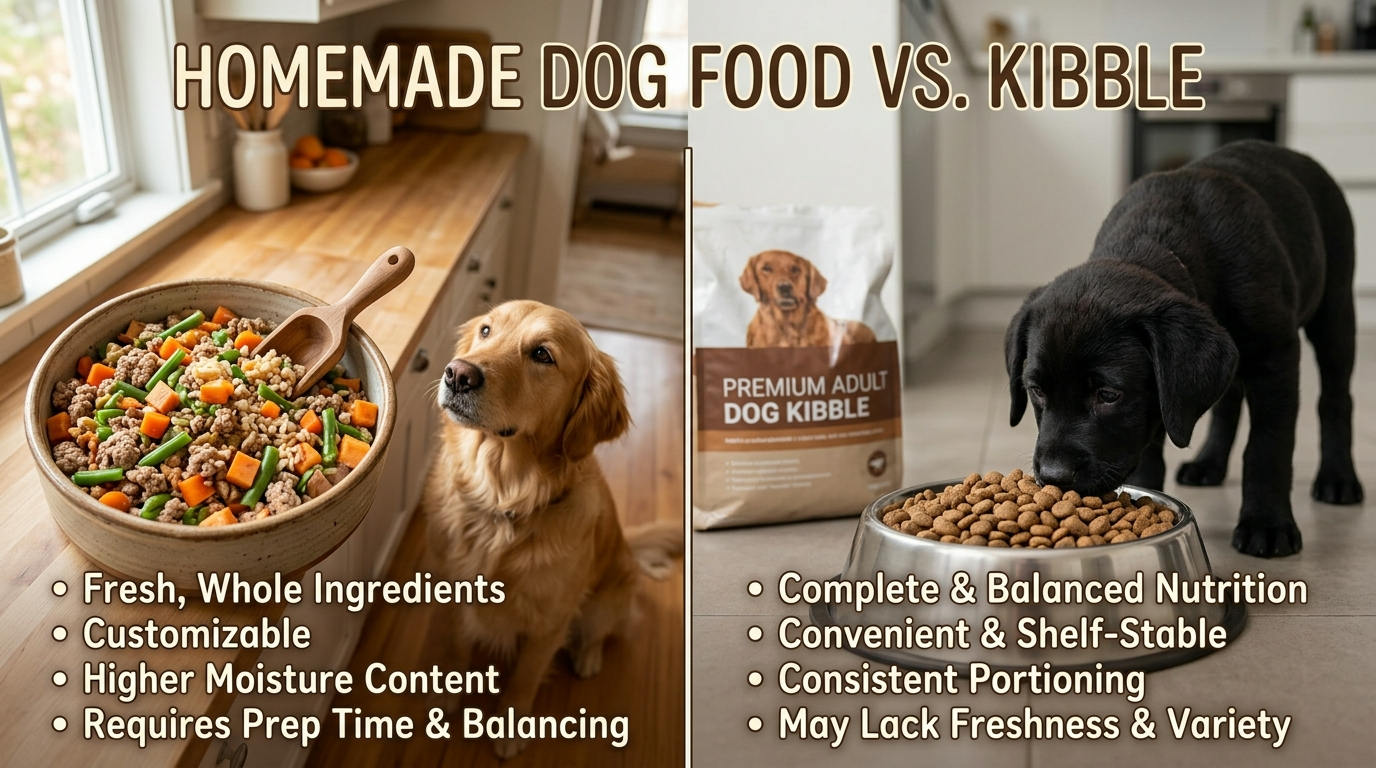
Choosing the right diet shapes your dog’s long-term health. The debate around homemade dog food vs kibble often centers on nutrition, safety, and convenience. Because diet affects energy, coat health, digestion, and lifespan, making an informed decision matters.
Some owners prefer fresh, home-prepared meals. Others trust commercially balanced dry food. While both options can support healthy dogs, they differ significantly in preparation, cost, and nutritional control. Therefore, understanding the strengths and limitations of each approach helps you decide confidently.
Balanced nutrition remains the ultimate goal. Whether you prepare meals at home or choose dry formulas, quality and consistency determine outcomes.
Understanding Nutritional Requirements
Dogs require protein, fats, carbohydrates, vitamins, and minerals in proper ratios. Additionally, nutrients like calcium and phosphorus must stay balanced.
The homemade dog food vs kibble discussion often begins with control. Homemade meals allow full ingredient transparency. However, precise nutrient balance can prove challenging without guidance.
Commercial kibble formulas undergo laboratory testing. Because manufacturers follow established nutritional standards, many products meet complete and balanced guidelines.
Nevertheless, not all brands maintain equal quality. Ingredient sourcing and formulation matter significantly.
Therefore, evaluate both options based on nutritional completeness rather than marketing claims.
Benefits of Homemade Dog Food
Many owners appreciate ingredient control. Preparing meals at home eliminates mystery additives and artificial preservatives.
The homemade dog food vs kibble debate highlights freshness as a key advantage. Fresh ingredients may enhance flavor and digestibility.
Owners can tailor recipes to allergies or sensitivities. For example, removing specific proteins becomes easier in home cooking.
Additionally, some dogs show improved coat shine and energy after switching to balanced fresh diets.
However, achieving correct nutrient ratios requires veterinary consultation. Without supplementation, deficiencies may develop over time.
Risks of Improper Home Preparation
Although fresh meals sound appealing, imbalance remains a serious concern.
Calcium deficiency, inadequate omega fatty acids, and vitamin shortages may arise without careful formulation.
The homemade dog food vs kibble comparison reveals that improperly balanced diets pose risks.
Dogs fed unbalanced homemade meals may experience bone weakness or organ strain.
Therefore, consulting a veterinary nutritionist becomes essential before transitioning.
Accurate portion measurement and supplementation protect long-term health.
Advantages of Quality Kibble
Kibble offers convenience and consistency.
Manufacturers design formulas to meet specific life stages, from puppies to seniors.
The homemade dog food vs kibble discussion often notes kibble’s affordability and long shelf life.
Dry food supports dental health through chewing action. Additionally, measured servings simplify portion control.
Reputable brands conduct feeding trials to confirm nutritional adequacy.
Because kibble remains accessible and stable, many owners find it practical.
Concerns About Commercial Dog Food
Not all kibble meets high standards.
Some low-quality brands include fillers, artificial dyes, and low-grade protein sources.
The homemade dog food vs kibble debate emphasizes ingredient transparency.
Recalls occasionally occur due to contamination concerns. Therefore, researching brand reputation matters.
Reading labels carefully helps identify quality formulas.
Higher-end kibble options often provide better ingredient sourcing and fewer additives.
Digestibility and Absorption
Digestibility affects nutrient absorption.
Fresh diets sometimes contain higher moisture content. As a result, some dogs digest them more easily.
In the homemade dog food vs kibble conversation, digestibility often varies by individual dog.
Certain dogs tolerate dry food well. Others may experience improved stool quality on fresh meals.
Monitoring energy, coat condition, and stool consistency helps evaluate effectiveness.
Cost Comparison
Homemade diets often cost more.
Fresh proteins, vegetables, and supplements add up quickly.
The homemade dog food vs kibble debate frequently includes budget considerations.
Premium kibble also carries higher prices, yet it may remain more affordable than daily fresh cooking.
Time investment also matters. Preparing meals weekly requires planning and storage space.
Therefore, weigh both financial and time commitments carefully.
Time and Convenience
Kibble offers unmatched convenience.
Measuring and serving takes seconds.
In contrast, homemade dog food vs kibble involves prep time, cooking, and cleaning.
Busy households may struggle to maintain consistent preparation schedules.
Consistency matters greatly. Irregular feeding patterns may disrupt digestion.
Evaluate your lifestyle before committing to home cooking.
Special Dietary Needs
Dogs with allergies or medical conditions may benefit from tailored diets.
The homemade dog food vs kibble decision becomes more nuanced when dealing with sensitivities.
Prescription kibble formulas address kidney disease, obesity, and gastrointestinal issues.
However, customized home-prepared diets can also meet special needs under professional supervision.
Veterinary oversight ensures safety in both cases.
Food Safety Considerations
Proper handling prevents contamination.
Homemade meals require safe storage and hygiene practices.
The homemade dog food vs kibble comparison highlights bacterial risks in raw preparation.
Dry food also requires proper storage to prevent mold growth.
Clean bowls and fresh water support overall safety.
Following food safety guidelines reduces health risks significantly.
Transitioning Between Diets
Switch gradually over 7 to 10 days.
Mix increasing portions of the new food with the old diet.
The homemade dog food vs kibble switch may cause temporary digestive upset if done abruptly.
Gradual change allows gut bacteria to adapt.
Monitor stool consistency and appetite during transition.
Combining Both Approaches
Some owners combine high-quality kibble with fresh toppers.
The homemade dog food vs kibble debate does not always require strict separation.
Balanced kibble can serve as the base, while small fresh additions enhance flavor and variety.
Ensure that added ingredients do not unbalance the total nutrient profile.
Consult a veterinarian before implementing hybrid feeding plans.
Long-Term Health Impact
Longevity depends on overall care, exercise, and genetics.
The homemade dog food vs kibble question does not have a universal answer.
Both approaches can support healthy dogs when properly managed.
Regular veterinary checkups ensure nutritional adequacy.
Blood work may reveal early deficiencies or imbalances.
Environmental Considerations
Packaging waste differs between options.
Homemade diets reduce commercial packaging but increase grocery sourcing.
The homemade dog food vs kibble conversation sometimes includes sustainability factors.
Bulk kibble purchases reduce plastic waste compared to small bags.
Evaluate environmental impact according to your values.
Monitoring Your Dog’s Response
Observe energy levels, weight stability, and coat condition.
The homemade dog food vs kibble choice should prioritize visible health markers.
Healthy dogs display steady weight, clear eyes, and consistent digestion.
Adjust feeding amounts based on activity levels.
Ongoing observation ensures optimal results.
Making an Informed Decision
Research thoroughly before choosing.
Consult veterinary professionals for guidance.
The homemade dog food vs kibble debate ultimately depends on your dog’s unique needs and your ability to maintain nutritional balance.
Evaluate time, budget, and long-term commitment honestly.
Consistency and quality matter more than the feeding method itself.
Conclusion
Selecting the right diet influences your dog’s comfort, vitality, and lifespan. The homemade dog food vs kibble discussion highlights both advantages and challenges on each side. Fresh home-prepared meals offer ingredient control and customization, yet they require careful planning and professional guidance. Meanwhile, high-quality kibble provides balanced nutrition and convenience when chosen wisely.
Ultimately, the healthiest choice depends on nutritional balance, consistency, and your dog’s specific needs. By prioritizing complete nutrition and monitoring results, you ensure your dog thrives regardless of the feeding approach.
FAQ
- Can dogs live long healthy lives on dry food alone?
Yes, many dogs thrive on high-quality, balanced kibble formulas. - Is cooking for dogs always healthier?
Not necessarily. Without proper formulation, home-prepared diets may lack essential nutrients. - Are grain-free diets better?
Grain-free is not automatically healthier. It depends on ingredient quality and your dog’s needs. - How often should I review my dog’s diet?
Discuss diet during annual veterinary visits or sooner if health changes occur. - Can I mix fresh meals with dry food safely?
Yes, but ensure the overall diet remains balanced and portions stay controlled.