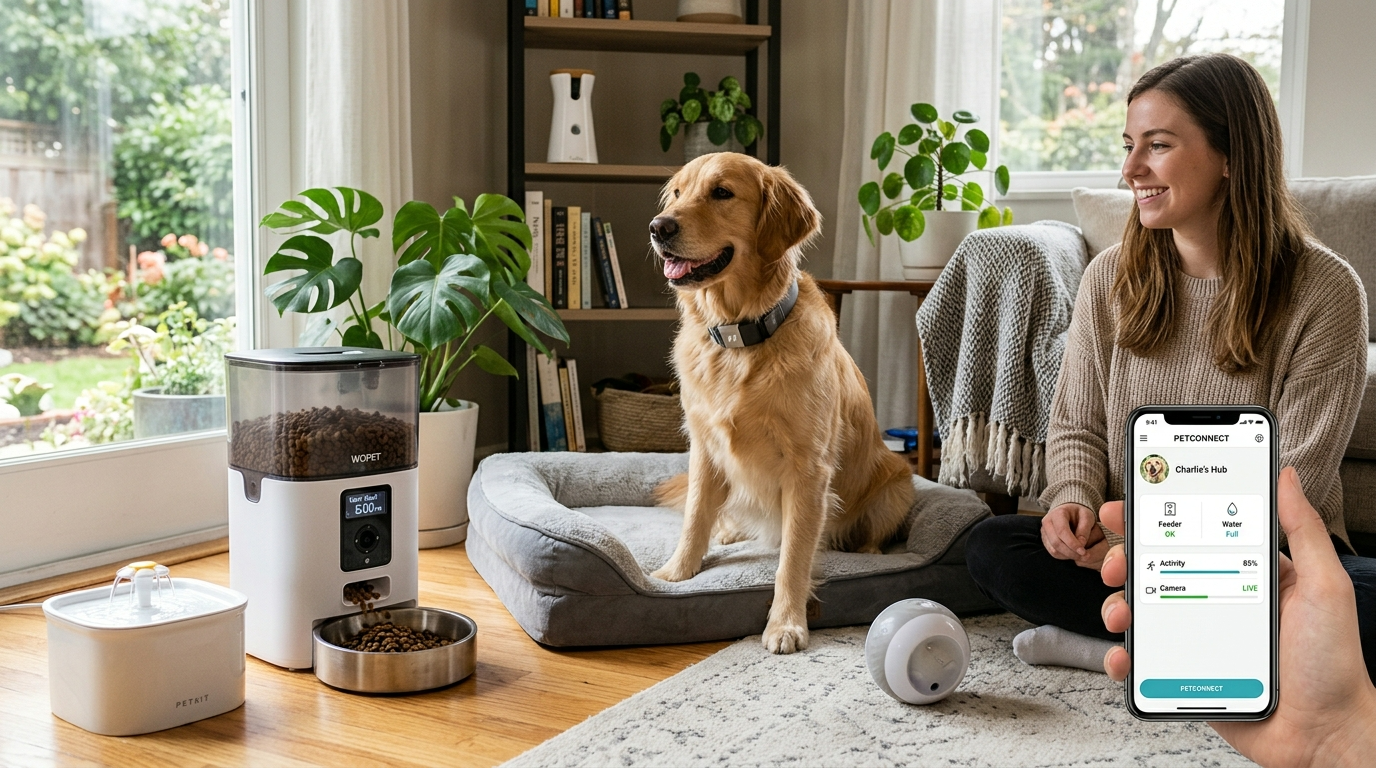
Leaving pets alone at home can cause worry. However, smart home devices for pets now make it easier to monitor safety, provide comfort, and maintain routines from anywhere. Because technology continues to evolve, pet owners can stay connected in real time.
Modern pet-focused technology does more than offer convenience. It improves safety, reduces anxiety, and supports consistent care. As a result, many households now rely on connected systems to create a secure environment.
Choosing the right tools requires understanding your pet’s needs. Therefore, exploring available options helps you build a balanced, tech-supported setup.
Why Technology Matters for Pets at Home
Pets thrive on routine. When owners leave for work or travel, disruptions can increase stress.
Smart home devices for pets allow owners to maintain feeding schedules, monitor behavior, and respond to emergencies remotely. Because real-time access improves awareness, response times become faster.
Additionally, many devices support two-way communication. Hearing your voice can reassure anxious pets. In turn, emotional comfort reduces destructive behavior.
Safety also improves. Motion sensors and smart alerts notify owners of unusual activity. Consequently, pets remain protected even when no one is physically present.
Integrating connected technology creates peace of mind while supporting consistent care.
Smart Pet Cameras With Two-Way Audio
Pet cameras remain one of the most popular tools for remote monitoring. They allow live video streaming through smartphone apps.
Smart home devices for pets often include cameras with high-definition resolution and night vision. Therefore, you can observe your pet clearly at any time of day.
Two-way audio enables direct communication. If your dog begins barking, you can respond immediately. Because pets recognize familiar voices, this feature reduces anxiety.
Some models include treat dispensers. These add interactive rewards during the day. However, placement matters to ensure full room visibility.
Camera alerts also detect unusual motion or sounds. As a result, owners can act quickly if something seems wrong.
Automatic Smart Feeders
Maintaining feeding schedules proves essential for health and behavior. Automatic feeders simplify this process.
Smart home devices for pets that dispense food allow precise portion control. Because overfeeding contributes to obesity, scheduled portions promote balanced nutrition.
App-controlled feeders enable remote adjustments. If you return home late, you can delay a meal easily.
Many feeders also log feeding history. This data helps monitor eating patterns and detect appetite changes early.
Battery backup options provide reliability during power outages. Therefore, meals remain consistent even during disruptions.
Smart Water Fountains and Hydration Monitors
Fresh water access supports kidney health and overall well-being.
Smart home devices for pets now include app-connected water fountains. These systems filter water continuously while monitoring consumption levels.
Hydration tracking alerts you if intake drops suddenly. Because reduced drinking may signal illness, early detection becomes possible.
Automatic circulation also keeps water appealing. Flowing water encourages pets to drink more frequently.
Quiet pump systems prevent additional stress. Meanwhile, easy-clean designs simplify maintenance.
Smart Climate Control Systems
Temperature affects comfort and safety. Pets left alone in extreme heat or cold face serious risks.
Smart home devices for pets often integrate with thermostats. Remote temperature adjustments maintain stable indoor conditions.
Sensors detect fluctuations and send alerts instantly. Therefore, you can respond before discomfort escalates.
Some systems pair with smart blinds or fans. Together, they create balanced climate control.
Because older pets struggle more with temperature changes, climate management supports long-term health.
Smart Doors and Entry Systems
Automated pet doors allow safe outdoor access.
Smart home devices for pets that include controlled entry systems prevent unauthorized animals from entering. Microchip or collar recognition ensures only your pet passes through.
Scheduled lock settings provide nighttime security. Additionally, remote locking prevents escape when necessary.
Entry tracking also logs activity times. This feature proves helpful for monitoring bathroom habits.
Because safety remains the priority, secure access technology adds peace of mind.
Interactive Treat Dispensers and Toys
Mental stimulation reduces boredom. Therefore, interactive devices play a key role in enrichment.
Smart home devices for pets sometimes include treat-launching systems or automated toys. These tools activate on schedules or remote command.
Interactive play prevents destructive chewing and excessive barking. Because mental exercise complements physical activity, behavior improves.
App-controlled features allow spontaneous engagement during work breaks. However, moderation prevents overuse.
Rotating toy options maintains novelty and interest.
Smart Litter Boxes and Cleaning Systems
Cat owners benefit from automated litter solutions.
Smart home devices for pets now include self-cleaning litter boxes. These systems detect use and remove waste automatically.
Odor control improves air quality. Additionally, usage tracking identifies changes in bathroom habits.
Because urinary issues often show early signs through litter patterns, data monitoring supports early veterinary intervention.
Regular cleaning reduces bacteria buildup. Meanwhile, sealed waste compartments simplify disposal.
Motion Sensors and Activity Trackers
Understanding activity levels helps monitor health.
Smart home devices for pets often include wearable trackers. These devices measure movement, rest patterns, and calorie burn.
Sudden decreases in activity may signal discomfort or illness. Therefore, early alerts enable faster response.
Motion sensors within rooms also track roaming patterns. Combined with cameras, they offer comprehensive oversight.
Data insights empower proactive care decisions.
Smart Home Integration and Automation
The true advantage emerges when systems connect seamlessly.
Smart home devices for pets integrate with central hubs like voice assistants. For example, you can activate feeding or camera viewing through simple commands.
Automation routines streamline care. Lights can turn on gradually in the evening to reduce anxiety. Similarly, calming music can activate during certain hours.
Because automation reduces manual tasks, daily care becomes more efficient.
Integration ensures devices work together rather than separately.
Security Features for Added Protection
Beyond comfort, safety remains critical.
Smart home devices for pets often include smoke detectors and carbon monoxide sensors linked to mobile alerts.
Video doorbells monitor unexpected visitors. Additionally, smart locks secure entry points remotely.
Emergency alerts allow you to contact neighbors quickly. Therefore, pets remain protected even during unforeseen events.
Backup battery systems maintain operation during power outages.
Choosing the Right Devices
Not every household requires every gadget.
Start by identifying your pet’s needs. For example, anxious dogs may benefit most from cameras and audio features.
Smart home devices for pets should complement lifestyle rather than complicate it.
Check app compatibility and Wi-Fi reliability. Additionally, read user reviews for performance feedback.
Invest in durable products with strong customer support.
Cost and Long-Term Value
Prices vary widely depending on features.
Although initial costs may seem high, long-term benefits often justify the investment.
Smart home devices for pets reduce emergency risks and support consistent routines.
Subscription services may add costs for cloud storage or advanced analytics. Therefore, compare options carefully.
Reliable technology prevents unexpected expenses related to missed feeding or climate issues.
Creating a Balanced Tech Environment
Technology should enhance, not replace, personal interaction.
Schedule regular playtime and exercise outside automated systems.
Smart home devices for pets work best alongside attentive care.
Maintain device cleanliness and perform software updates regularly.
Monitor battery levels to prevent disruptions.
Balanced integration ensures long-term success.
Conclusion
Modern technology transforms pet care. Smart home devices for pets provide safety, structure, and connection while owners are away. From automatic feeders to interactive cameras, these tools support both physical and emotional well-being.
When selected thoughtfully, connected systems reduce stress for both pets and owners. However, technology should supplement daily bonding rather than replace it.
By combining smart tools with consistent routines and attentive care, you create a secure and enriching home environment. Ultimately, thoughtful integration ensures your pets remain safe, comfortable, and content even when left alone.
FAQ
- Are connected pet gadgets safe to use daily?
Yes, when purchased from reputable brands and updated regularly, they operate safely and reliably. - Can smart feeders replace manual feeding entirely?
They can manage schedules effectively, but occasional supervision ensures proper functioning. - Do interactive cameras reduce separation anxiety?
Many pets respond positively to voice interaction, which may ease mild anxiety. - Is climate control really necessary for pets?
Yes, stable temperatures protect pets from heatstroke or cold-related stress. - Are automated litter boxes suitable for all cats?
Most adapt well, though gradual introduction helps ensure comfort.