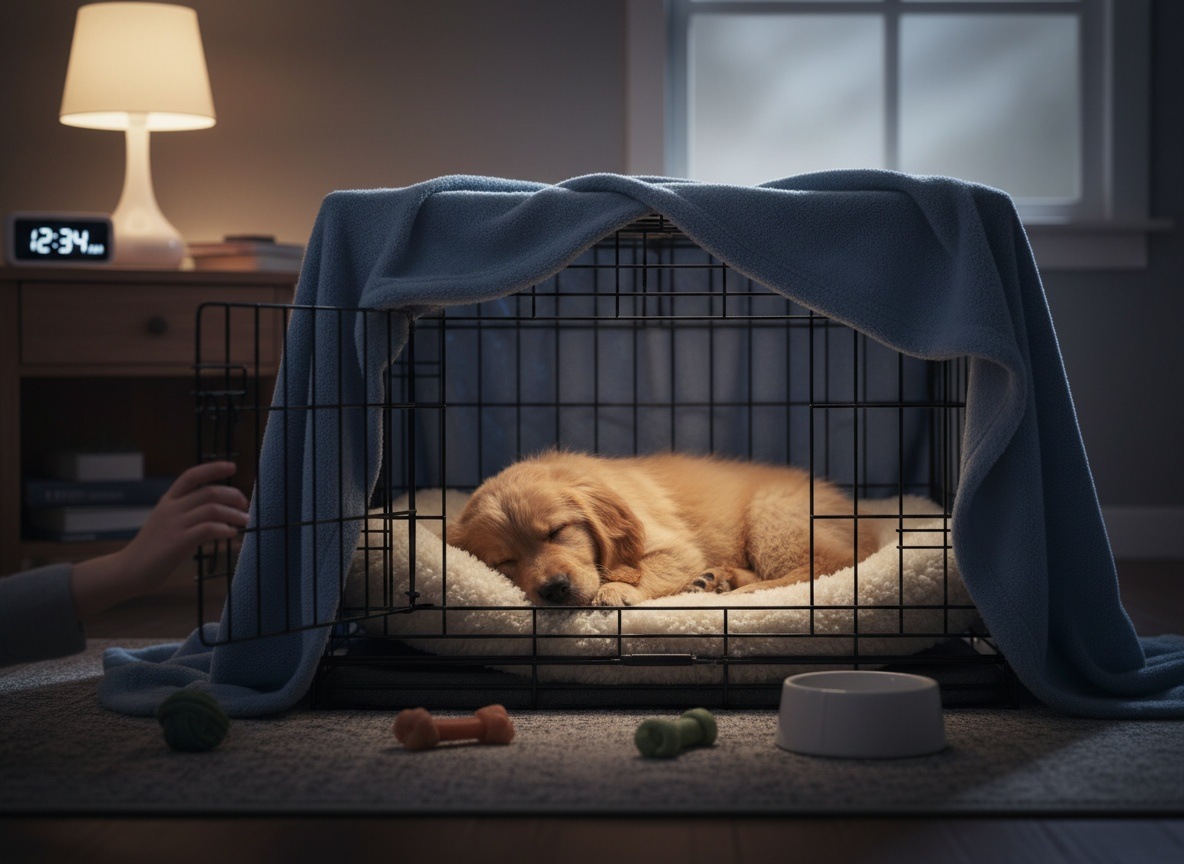
Crate training your new puppy at night can feel overwhelming at first. You want your puppy to sleep soundly, feel safe, and avoid nighttime crying. Yet it’s easy to wonder whether you’re doing it right. The good news? If you take a thoughtful, gentle approach, you really can crate train a puppy at night without stress—for you or your pup. Think of the crate like a cozy bedroom for your little companion. When you introduce it the right way, it becomes a safe haven rather than a punishment.
Many new puppy owners struggle because they rush the process or misunderstand how puppies think. A puppy isn’t born knowing that nighttime means long sleep stretches or alone time. To them, the world is unfamiliar, and separation can feel scary. That’s why your approach matters. Starting with patient, predictable steps builds confidence and security. Over time, your puppy learns that sleeping in the crate feels natural, peaceful, and comforting.
In this guide, you’ll learn exactly how to help your puppy settle into their nighttime crate routine. You’ll discover simple techniques that reduce whining, prevent stress, and promote healthy sleep habits. Whether your puppy is eight weeks old or a bit older, these methods work because they match how young dogs learn and adapt.
Why Nighttime Crate Training Matters
When you crate train a puppy at night, you’re doing more than creating a sleep routine. You’re shaping their emotional foundation. A calm nighttime routine supports housebreaking, reduces anxiety, and prevents destructive habits. Most importantly, it teaches your puppy how to self-soothe. Puppies that learn to settle in a crate tend to grow into confident, well-adjusted adult dogs.
Think of the crate as a safe, predictable space. Dogs naturally seek dens—small, enclosed areas where they feel protected. So setting up your puppy’s crate properly aligns with their instincts. Still, instinct alone isn’t enough. You need to introduce the crate in a positive way and give your puppy time to build trust. When you do, nighttime becomes easier for everyone.
Preparing Your Puppy’s Crate for Stress-Free Nights
Before the first night, focus on making the crate inviting. If the crate feels cold or unwelcoming, your puppy won’t want to stay there. But if it feels like a warm little den, you’re already halfway to success.
Start with comfortable bedding. Choose something soft but washable. A familiar scent can help your puppy relax, so you might add a piece of clothing that smells like you. Include a safe chew toy to give the puppy something relaxing to focus on as they wind down.
The location of the crate matters too. Many puppy owners place the crate in the bedroom during the early weeks. This reduces separation anxiety because your puppy can smell and hear you. Later, you can move the crate gradually to its permanent location if you prefer. But in the beginning, close proximity helps the puppy settle more quickly, especially at night.
One of the best ways to crate train a puppy at night without stress is to create a calm pre-bed routine. Puppies thrive on structure. A consistent schedule helps their bodies and minds understand what’s coming next. Evening potty time, light play, and a short cuddle session signal that the day is ending. These small habits prepare your puppy for sleep just like bedtime rituals help children unwind.
Introducing Your Puppy to the Crate During the Day
You can’t expect your puppy to love the crate at night if they’ve never used it before. Daytime introduction is essential. Start by leaving the crate door open and letting your puppy explore at their own pace. Toss treats inside the crate so your puppy feels encouraged rather than pressured.
Use a cheerful, upbeat tone when your puppy goes inside. Praise them calmly. Let your puppy walk in and out freely. This creates positive associations and prevents fear. Short daytime naps in the crate also help the puppy understand that the crate is a normal, safe part of life.
As your puppy becomes comfortable, you can close the door for one or two minutes at a time. Stay nearby. Increase the time slowly. Patience now pays off later when nighttime comes around.
This process builds your puppy’s confidence. When the crate feels familiar, nighttime becomes far less stressful. You’ll be able to crate train a puppy at night without overwhelming them because they already trust the space.
How to Handle the First Night Calmly
The first night can be challenging. Puppies often cry, and it’s easy to feel guilty or unsure about what to do. Remember: crying doesn’t mean you’re doing something wrong. It usually means your puppy is adjusting to a new environment.
Start by giving your puppy one last potty break right before bed. This reduces the chances of whining due to discomfort. Place your puppy in the crate calmly, using your chosen cue word. Keep the lights low, speak softly, and avoid big goodbyes.
If your puppy cries, pause before responding. Sometimes they settle after a few moments. If they escalate, speak gently without removing them from the crate. Your voice offers comfort while reinforcing the routine.
Young puppies may need one or two bathroom breaks during the night. Keep these breaks quiet and businesslike. No playtime. No stimulation. This teaches your puppy that nighttime is for sleeping.
A predictable flow helps you crate train your puppy at night with less stress, because the puppy begins to understand that the night follows a structured rhythm.
Reducing Nighttime Whining and Stress
Whining can happen even when you do everything right. What matters is how you respond. Puppies learn from every interaction. If whining always leads to freedom or cuddles, your puppy may repeat the behavior. But if you respond calmly and consistently, your puppy learns to relax.
Start with gentle reassurance. A soft “It’s okay” or a quiet “Good night” carries your scent and voice, which comfort your puppy. Avoid emotional reactions. Puppies are sensitive to your energy. Calmness encourages calmness.
If your puppy continues whining, check whether they need to go outside. Bathroom needs are legitimate reasons for crying. Take them out briefly, then return them to the crate with minimal fuss. Over time, whining decreases because your puppy trusts the process.
Another helpful technique is using a white noise machine or soft fan. Background sound masks unfamiliar noises and creates a soothing environment. This simple change often reduces nighttime stress dramatically.
Building a Healthy Nighttime Routine
When you crate train a puppy at night, consistency is your best friend. Puppies understand patterns quickly. They feel safe when life is predictable. Choose a bedtime and stick to it. Follow your pre-sleep routine every evening so your puppy knows what to expect.
Feed your puppy dinner several hours before bed. Avoid big drinks of water right before sleep. Give them a final opportunity to potty. Keep pre-bed play gentle and relaxing. All of these details reduce restlessness and improve nighttime success.
As your puppy adapts, the nights get easier. Most puppies sleep longer stretches within a couple of weeks. As they grow, they’ll naturally need fewer nighttime potty breaks. The process becomes smoother, and the crate truly feels like home.
Common Mistakes to Avoid During Nighttime Crate Training
Training goes faster when you avoid missteps that create confusion or stress. One common mistake is using the crate as punishment. A crate should never feel like a consequence. It’s a sanctuary, not a timeout corner.
Another mistake is moving too quickly. Puppies need gradual exposure. Trying to close the crate door for long periods too soon can lead to fear. A slow approach leads to long-term success.
Inconsistent routines cause problems too. If bedtime changes dramatically from night to night, your puppy won’t know what to expect. Predictability builds trust, and trust makes crate training smoother.
Lastly, avoid giving in to every whine. Respond thoughtfully, not emotionally. A calm, balanced approach teaches your puppy resilience and confidence.
Helping Your Puppy Form Positive Associations
Everything you do teaches your puppy how to feel about their crate. Using rewards, encouragement, and consistency builds positive associations. Offer treats when they enter the crate. Praise small successes. Keep the crate environment calm and comforting.
You can also use feeding time as a positive tool. Feeding meals in the crate helps your puppy connect the space with something pleasant. Allow the puppy to eat with the door open at first, then slowly introduce closing it during meals.
Small wins throughout the day make nighttime easier. The more your puppy views the crate as a friendly place, the less stress they feel at bedtime.
Transitioning Your Puppy to Independent Sleeping
Over time, your puppy becomes more confident sleeping alone. You can begin moving the crate gradually farther from your bed if that’s your goal. Do it in small increments—first a few feet, then the next night a few more.
Watch your puppy’s reactions. If they adjust well, keep going. If they seem stressed, slow the pace. Eventually, you’ll have a puppy who sleeps peacefully through the night without needing constant reassurance.
This steady transition reflects the real goal behind crate training a puppy at night: independence, calmness, and emotional security.
Conclusion
Crate training a puppy at night without stress is absolutely possible when you take a patient and thoughtful approach. By building positive associations, following a predictable routine, and supporting your puppy emotionally, you create a safe environment where your puppy feels confident and calm. Over time, the crate becomes a restful haven, and nighttime becomes peaceful for both of you. The journey may have challenges, but each night brings your puppy closer to long-term comfort, trust, and independence.
FAQ
- How long does it take to crate train a puppy at night?
Most puppies adjust within two to three weeks, but some may need a little longer depending on age and temperament. - Should I let my puppy cry in the crate at night?
A little whining is normal. Pause before responding, but comfort them calmly if needed without removing them unnecessarily. - How often should I take my puppy out at night?
Young puppies usually need one or two nighttime potty breaks. As they grow, the need decreases naturally. - Where should I put the crate at night?
Placing the crate in your bedroom helps reduce separation anxiety and supports smoother nighttime training. - Is it okay to put toys in the crate at night?
Yes, as long as the toys are safe. Soft chew toys or comfort items help puppies relax and settle more easily.