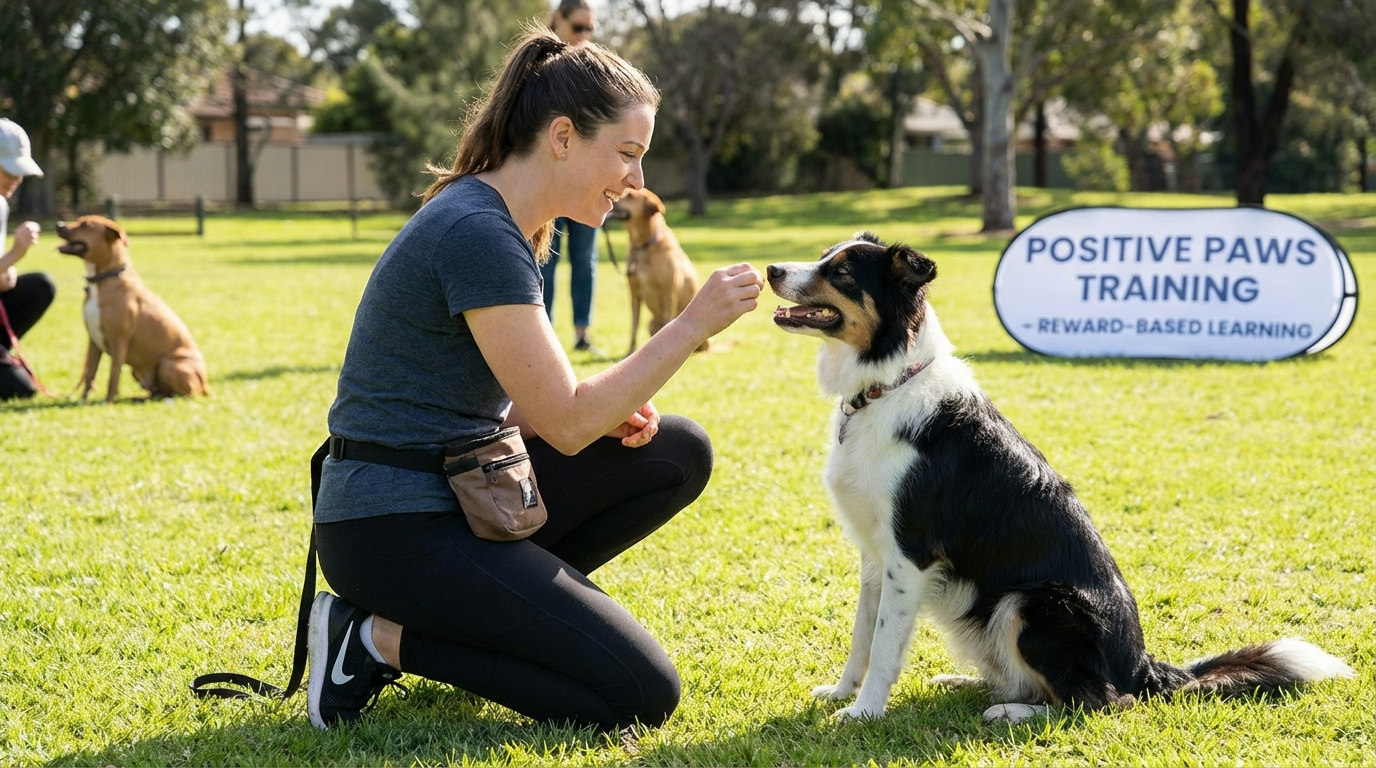
Training a dog should feel like building a relationship, not winning a battle. Yet many owners struggle because they rely on outdated techniques rooted in correction or control. Reward-based dog training offers a more effective alternative. It replaces fear with trust, confusion with clarity, and resistance with cooperation.
Rather than focusing on punishment, this approach teaches dogs what to do. Positive reinforcement encourages learning in a way that feels safe and motivating. Much like humans, dogs learn faster when success is acknowledged and repeated.
If you have ever wondered why some dogs listen eagerly while others shut down, the answer often lies in the training method. Dogs taught through rewards associate learning with positive outcomes. Over time, this connection builds confidence and reliability.
In this guide, you will discover why reward-focused methods work, how to apply them correctly, and which techniques create lasting behavioral change.
What Is Reward-Based Dog Training?
Reward-based dog training is a learning approach that reinforces desired behaviors using positive outcomes. When a dog performs a correct action, it is followed by something the dog values, such as food, praise, toys, or access to play.
This method is grounded in behavioral science. Actions that lead to positive results are more likely to be repeated. Behaviors that receive no reinforcement gradually fade.
Importantly, this approach does not mean a lack of structure. Rules still exist. Expectations remain clear. The difference lies in communication. Guidance replaces intimidation.
By focusing on encouragement, dogs become active participants in learning. Trust develops naturally, and motivation replaces fear-based compliance.
Why Reward-Based Training Methods Are So Effective
Dogs learn best when they feel safe. Positive reinforcement keeps stress levels low while increasing focus and engagement.
When a dog receives a reward for a correct behavior, the brain releases dopamine. This chemical strengthens learning pathways and improves memory retention. As a result, behaviors are learned faster and maintained longer.
In contrast, punishment can trigger anxiety. Learning slows. In some cases, fear replaces understanding.
Reward-based methods also improve emotional resilience. Dogs recover quickly from mistakes. They are more willing to try again rather than shut down.
Clarity is another advantage. Rewards provide immediate feedback, helping dogs understand exactly which action earned the outcome.
The Science Behind Positive Reinforcement
Positive reinforcement is supported by decades of research. Studies consistently show that dogs trained with rewards exhibit fewer behavioral problems and lower stress levels.
This approach reduces the likelihood of aggression because dogs are not placed in defensive situations. Instead, learning occurs through repetition and success.
Professional trainers and veterinary behaviorists widely support reward-based approaches because they align with canine cognition and emotional needs.
When learning feels safe, progress accelerates.
Choosing Rewards That Motivate Your Dog
Every dog values different things. Selecting the right reward is essential for successful training.
Food rewards are often the easiest starting point. Soft, flavorful treats work well during early stages. However, food is not the only option.
Some dogs prefer toys, praise, or physical affection. Others respond strongly to access-based rewards such as sniffing, running, or playing.
Observation matters. Pay attention to what excites your dog. Use those preferences to guide reinforcement choices.
As behaviors improve, rewards should be adjusted. High-value rewards are best for new or difficult tasks. Lower-value rewards help maintain skills.
Why Timing Matters More Than the Reward
Timing is critical in positive dog training. Rewards must occur immediately after the desired behavior.
Dogs associate outcomes with actions that happen within seconds. Delayed reinforcement leads to confusion.
Markers help solve this issue. A clicker or a verbal marker like “yes” tells the dog exactly when the correct behavior occurred. The reward follows, reinforcing clarity.
Short sessions improve timing accuracy. Focus matters more than duration.
When timing improves, learning speeds up dramatically.
Using Shaping to Teach Complex Behaviors
Shaping is a technique that reinforces small steps toward a final goal. Instead of waiting for perfection, progress is rewarded incrementally.
For example, teaching a down begins by rewarding movement toward the floor. Each step brings the dog closer to the final behavior.
Shaping builds confidence and encourages problem-solving. Dogs become engaged learners rather than passive followers.
This method is especially effective for advanced skills, tricks, and confidence-building exercises.
Positive Training for Puppies
Puppies benefit immensely from reward-based learning. Their brains are flexible, and early experiences shape long-term behavior.
Positive reinforcement helps puppies learn house manners, social skills, and basic cues without fear. Confidence grows alongside obedience.
Training sessions should be short and frequent. Young dogs have limited attention spans, and success should come easily.
Mistakes are part of learning. Gentle redirection combined with rewards teaches boundaries safely.
Training Adult and Rescue Dogs with Rewards
Adult dogs are fully capable of learning new behaviors. For rescue dogs, positive methods are often essential.
Many adult dogs carry emotional history. Punishment can reinforce fear. Rewards rebuild trust.
Training should begin with simple behaviors to establish success. Gradually, challenges increase as confidence grows.
Consistency and patience are key. Over time, new associations replace old habits.
Common Mistakes to Avoid
Even effective methods can fail when applied incorrectly.
Bribery is a common issue. Rewards should follow behavior, not precede it.
Inconsistency also causes confusion. Rules must remain stable across environments.
Over-reliance on treats can reduce effectiveness. Rewards should be faded gradually as behaviors stabilize.
Poor timing weakens learning. Practicing marker use improves precision.
Transitioning to Real-Life Rewards
Food rewards are not permanent. As behaviors become reliable, real-life rewards take over.
Praise, play, and access to valued activities maintain motivation without constant treats.
For example, good leash behavior earns freedom to explore. A solid recall earns a favorite game.
This transition creates reliability in everyday situations.
Applying Reward-Based Training in Daily Life
Training should extend beyond structured sessions. Daily routines offer countless learning opportunities.
Walks, greetings, and playtime reinforce good choices. Distractions strengthen reliability.
Consistency across environments ensures lasting success.
Training becomes a lifestyle rather than a task.
Emotional Benefits of Positive Training
Beyond obedience, reward-based approaches support emotional health.
Dogs show lower anxiety and higher confidence. Owners experience less frustration.
The relationship becomes cooperative rather than confrontational.
This emotional balance improves quality of life for both dog and owner.
Conclusion
Reward-based dog training works because it respects how dogs learn and feel. By using positive reinforcement, clear communication, and consistency, owners create reliable behavior without fear or force. When learning feels rewarding, trust grows, confidence builds, and success follows naturally.
FAQ
1. Can reward-based training work for difficult dogs?
Yes. Motivation and clarity often resolve resistance labeled as stubbornness.
2. Does positive training stop bad behavior?
Yes. Reinforcing alternatives naturally replaces unwanted actions.
3. Will my dog always need treats?
No. Treats are gradually replaced with praise and real-life rewards.
4. Is this method safe for fearful dogs?
Yes. It reduces anxiety and builds trust when applied consistently.
5. How quickly will I see results?
Many dogs improve within days, with lasting habits forming over weeks.