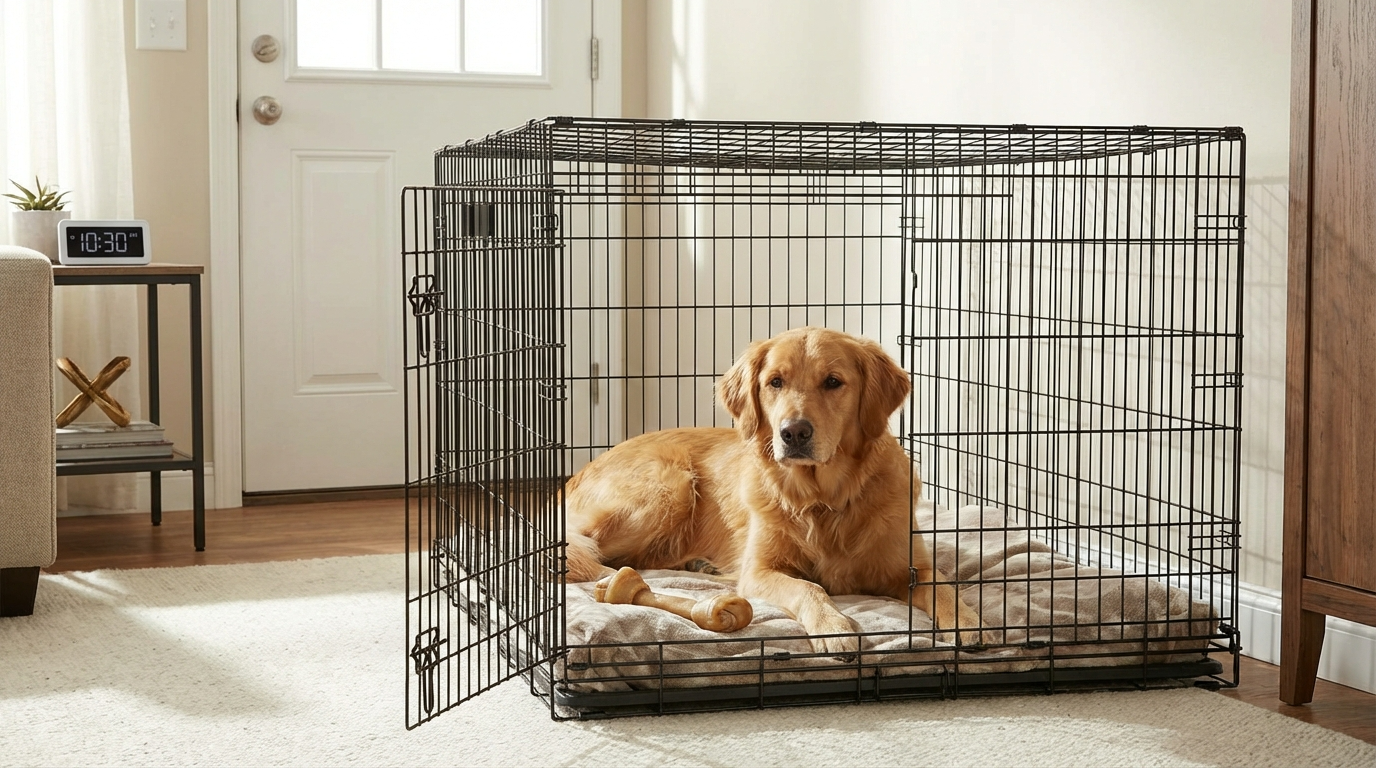
Crate training when away from home can be one of the most effective ways to keep your dog safe and secure during work hours. Instead of worrying about chewed furniture or anxious pacing, you can create a structured routine that supports comfort and confidence.
Many dog owners feel guilty about leaving their pets alone. However, with proper crate training when away at work, your dog can view the crate as a safe haven rather than a restriction. The key lies in preparation, consistency, and positive association.
Let’s explore how to make this method work in a healthy and humane way.
Why Crate Training When Away From Home Works
Dogs naturally seek den-like spaces. In the wild, a den offers protection and security. Similarly, a crate can provide that same sense of shelter in your home.
When crate training when away is introduced gradually, it becomes a predictable and comforting environment. Your dog learns that the crate is not a punishment. Instead, it is a calm resting space.
Moreover, structure reduces stress. Dogs thrive on routine. If every workday begins with a walk, followed by crate time, your pet quickly understands the pattern.
As a result, anxiety decreases. Confidence grows.
Benefits of Crate Training When Away at Work
There are several advantages to using this method responsibly.
First, safety improves. Puppies and curious dogs may chew electrical cords or swallow harmful objects. A properly sized crate prevents accidents.
Second, house training becomes easier. Dogs instinctively avoid soiling their sleeping area. Therefore, crate use supports consistent bathroom habits.
Third, destructive behavior is reduced. When boundaries are clear, your dog is less likely to create chaos.
Finally, separation anxiety can be eased. A predictable crate routine signals stability. While it does not eliminate anxiety entirely, it offers comfort.
Choosing the Right Crate for Success
Crate training when away at work begins with selecting the correct crate.
Size matters. The crate should allow your dog to stand, turn around, and lie down comfortably. However, it should not be so large that one corner becomes a bathroom area.
Material also plays a role. Wire crates provide ventilation and visibility. Plastic crates create a more enclosed den-like feel. Soft-sided crates are best for calm dogs, not heavy chewers.
Additionally, placement within your home matters. Choose a quiet area with moderate activity. Too much isolation may increase stress, while excessive noise can disturb rest.
Comfort items such as soft bedding or safe chew toys can also be included.
Introducing Crate Training When Away Gradually
Patience is essential. Crate training when away should never start with long workday confinement.
Begin by leaving the crate door open. Allow your dog to explore voluntarily. Toss treats inside. Offer praise when your dog steps in.
Next, close the door for short periods while you remain nearby. Gradually increase the duration.
After successful indoor sessions, practice brief departures. Leave for five minutes. Then return calmly. Over time, extend the duration.
This step-by-step method builds trust.
Creating a Pre-Work Routine
Consistency transforms crate training when away at work into a positive experience.
Start each morning with physical exercise. A brisk walk burns energy and reduces restlessness.
After exercise, allow bathroom time. A dog with an empty bladder feels more comfortable.
Then, offer a safe chew toy or food puzzle inside the crate. This shifts focus toward engagement rather than your departure.
Keep departures low-key. Dramatic goodbyes increase anxiety. Instead, leave calmly and confidently.
Upon returning home, greet your dog warmly but without excessive excitement.
Routine builds security.
How Long Is Too Long?
Time limits are important. Adult dogs can typically stay in a crate for four to six hours comfortably. Puppies require shorter periods.
However, extended confinement without breaks should be avoided. If you work long hours, consider hiring a dog walker or asking a neighbor for assistance.
Crate training when away at work works best when balanced with regular exercise and interaction.
Dogs are social creatures. They need connection as much as structure.
Addressing Common Concerns
Some owners worry that crate use feels cruel. However, when introduced properly, most dogs view their crate as a safe retreat.
The key difference lies in intent and duration. A crate should never be used as punishment. Negative associations undermine the entire process.
Additionally, signs of distress should be monitored. Excessive drooling, frantic scratching, or constant barking indicate discomfort. If these behaviors persist, adjustments are necessary.
In some cases, professional guidance may be helpful.
Using Enrichment During Crate Training When Away
Mental stimulation enhances crate comfort.
Food-dispensing toys, frozen treats, and long-lasting chews keep dogs occupied. This distraction reduces focus on your absence.
Rotate enrichment items regularly. Novelty maintains interest.
However, safety remains a priority. Only leave items that have been tested under supervision.
When enrichment is combined with crate training when away, alone time becomes productive.
Preventing Separation Anxiety With Structure
Although crate training when away can reduce stress, it should not replace emotional support.
Practice short absences even on non-workdays. This teaches your dog that departures are temporary.
Avoid allowing constant shadowing behavior. Encourage independent play while you are home.
Gradually, confidence increases.
Dogs learn that being alone does not equal abandonment.
Transitioning Out of the Crate Over Time
As your dog matures and demonstrates reliability, crate use may be adjusted.
Some dogs eventually earn more freedom. Others prefer the crate as a resting place long term.
Observe behavior carefully. If destructive habits return, reintroduce structure.
Flexibility is part of responsible pet ownership.
When Crate Training May Not Be Ideal
While crate training when away at work suits many dogs, it may not fit every situation.
Severe separation anxiety may require specialized behavioral therapy. Medical issues may also limit crate use.
If your dog experiences persistent distress, consult a veterinarian or trainer.
Individual needs should always guide decisions.
Building Trust Through Positive Reinforcement
Trust is the foundation of effective crate training when away.
Reward calm behavior. Use treats, praise, and gentle encouragement.
Avoid forcing your dog inside. Coercion damages confidence.
Instead, make the crate inviting. Keep it clean and comfortable.
Over time, your dog may enter willingly, even when you are home.
That is a sign of success.
Conclusion: A Safe and Balanced Approach
Crate training when away at work can provide safety, structure, and peace of mind for both you and your dog. When introduced gradually and paired with routine, it becomes a secure resting space rather than confinement.
By focusing on positive reinforcement, appropriate timing, and emotional support, you create a balanced system. Your dog learns independence while still feeling protected.
Ultimately, success comes from patience and consistency. With thoughtful preparation, crate training becomes not just a tool, but a foundation for confidence and calm behavior.
FAQs
- Is crate training when away at work safe for all dogs?
It is safe for most dogs when introduced gradually and used for appropriate durations. - How many hours can a dog stay in a crate?
Adult dogs can usually remain crated for four to six hours. Puppies require shorter intervals. - Should I leave toys in the crate?
Yes, but only safe and tested toys should be used during unsupervised time. - Can crate training reduce separation anxiety?
It may help reduce mild anxiety by providing structure, but severe cases need professional support. - What if my dog cries in the crate?
Brief whining can be normal at first. However, persistent distress requires reassessment and gradual retraining.