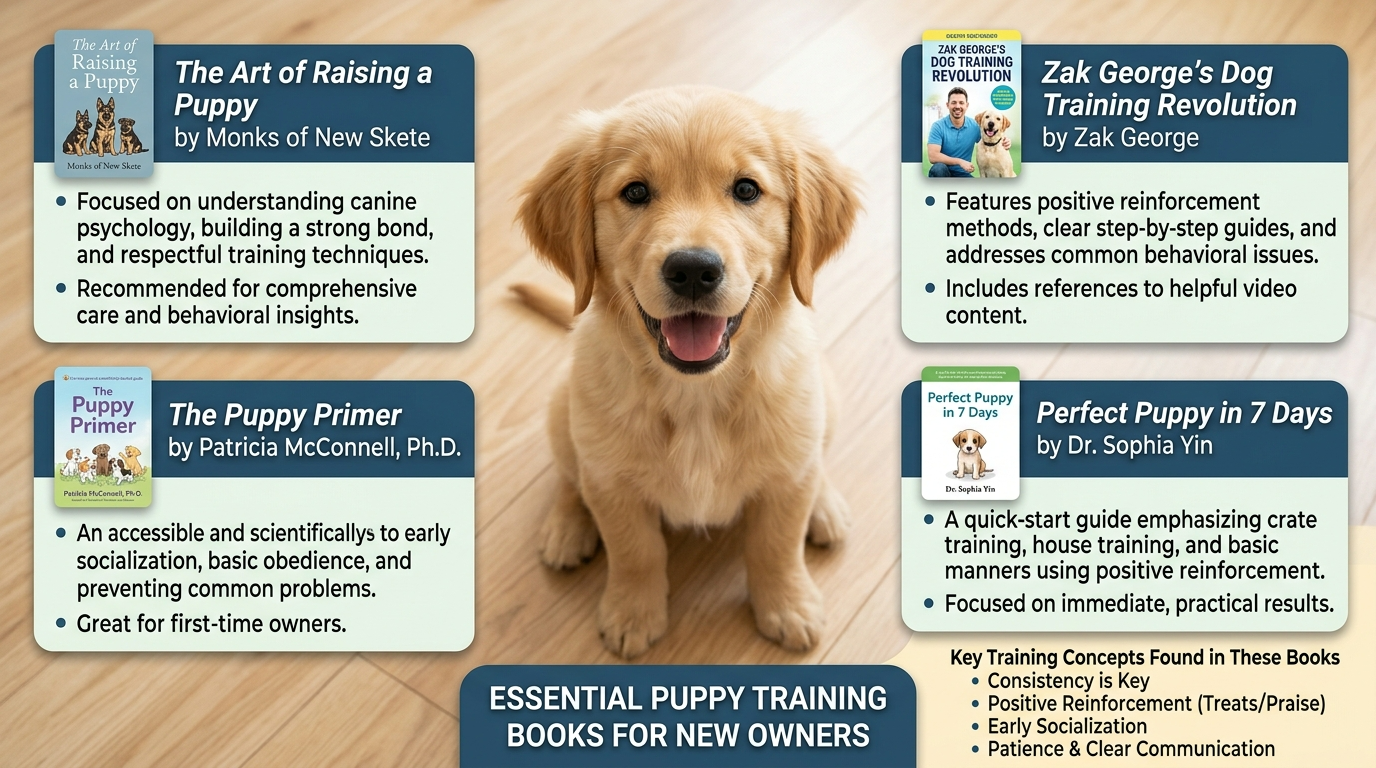
Raising a young dog can feel overwhelming without the right support. Fortunately, the best puppy training books offer structured, step-by-step guidance that builds confidence for both owner and pup. Because early training shapes lifelong habits, investing in reliable resources makes a lasting difference.
While online videos and quick tips can help, books provide deeper explanations and organized systems. As a result, owners gain a stronger understanding of canine behavior and learning patterns. Clear guidance reduces confusion and accelerates progress.
Choosing wisely ensures you follow proven methods instead of outdated or harsh techniques.
Why Books Still Matter in Puppy Training
Digital resources dominate today’s world. However, books remain valuable for structured learning.
The best puppy training books organize lessons logically. Instead of random tips, they guide readers through developmental stages. Consequently, training becomes systematic rather than reactive.
Books also explain the “why” behind commands. Understanding learning theory helps owners adapt techniques when challenges arise.
Additionally, written guides reduce information overload. Because content is curated and edited, advice often feels more reliable.
When distractions decrease, focus improves. Therefore, reading a comprehensive guide builds stronger foundational knowledge.
What to Look for in a Quality Training Book
Not all guides offer equal value. Before purchasing, evaluate a few critical factors.
First, check the author’s credentials. Certified trainers, veterinarians, or behaviorists provide greater credibility.
Second, review the training philosophy. The best puppy training books emphasize positive reinforcement rather than punishment.
Third, examine structure. Clear chapters, step-by-step instructions, and troubleshooting sections improve usability.
Fourth, look for age-specific guidance. Puppies require different approaches than adult dogs.
Finally, assess readability. Simple explanations and practical examples enhance understanding.
Choosing carefully prevents wasted time and inconsistent methods.
Positive Reinforcement-Based Guides
Modern training prioritizes reward-based systems. Because dogs repeat behaviors that earn rewards, positive reinforcement produces reliable results.
The best puppy training books often highlight clicker training, treat timing, and praise techniques. These methods strengthen communication without fear.
Clear instructions explain how to phase out treats gradually. Additionally, they address common mistakes like inconsistent timing.
Reward-based guides also cover socialization and confidence-building exercises. Therefore, behavior improves alongside emotional stability.
When puppies feel safe, they learn faster and trust their owners more deeply.
Step-by-Step House Training Manuals
House training remains one of the first major challenges.
The best puppy training books break this process into manageable steps. Structured schedules, crate guidance, and accident prevention tips reduce frustration.
Clear explanations of bladder development help owners set realistic expectations.
Many guides include sample daily routines. Because consistency supports faster progress, these routines simplify implementation.
Troubleshooting sections often address regression, marking behavior, and nighttime accidents.
Detailed instruction prevents common setbacks.
Comprehensive Behavior Training Guides
Beyond house training, broader obedience matters.
The best puppy training books cover sit, stay, recall, leash walking, and impulse control.
Chapters typically build progressively. Basic commands form the foundation for advanced behaviors.
Explanations often include body language cues. Recognizing subtle signals improves communication significantly.
Many comprehensive guides also address chewing, barking, and jumping.
Because early correction prevents long-term issues, structured obedience training remains essential.
Books Focused on Socialization
Socialization influences adult temperament.
The best puppy training books emphasize early exposure to sounds, environments, and people.
Clear timelines outline critical developmental windows. Therefore, owners avoid missing key opportunities.
Guides often suggest safe public outings and structured play sessions.
Additionally, they explain how to prevent fear-based reactions.
Early confidence reduces anxiety later in life.
Problem-Solving and Troubleshooting Guides
Even with preparation, challenges arise.
The best puppy training books include detailed troubleshooting sections.
For example, they address leash pulling, separation anxiety, and resource guarding.
Rather than offering quick fixes, these guides explore root causes.
Understanding triggers allows owners to implement effective solutions.
Structured troubleshooting reduces stress for both pet and owner.
Science-Based Training Resources
Behavior science has evolved significantly.
The best puppy training books grounded in research explain learning theory clearly.
They discuss operant conditioning, reinforcement schedules, and behavior shaping.
Scientific context improves consistency. Because training relies on predictable patterns, understanding theory strengthens results.
Evidence-based methods also avoid outdated dominance-based practices.
Informed owners make better decisions.
Breed-Specific Training Guides
Some books focus on breed traits.
While general training principles apply broadly, breed tendencies influence energy levels and motivation.
The best puppy training books tailored to specific breeds address common challenges.
For example, herding breeds may require additional mental stimulation. Toy breeds may need extra socialization support.
Understanding breed characteristics prevents unrealistic expectations.
Books for First-Time Dog Owners
New owners benefit from beginner-friendly resources.
The best puppy training books for beginners explain terminology clearly.
They also provide visual aids, checklists, and progress trackers.
Step-by-step frameworks prevent overwhelm.
Because clarity reduces hesitation, beginners gain confidence quickly.
Early success motivates continued learning.
Integrating Books With Real-Life Practice
Reading alone does not train a puppy.
The best puppy training books emphasize action steps.
After each chapter, apply lessons immediately.
Short daily sessions reinforce reading material.
Consistency turns knowledge into results.
Combine written guidance with patience and repetition.
Creating a Personalized Training Plan
Every puppy learns differently.
The best puppy training books encourage adaptation rather than rigid routines.
Observe your dog’s motivation style. Some respond best to treats, others to play.
Adjust session length based on attention span.
Personalized plans enhance retention and engagement.
Avoiding Common Training Pitfalls
Many setbacks stem from inconsistency.
The best puppy training books warn against mixed commands and unclear boundaries.
They also discourage punishment-based methods.
Consistency across family members remains critical.
Structured communication prevents confusion.
Evaluating Progress Over Time
Track milestones weekly.
The best puppy training books often include progress charts.
Record improvements in recall, leash walking, and house training.
Small wins indicate steady growth.
Monitoring progress highlights areas needing reinforcement.
When to Supplement With Professional Help
Books provide foundation, but professional trainers offer personalized feedback.
The best puppy training books recommend seeking help when aggression or severe anxiety appears.
Group classes also reinforce social skills.
Combining written knowledge with expert guidance accelerates results.
Building a Lifelong Training Mindset
Training does not end after puppyhood.
The best puppy training books emphasize lifelong learning.
Regular practice maintains obedience and mental sharpness.
Advanced skills like agility or scent work add enrichment.
Continuous training strengthens the bond between owner and dog.
Conclusion
Raising a well-behaved dog begins with clear guidance. The best puppy training books offer structured, science-backed methods that promote confidence and consistency. By choosing reliable resources, owners avoid common mistakes and build strong foundations early.
While practice remains essential, high-quality books simplify the journey. They clarify expectations, explain behavior, and provide practical tools for daily training.
Investing time in trusted training guides pays long-term dividends. With patience, structure, and consistent effort, you can raise a confident, obedient companion prepared for a lifetime of success.
FAQ
- Are training books enough without professional classes?
Books provide strong foundations, but some dogs benefit from in-person guidance. - How many training guides should I follow at once?
Stick to one clear method to avoid confusing your puppy. - Do reward-based methods work for all breeds?
Yes, positive reinforcement benefits most dogs regardless of breed. - Can older puppies still benefit from structured guides?
Absolutely. Consistent training improves behavior at any age. - What makes a guide truly reliable?
Credible authors, science-based methods, and step-by-step instruction ensure dependable results.