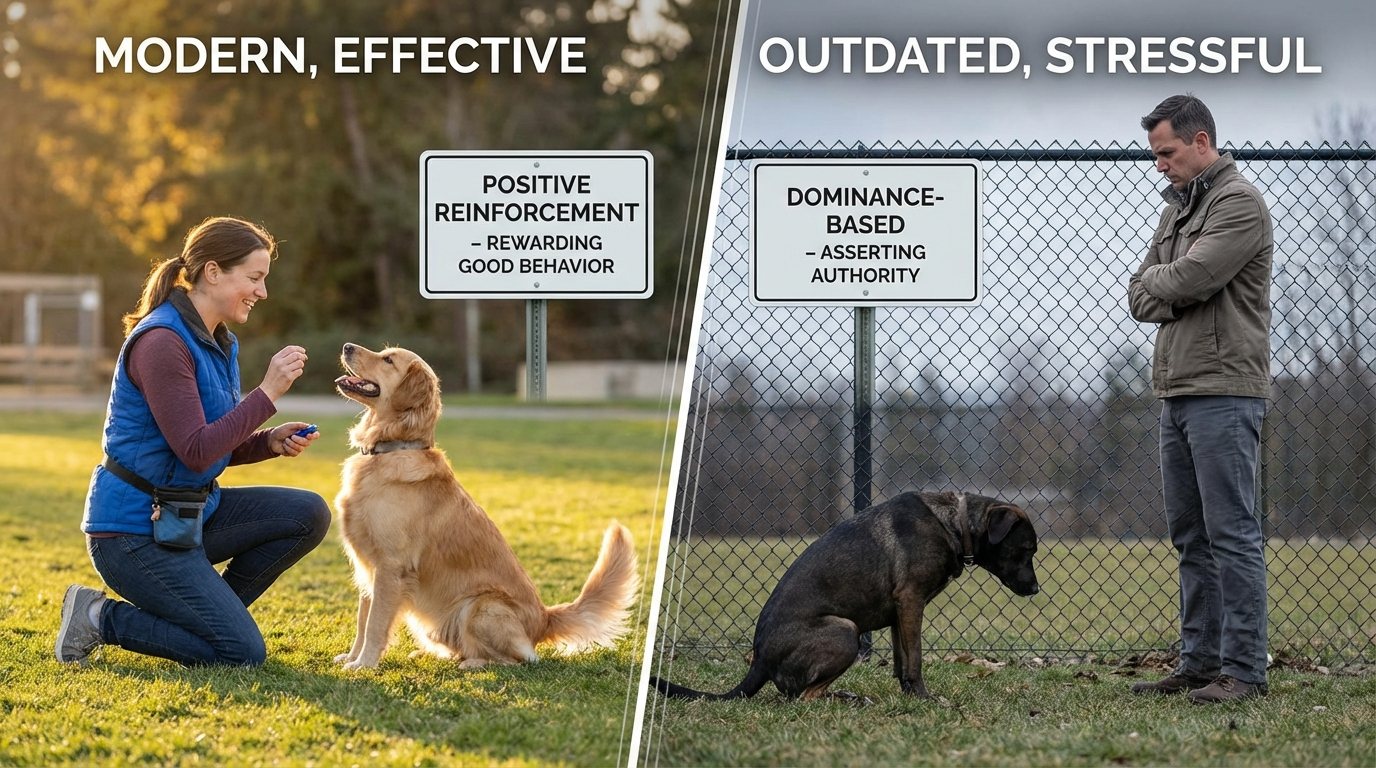
Positive reinforcement vs dominance training remains one of the most debated topics in modern dog training. Many owners want fast results, yet they also want a healthy relationship with their pets. Therefore, understanding how each method works is essential before choosing a training path.
At its core, positive reinforcement vs dominance training represents two very different philosophies. One focuses on rewards and cooperation. The other centers on hierarchy and correction. While both aim to improve behavior, their long-term impact differs significantly.
In this guide, you will learn how each approach works, what science says about effectiveness, and which method supports lasting behavioral success.
Understanding Positive Reinforcement
Positive reinforcement builds behavior through rewards. When a dog performs a desired action, the trainer provides something pleasant. As a result, the dog associates that behavior with positive outcomes.
Rewards may include:
- Treats
- Praise
- Toys
- Playtime
- Affection
Timing matters greatly. Immediate rewards strengthen the connection between action and outcome. Therefore, consistency accelerates learning.
Unlike punishment-based systems, reward training reduces fear and stress. Additionally, it encourages problem-solving skills.
In the positive reinforcement vs dominance training discussion, this method emphasizes trust over control. Dogs learn what to do instead of focusing on avoiding mistakes.
Because it relies on motivation, many experts consider it sustainable and humane.
Understanding Dominance Training
Dominance training stems from older theories about wolf pack hierarchy. According to this model, dogs constantly seek to assert dominance. Therefore, trainers must establish authority through firm correction.
Common techniques include:
- Leash corrections
- Physical positioning
- Alpha rolls
- Verbal reprimands
The idea behind dominance-based systems is that dogs obey when they recognize human leadership. However, modern research challenges the assumption that dogs constantly compete for rank.
In the positive reinforcement vs dominance training debate, dominance approaches focus on control and submission. While some dogs respond quickly to firm corrections, others develop fear or defensive behavior.
Because this method relies heavily on punishment, its long-term emotional effects raise concerns among behaviorists.
What Science Says About Learning
Learning theory supports reinforcement over punishment. Dogs repeat behaviors that bring rewards. Conversely, they avoid behaviors that bring discomfort.
However, punishment does not teach replacement behaviors. It simply suppresses actions temporarily.
Research shows that reward-based training improves reliability and emotional stability. Meanwhile, harsh corrections may increase stress hormones.
When analyzing positive reinforcement vs dominance training scientifically, reinforcement aligns more closely with how animals naturally learn.
Moreover, trust strengthens communication. Dogs that feel safe respond more confidently.
Behavioral studies consistently support humane, reward-focused techniques.
Emotional Impact on Dogs
Emotional well-being influences behavior significantly. Fear-based systems may produce obedience, but they can also create anxiety.
Dogs trained primarily through correction may hesitate or avoid interaction. Additionally, some may display aggression due to fear responses.
On the other hand, reward-based systems build enthusiasm. Dogs approach training sessions with curiosity.
In the positive reinforcement vs dominance training comparison, emotional safety often determines long-term success.
Confidence supports resilience. Therefore, balanced dogs handle new environments more calmly.
Because emotional health affects overall behavior, training philosophy matters deeply.
Long-Term Behavior Reliability
Short-term obedience does not always equal lasting behavior change.
Dominance techniques may stop unwanted behavior quickly. However, suppression does not eliminate underlying motivation.
Positive reinforcement builds habits through repetition and reward. As a result, behaviors become voluntary rather than forced.
In the positive reinforcement vs dominance training discussion, long-term reliability favors reward-based systems.
Dogs trained through cooperation often generalize skills better. They respond reliably even without visible rewards over time.
Consistency and repetition strengthen neural pathways, ensuring durable results.
The Role of Leadership
Supporters of dominance training argue that dogs need strong leadership. While leadership matters, it does not require intimidation.
Leadership through clarity and consistency works effectively. Therefore, positive reinforcement does not eliminate structure.
In the positive reinforcement vs dominance training debate, modern trainers emphasize guidance over force.
Clear boundaries, predictable routines, and fair expectations establish authority without fear.
Balanced leadership fosters respect rather than submission.
Addressing Problem Behaviors
Certain behaviors, such as aggression or resource guarding, require careful handling.
Punishment may escalate defensive reactions. Conversely, controlled desensitization and counterconditioning often yield better results.
Rewarding calm alternatives reduces unwanted responses gradually.
Within positive reinforcement vs dominance training comparisons, professional behaviorists consistently recommend reinforcement for complex issues.
Fear-driven dogs rarely improve under harsh discipline.
Instead, structured rehabilitation programs build confidence step by step.
Owner-Dog Relationship
Trust forms the foundation of companionship. Therefore, training methods influence relationships deeply.
Dogs trained through rewards often seek interaction. Meanwhile, dogs trained through intimidation may avoid eye contact or physical closeness.
In evaluating positive reinforcement vs dominance training, relationship quality becomes a key factor.
Mutual understanding strengthens bonding. Additionally, cooperation improves everyday communication.
Healthy relationships support consistent obedience naturally.
Common Misconceptions About Reinforcement
Some believe reward-based training creates spoiled dogs. However, proper reinforcement includes structure and consistency.
Rewards should reinforce desired behaviors, not random actions.
Additionally, treats gradually phase out as habits strengthen.
In the positive reinforcement vs dominance training conversation, misconceptions often distort understanding.
Reward training does not mean permissiveness. Instead, it promotes clear expectations with positive outcomes.
When Correction Becomes Necessary
Even reward-focused systems include mild corrections. For example, removing attention can discourage unwanted jumping.
However, physical force remains unnecessary in most cases.
In positive reinforcement vs dominance training comparisons, balanced trainers rely on guidance rather than intimidation.
Clear communication reduces the need for harsh discipline.
Consistency and patience typically prevent escalation.
Training Puppies vs Adult Dogs
Puppies respond particularly well to rewards. Early experiences shape lifelong behavior.
Harsh methods during developmental stages may create lasting fear.
Adult dogs also benefit from reinforcement-based retraining. Even dogs previously exposed to dominance techniques can rebuild trust.
In positive reinforcement vs dominance training choices, age does not limit effectiveness of reward systems.
Patience remains essential across life stages.
Practical Example: Teaching Sit
With reinforcement, you lure the dog into position and reward immediately.
With dominance training, you may physically push the dog into position while issuing commands.
The first approach builds voluntary participation. The second relies on compliance.
In real-world comparisons of positive reinforcement vs dominance training, voluntary behavior proves more sustainable.
Motivation enhances enthusiasm and reliability.
Professional Trainer Perspectives
Modern certified trainers increasingly favor science-based methods.
Organizations promoting humane training emphasize reinforcement principles.
In the broader positive reinforcement vs dominance training debate, professional standards continue shifting toward reward systems.
Insurance providers and animal welfare groups also encourage non-aversive methods.
Industry trends reflect growing evidence.
Conclusion: Choosing What Truly Works
The discussion of positive reinforcement vs dominance training highlights two distinct philosophies. One centers on trust, rewards, and cooperation. The other emphasizes hierarchy and correction.
Scientific research, behavioral studies, and professional consensus increasingly support reward-based systems. While dominance approaches may produce short-term compliance, they risk long-term emotional consequences.
Effective leadership does not require fear. Instead, clarity, consistency, and positive reinforcement build lasting obedience.
Ultimately, training shapes not only behavior but also relationships. When trust guides the process, dogs respond with confidence and reliability. Therefore, choosing humane, science-backed techniques supports both performance and partnership for years to come.
FAQ
- Is reward-based training effective for stubborn dogs?
Yes. Consistency and high-value rewards often motivate even independent breeds. - Can strict correction harm a dog emotionally?
Harsh discipline may increase anxiety or defensive behavior in sensitive dogs. - Do dogs need an alpha leader?
Modern research suggests dogs benefit more from guidance and structure than dominance. - How long does reinforcement-based training take?
Progress depends on consistency, but many dogs learn basic commands within weeks. - Should I consult a professional trainer?
If behavior issues feel overwhelming, certified trainers can create structured, humane plans.