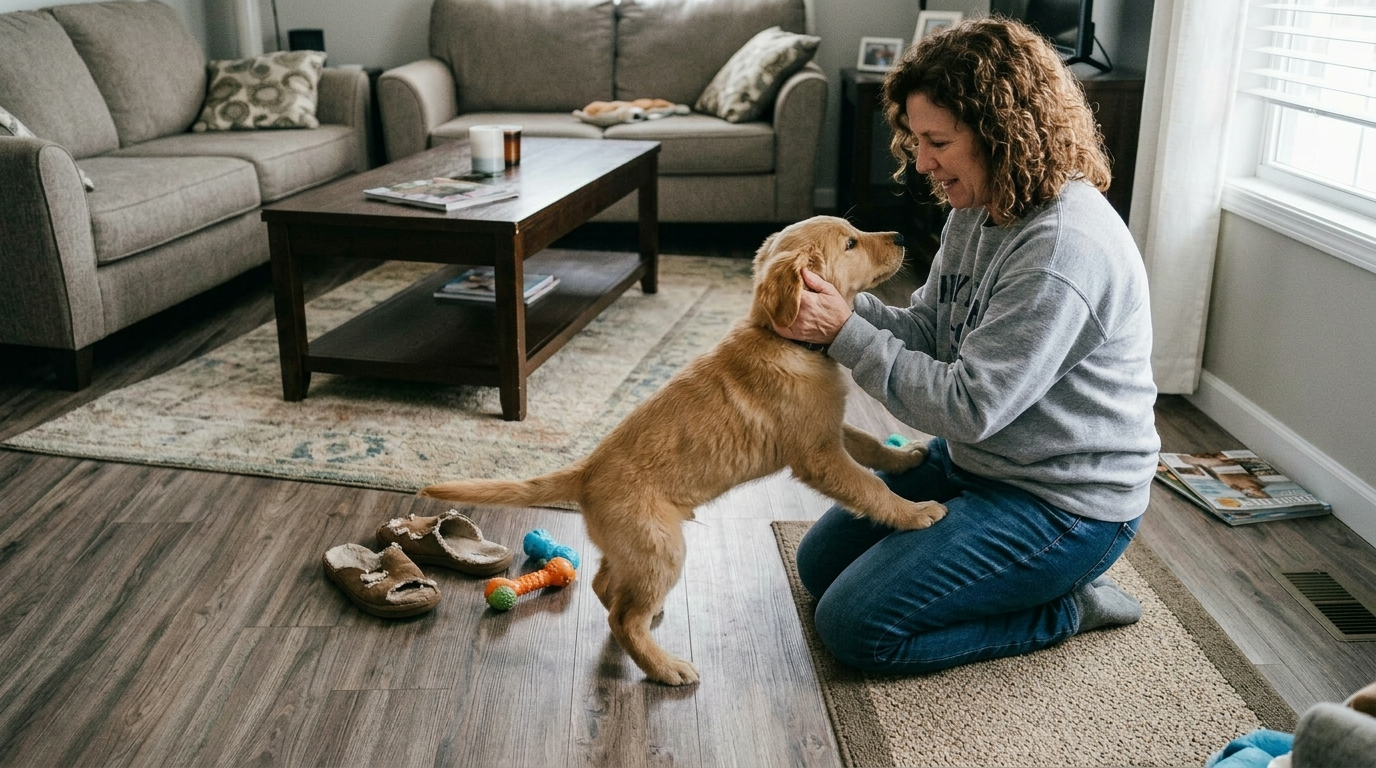
Raising a new dog is exciting, but puppy training mistakes can quickly create confusion and frustration. Because early habits shape lifelong behavior, avoiding common errors makes a huge difference. With the right approach, you can build trust, confidence, and obedience from the start.
Many owners act with good intentions. However, inconsistent routines and mixed signals often slow progress. Fortunately, once you understand what to avoid, training becomes clearer and more effective.
Why Early Training Matters So Much
The first months of a puppy’s life form the foundation for adult behavior. During this period, dogs absorb information rapidly. Therefore, consistent guidance helps them understand expectations.
When structure is missing, confusion grows. Puppies do not misbehave out of spite. Instead, they respond to patterns you create.
Avoiding puppy training mistakes early prevents long-term challenges. For example, poor leash habits can turn into pulling problems. Similarly, inconsistent house rules can encourage boundary testing.
Clear communication builds trust. As a result, puppies feel secure and eager to learn.
1. Inconsistent Rules at Home
Consistency remains the backbone of effective training. If one family member allows jumping while another corrects it, confusion develops.
Dogs learn through repetition. Therefore, mixed messages delay understanding. Everyone in the household must follow the same guidelines.
Set clear boundaries from day one. For instance, decide whether the couch is allowed. Then stick to that decision.
When owners avoid puppy training mistakes related to inconsistency, learning accelerates significantly.
2. Using Punishment Instead of Guidance
Harsh corrections create fear. Although punishment may stop behavior temporarily, it rarely teaches alternatives.
Positive reinforcement works better. Reward calm behavior, proper elimination, and polite greetings. Because rewards motivate repetition, puppies respond faster.
Yelling often increases anxiety. Consequently, stressed puppies struggle to focus.
Avoiding punishment-based puppy training mistakes builds confidence and strengthens your bond.
3. Expecting Too Much Too Soon
Young dogs have short attention spans. Therefore, long sessions often overwhelm them.
Keep training sessions under 10 minutes at first. Short, frequent practice improves retention.
Puppies also lack bladder control early on. Unrealistic house-training expectations lead to frustration.
Patience prevents common puppy training mistakes that stem from unrealistic goals. Progress happens gradually.
4. Skipping Socialization
Socialization shapes how dogs respond to the world. Without exposure to new people, sounds, and environments, fear may develop.
Introduce your puppy to various safe situations. For example, visit parks, meet friendly dogs, and explore different surfaces.
Because early exposure builds resilience, confident behavior follows.
Avoid isolating your dog during critical development stages. Skipping this step ranks among serious puppy training mistakes.
5. Inconsistent Potty Training Routines
House training requires strict scheduling. Feed, walk, and rest times should remain predictable.
Take your puppy outside first thing in the morning, after meals, and before bedtime. Consistency speeds up learning.
Accidents will happen. However, punishment for accidents confuses puppies.
Instead, clean thoroughly and reinforce outdoor success. Structured routines prevent many puppy training mistakes tied to house training.
6. Reinforcing Bad Behavior Accidentally
Owners sometimes reward unwanted behavior without realizing it. For example, giving attention when a puppy barks reinforces barking.
Even negative attention can feel rewarding. Therefore, ignore minor attention-seeking behaviors when safe to do so.
Reward calm alternatives instead. When quiet behavior earns praise, repetition follows.
Recognizing subtle puppy training mistakes helps prevent habits from forming.
7. Lack of Mental Stimulation
Physical exercise alone is not enough. Puppies need mental challenges too.
Interactive toys, puzzle feeders, and short training drills keep young minds engaged. Boredom often leads to chewing and digging.
Because enrichment channels energy productively, destructive behavior decreases.
Avoiding boredom-based puppy training mistakes supports balanced development.
8. Overusing Treats Without Fading Rewards
Treats motivate learning initially. However, relying on food forever weakens command reliability.
Gradually replace constant treats with praise and variable rewards. This builds long-term obedience.
Because unpredictable reinforcement maintains interest, dogs stay engaged.
Failing to phase out treats represents one of the more subtle puppy training mistakes owners make.
9. Neglecting Leash Training Early
Some owners delay leash practice. However, early exposure prevents pulling habits.
Begin indoors with short, calm sessions. Reward walking beside you.
If pulling occurs, stop immediately. Movement should only continue when the leash relaxes.
Starting late increases frustration. Therefore, early correction avoids preventable puppy training mistakes outdoors.
10. Inconsistent Crate Training
Crates offer security when introduced properly. However, forcing a puppy inside creates negative associations.
Make the crate comfortable. Add bedding and toys. Keep sessions short initially.
Never use the crate as punishment. Instead, treat it as a safe space.
Proper introduction prevents crate-related puppy training mistakes that cause anxiety.
Building a Structured Training Plan
A clear routine simplifies learning. Begin with basic commands such as sit, stay, and come.
Practice daily in short sessions. Gradually increase difficulty once mastery improves.
Because repetition builds confidence, regular practice produces steady progress.
Avoid jumping ahead too quickly. Skipping steps often leads to puppy training mistakes that require retraining later.
Track progress weekly. Small wins matter.
The Role of Positive Reinforcement
Reward-based training remains the most effective method. Praise, treats, and play reinforce desired behavior.
Timing matters greatly. Deliver rewards immediately after the correct action.
Because dogs connect actions with outcomes quickly, clear timing accelerates learning.
Avoid vague praise. Instead, mark success clearly with consistent cues.
Proper reinforcement helps eliminate many puppy training mistakes rooted in confusion.
Understanding Puppy Development Stages
Puppies experience fear periods during growth. Sudden sensitivity to sounds or strangers may appear temporarily.
Stay calm during these phases. Offer reassurance without forcing exposure.
Because development fluctuates, patience becomes essential.
Recognizing growth stages helps owners avoid misinterpreting behavior as stubbornness.
Awareness reduces avoidable puppy training mistakes during transitional phases.
Managing Energy and Exercise
High energy levels often drive misbehavior. Structured play sessions reduce excess energy.
Incorporate fetch, tug, and supervised social play. However, avoid overexertion in young puppies.
Balanced activity prevents frustration. Consequently, calmer behavior emerges indoors.
Exercise combined with mental stimulation minimizes puppy training mistakes related to chewing and jumping.
The Importance of Clear Communication
Use simple, consistent commands. Changing words for the same behavior confuses puppies.
For example, choose either “down” or “off” consistently.
Tone also influences response. Calm voices build trust. Loud frustration increases anxiety.
Clear signals reduce misinterpretation. Therefore, communication consistency prevents recurring puppy training mistakes.
When to Seek Professional Help
Sometimes challenges persist despite effort. Professional trainers offer structured guidance.
Group classes also provide socialization opportunities. Additionally, trainers identify subtle issues owners may miss.
Seeking help early prevents long-term behavioral problems.
Delaying assistance often compounds puppy training mistakes.
Long-Term Benefits of Avoiding Early Errors
Preventing early mistakes saves time later. Dogs trained consistently adapt faster to new environments.
Strong foundations create confident adult companions.
Because habits solidify quickly, early correction matters.
Avoiding puppy training mistakes strengthens the relationship between owner and dog.
Trust grows through clarity and fairness.
Conclusion
Raising a puppy requires patience, structure, and consistency. Puppy training mistakes often happen unintentionally, yet their impact can last for years. Fortunately, by recognizing common errors and adjusting early, you set your dog up for lifelong success.
Focus on clear communication, positive reinforcement, and realistic expectations. Provide structure, socialization, and mental stimulation daily. When challenges arise, respond calmly and consistently.
By avoiding these common missteps, you build a confident, well-mannered companion who trusts your guidance. Early effort pays off in years of joyful partnership.
FAQ
- How long does it take to correct early behavior issues?
Most minor problems improve within weeks when consistent routines and positive reinforcement are applied. - Is professional training necessary for every puppy?
Not always. However, structured classes can accelerate progress and improve social skills. - Can older dogs fix early bad habits?
Yes, but it may take more time. Consistency and patience remain essential. - What is the most common mistake new owners make?
Inconsistent rules often create confusion and slow learning. - Should training sessions happen daily?
Yes. Short daily sessions build steady progress and improve command retention.