Few things test patience like stepping into a puddle you did not expect. Indoor accidents can feel confusing, annoying, and sometimes discouraging. Many owners wonder why their dog still struggles despite training efforts. The truth is that indoor accidents rarely happen without a reason.
Dogs do not soil the house out of spite. Accidents are signals. They point to gaps in routine, communication, health, or understanding. Once those gaps are identified, progress becomes possible.
Learning how to stop dog indoor accidents starts with a mindset shift. Instead of punishment or frustration, clarity and consistency matter more. Dogs thrive on structure. When routines feel predictable, behavior stabilizes.
This article explains why indoor accidents happen and how to stop them effectively. You will learn practical steps, behavior strategies, and training adjustments that create lasting results. With patience and the right approach, clean floors can become the norm again.
Why Dogs Have Indoor Accidents in the First Place
Before you can stop dog indoor accidents, you need to understand the cause. Accidents are rarely random.
One common reason is incomplete house training. Dogs may not fully understand where they are expected to go. Confusion often happens when rules change between environments.
Another factor involves routine inconsistency. Irregular feeding times lead to unpredictable bathroom needs. Missed walks create urgency that overwhelms control.
Stress also plays a role. Changes in schedule, new environments, or unfamiliar people can disrupt bathroom habits.
Health issues should not be ignored either. Urinary infections, digestive problems, or age-related changes can cause sudden accidents.
Finally, communication gaps matter. If a dog does not know how to signal the need to go out, accidents become likely.
Identifying the cause guides the solution.
Establishing a Predictable Bathroom Routine
Routine is the backbone of success when trying to stop dog indoor accidents. Dogs learn patterns faster than rules.
Start by feeding meals at the same times each day. Digestion follows predictable cycles. This helps you anticipate bathroom needs.
Schedule bathroom breaks consistently. First thing in the morning, after meals, after play, and before bedtime are essential times.
Take your dog to the same outdoor spot each time. Familiar scents encourage elimination.
Wait patiently. Do not rush the process. Calm stillness helps dogs focus.
Consistency builds clarity. Over time, your dog will expect these moments and respond accordingly.
Using Positive Reinforcement to Stop Indoor Accidents
Positive reinforcement accelerates learning. Punishment, however, slows progress and increases anxiety.
When your dog eliminates outside, reward immediately. Use praise, treats, or affection. Timing matters. Rewards must happen right after the behavior.
This creates a strong association between outdoor elimination and positive outcomes.
Avoid scolding for accidents. Dogs do not connect punishment with past actions. Fear only increases confusion.
If an accident happens, clean calmly and reset the routine.
Positive reinforcement builds trust and speeds understanding.
Supervision and Management Inside the Home
Until habits stabilize, supervision is critical. Freedom should be earned gradually.
When you cannot actively watch your dog, use confinement wisely. Crates or small gated areas prevent roaming accidents.
Crate training helps many dogs control elimination. Dogs naturally avoid soiling sleeping spaces when properly introduced.
Ensure crates are appropriately sized. Too much space encourages accidents.
Leash your dog indoors if needed. This keeps them nearby and observable.
Management prevents mistakes while learning solidifies.
Recognizing Your Dog’s Bathroom Signals
Many dogs give subtle signals before accidents happen. Learning these cues helps you intervene early.
Common signs include pacing, sniffing, circling, whining, or heading toward doors.
Some dogs sit quietly instead, making signals harder to spot.
Watch closely during high-risk times, such as after meals or naps.
When you see signs, respond immediately. Take your dog outside calmly.
Teaching a signal, such as ringing a bell, can also help stop dog indoor accidents long term.
Cleaning Accidents Properly to Prevent Repeat Marking
Scent plays a powerful role in elimination behavior. If accidents are not cleaned correctly, dogs may return to the same spot.
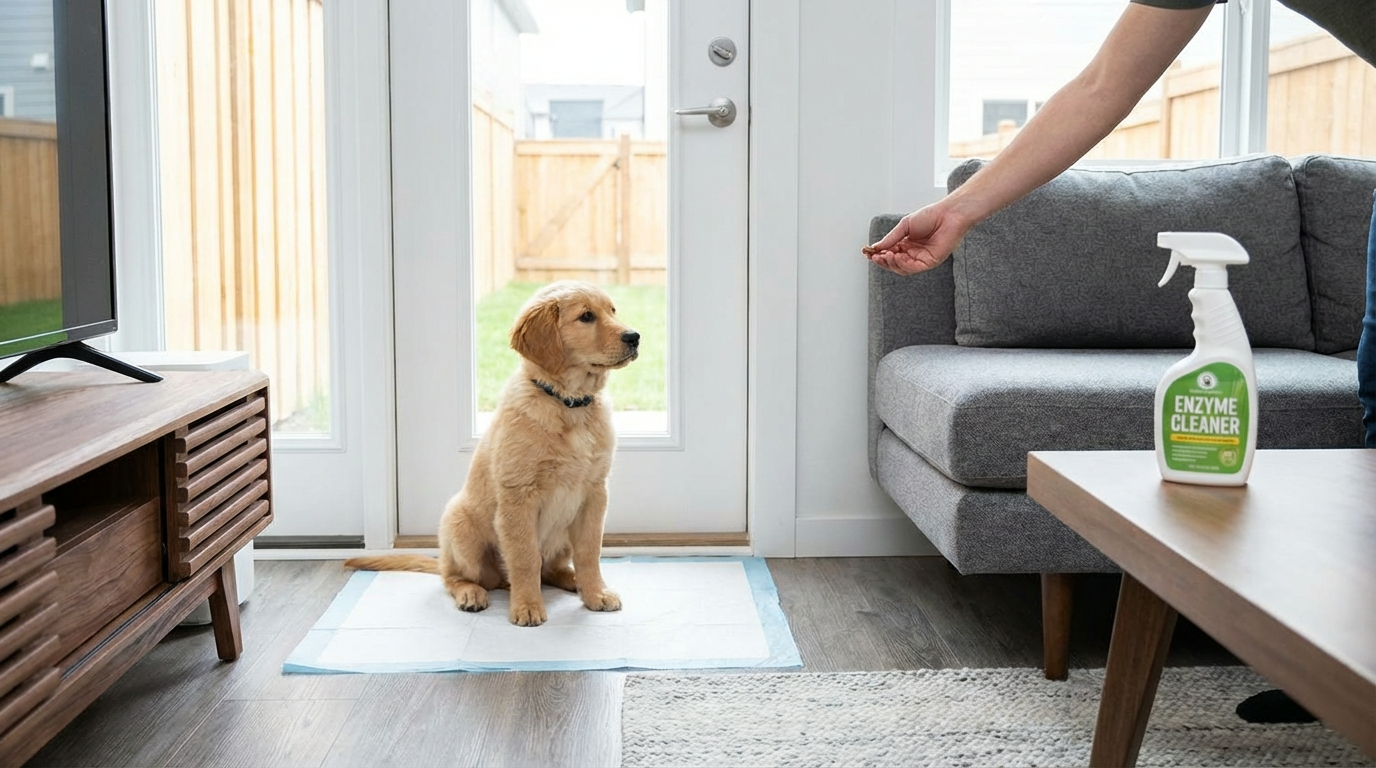
Use enzymatic cleaners designed for pet accidents. These break down odor-causing proteins.
Avoid ammonia-based products. They smell similar to urine and encourage repeat behavior.
Clean thoroughly, even if the accident seems minor.
By removing scent cues, you reduce confusion and repetition.
Adjusting Expectations for Puppies
Puppies require patience. Their bladders are small. Control develops gradually.
Expect frequent breaks. Young puppies may need to go out every hour.
Nighttime accidents are common early on. Gradual progress is normal.
Consistency matters more than perfection. Progress comes with repetition.
Avoid comparing puppies to adult dogs. Development timelines vary.
With structure, puppies grow into reliable habits.
Helping Adult Dogs Stop Indoor Accidents
Adult dogs can still struggle with accidents, especially after adoption or changes.
Rescue dogs may lack previous training. New environments reset habits.
Treat adult dogs like puppies initially. Reinforce basics.
Do not assume understanding. Clear routines rebuild expectations.
Adult dogs often learn quickly once consistency is established.
Patience pays off, even with setbacks.
Senior Dogs and Age-Related Accidents
Aging changes bathroom control. Senior dogs may need more frequent breaks.
Muscle tone weakens. Awareness decreases. Arthritis slows movement.
Adjust routines accordingly. Increase outdoor access.
Consider using pee pads strategically if mobility declines.
Never punish age-related accidents. Compassion matters.
Supporting seniors helps maintain dignity and comfort.
Medical Reasons You Should Not Ignore
When accidents appear suddenly, medical issues must be ruled out.
Urinary tract infections cause urgency and leakage. Digestive issues cause loss of control.
Hormonal changes can affect bladder strength.
If accidents persist despite training, consult a veterinarian.
Treating underlying conditions often resolves behavior.
Health comes first when trying to stop dog indoor accidents.
How Diet Impacts Indoor Accidents
Diet affects digestion and elimination timing.
Low-quality food may cause loose stools or urgency.
Inconsistent feeding increases unpredictability.
Switching foods abruptly can trigger accidents.
Choose a balanced diet appropriate for age and health.
Stable nutrition supports stable bathroom habits.
Reducing Stress to Prevent Indoor Accidents
Stress disrupts control. Dogs under stress may regress temporarily.
New homes, schedule changes, or loud environments trigger anxiety.
Create a calm routine. Provide safe spaces.
Exercise reduces stress. Mental stimulation matters too.
Comfort and predictability help restore control.
Teaching a Clear Bathroom Cue
Cue training improves communication.
Choose a simple phrase. Use it consistently during outdoor elimination.
Reward immediately after success.
Over time, the cue triggers the behavior.
This skill is especially useful in bad weather or travel situations.
Clear cues help stop dog indoor accidents through understanding.
Using Confinement Correctly
Confinement is a training tool, not a punishment.
Use it when supervision is impossible.
Gradually increase freedom as success improves.
Set dogs up to succeed rather than fail.
Structure accelerates learning.
Nighttime Strategies to Prevent Accidents
Night accidents often stem from timing issues.
Limit water intake close to bedtime if appropriate.
Ensure a final bathroom break right before sleep.
Use alarms if needed during early training.
Gradual improvement is normal.
Consistency builds overnight success.
When Regression Happens
Regression is frustrating but normal.
Illness, stress, or routine changes cause setbacks.
Return to basics immediately.
Increase supervision and rewards.
Do not lose patience. Progress resumes with consistency.
How Long It Takes to Stop Indoor Accidents
There is no fixed timeline. Progress varies.
Some dogs improve in weeks. Others take months.
Consistency shortens the process.
Celebrate small wins.
Long-term habits matter more than speed.
Avoiding Common Training Mistakes
Punishment is the biggest mistake.
Inconsistent routines confuse dogs.
Too much freedom too soon leads to accidents.
Ignoring medical causes delays success.
Awareness prevents setbacks.
Building Long-Term Success
Long-term success comes from repetition and clarity.
Maintain routines even after improvement.
Stay observant for changes.
Adjust as your dog ages.
Consistency protects progress.
Conclusion
Learning how to stop dog indoor accidents requires patience, structure, and understanding. Accidents are not failures. They are feedback. By establishing predictable routines, using positive reinforcement, managing environments, and addressing health or stress factors, lasting change becomes possible. Every dog can learn better habits when guided with clarity and compassion. Clean floors are not just a goal. They are a reflection of communication and trust built over time.
FAQ
1. How long does it take to stop dog indoor accidents?
It varies by age, history, and consistency, but many dogs improve within weeks.
2. Should I punish my dog for indoor accidents?
No. Punishment increases fear and confusion, slowing progress.
3. Can medical issues cause indoor accidents?
Yes. Sudden or frequent accidents may indicate health problems.
4. Do older dogs have more accidents?
Senior dogs may need more frequent breaks due to physical changes.
5. Will crate training help stop indoor accidents?
Yes. When used properly, crate training supports bladder control and routine.